

Want to complement the sound of your acoustic guitar? Today we will talk about whether you can use guitar pedals with an acoustic amp.
Many acoustic players follow a more conventional route but enjoy maintaining a pristine sound. They are out there looking for the finest acoustic guitar pedal to eliminate the woodiness from their acoustic sounds. Furthermore, tools like loopers, high-tech direct boxes, and all-in-one multipurpose devices can be a godsend for rehearsal and take live performances to new heights.
Effect pedals are typically linked with electric guitars rather than acoustic guitars. Traditionally, guitarists have used pedals to alter the sound of their electronic guitars radically. While electric guitars are undeniably made for effects, acoustic guitars can also profit from having a well-rounded pedalboard.
But today, we’re going to talk about whether or not you can match your pedalboard or effects pedals with an acoustic guitar amp.
Let’s see whether or not it’s a good match.
Can You Use Guitar Pedals With An Acoustic Amp?
It’s possible that effects pedals can make a big difference for acoustic amps. When you add an effects pedal to an amp, it sounds like a regular acoustic with the effect on top. They will make your guitar sound better, and with the right choices, an acoustic can reach tones that were impossible before.
There are many different impacts, and each one will have the intended result. A distortion pedal will alter the sound waves, while a reverb pedal will create echoes. However, when you plug in an effects pedal, your acoustic instrument will sound tinny, and feedback will be much more prevalent than usual.
Applying effects to an instrument is as simple as pressing the pedal of any guitar pedal. With the right parameters, many different effect pedals can sound great. An instrument with a fuzz generator installed can produce two completely different sounds.
However, electro-acoustics cannot be performed with just one instrument. The pedals are not distinguished, so there is no way to tell them apart. Regarding sound quality, some effects pedals fare better than others.
Before deciding whether or not the pedal will function, try it out for yourself. Modest tonal shifts are expected, but no major problems should emerge. After the tuner, compressor, and distortion in the signal path, a multi-effects pedal is ideal.
In addition to their utility with electro-acoustic instruments, they are widely used to simulate traditional electric guitar amplifiers and speakers. Pedals can be helpful if you are a traditional guitarist who plays with an instrument and amplifier while seated.
When a new pedal is engaged, the result is always a sound that stands out. If you want to know how good an acoustic effect pedal is, you should probably listen to some of the most famous artists in the world.
What Are the Pedals That Work Well with Acoustic Guitar Amps?
The best effects for an acoustic amp are those that don’t alter the tone so that the guitar doesn’t sound as intended, but you’ll use pedals that complement the sound and make it richer, warmer, and more natural, so for starters, you can start with tuning, delay, and reverb.
And once you feel comfortable with these, you can move on to more complex ones. Because in the world of music, anything is possible, and the more you experiment with your musical range and identity, the more you will see that the effects are necessary to get the right tone and character you want to convey.

Reverb
Since an acoustic guitar, unprocessed, can sound boring, the reverb effect is crucial to making the instrument more engaging. The reverberation effect will dramatically impact the overall feel and sound of your tone. Whether performing in a large concert hall or a small, intimate room, reverb will make you sound bigger and more impressive. Your music will have more body and sheen.
Delay
Playing an acoustic instrument using the Delay effect will produce a sound very similar to the original. Regardless of what is fed into it, it will repeat in milliseconds. In a tunnel, if you yell “hello,” you’ll get multiple responses because of the delay effect. The time travel experience provided by delay is unparalleled. When sound signals are delayed, an echo-like phenomenon occurs. Using delay in your performance will give your rhythm more depth and polish. What’s more, your playing will sound more at ease and thrilling when played back instantly and with a snap.
Tremolo
The tremolo effect is a periodic reduction in the guitar’s output loudness. Accelerating and decelerating the volume of your instrument in quick bursts gives the impression of motion. There is no such thing as a slow song without the tremolo sound. It’s like shouting into a ceiling fan. The tremolo sound also profoundly affects the song’s overall atmosphere.
Compression
Compression is a hotly debated topic among acoustic musicians. Some musicians insist that a compressor is an indispensable tool that you must use to reach one’s full creative potential.
Some of the arguments made by each side are sound. Simply put, a compressor reduces the dynamic range of your music, making the silent parts louder and the loud ones quieter. In skilled hands, this can help you achieve a more uniform tone, lengthen your sustain, enrich your midrange, bring out your instrument’s treble, and make your playing sound more articulate.
However, if you squeeze too much, you won’t be able to use dynamics in your playing, which is when you play soft notes and loud notes on purpose to add interest, character, and emotion to a composition.
Looper
For those unfamiliar, a looper allows you to play new parts over the top of previously played portions. You can create a groove, repeat it, and then improvise on top of it. A virtuoso musician can use a looper to create an immersive, multi-guitar soundscape.
Even though it isn’t technically an effect, the looper pedal is among the most effective tools in your theatrical arsenal. A Looper pedal should be near the top of your wish list if you’re a beginner guitarist because it can be a fantastic instrument for learning and practicing. Perfect for honing your sense of coordination and improvisatory abilities.
Chorus
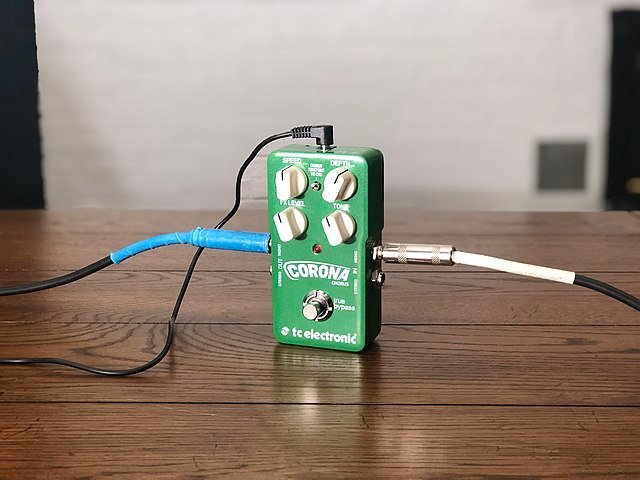
You get the choir effect when you play a sound and then resample it a few seconds later. The chorus effect is just what your acoustic instrument needs if you like how it sounds but wish there were more. It simulates the sound of multiple guitarists when played on a single acoustic instrument.
It gives your instrument more depth and makes it sound-finished. These noises give the impression that more than one instrument is being played simultaneously, giving your performance a more complex tone.
Pitch Shifter
When a specific amount alters the frequency of a sound, this is known as the pitch shift effect. You can use it to change the guitar’s tone. One note sounds simultaneously as another that is higher or lower in pitch, depending on your preference.
It can offer your acoustic guitar the low, rumbling bass tones you’re after. Only some enjoy the sound of a song with a changed pitch, but doing so can open up new sonic possibilities and spark your imagination.
Distortion
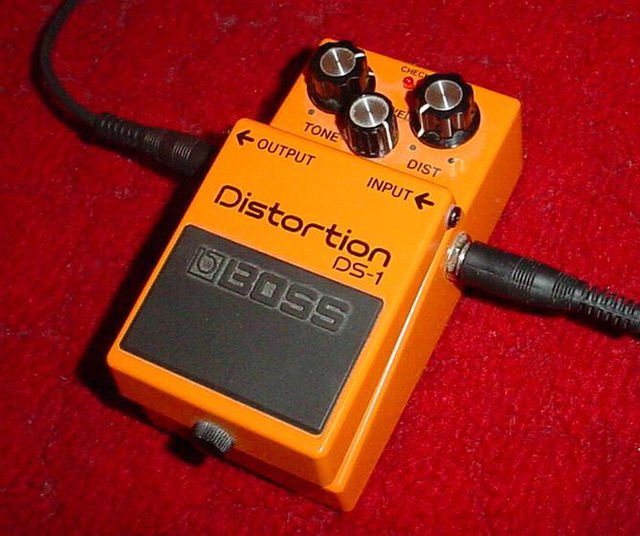
Distortion is applied to modify the acoustic guitar’s tone, which is achieved by increasing the signal’s gain and then pushing it past its distortion point. It may sound strange, but it adds the perfect amount of dirt and grit to the character of whatever you’re playing. You can play distortion and other effects without the use of instruments.
Can You Use a Distortion Pedal with an Acoustic Amp?
It is possible to use a distortion pedal with an acoustic instrument. This is a great method to improve your guitar’s signal and create a distinctive sound. Full-range acoustic amplifiers improve the sound of acoustic instruments, though not to the same extent as electronic guitars.
A more effective strategy exists. It’s all in how you use it, but it has the potential to be very useful. You need to catch up on high-end harmonics that you can achieve with a few dollars worth of piezo tweeters and a resistor. The music quality improves greatly in both directions when using a bass amplifier and a guitar amplifier.
Transforming an electric instrument into an amplifier is the best way to improve sound quality. Depending on the type of modeling tools you need to do your work, you could use a POD or a laptop.
What Signal Path Should I Consider When Choosing Pedals for an Acoustic Amplifier?
The most important thing is to keep the raw sound of the guitar as accurate and clean as possible. That’s why you should first put a tuner and a noise gate (if your signal chain needs it), and then it might be a great idea to put a compressor on after those.
We should preface this by saying that, like so many other aspects of music, pedal placement is a question of personal preference. It was by going against conventional wisdom that many legendary guitar sounds were first found. In other words, you should probably just disregard this guidance and try out different things until you discover a tone that you like.
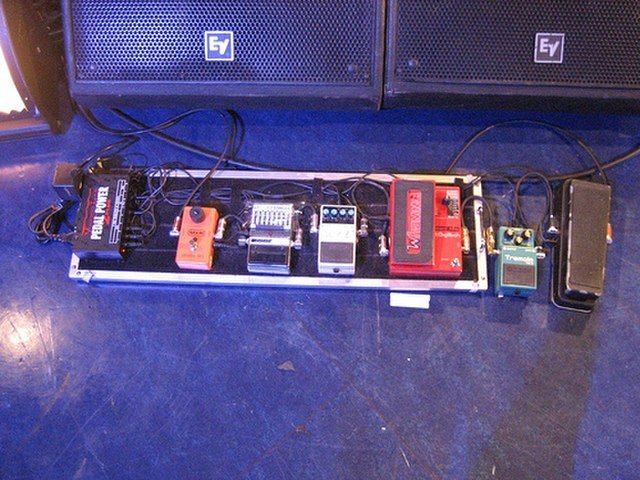
While every guitarist’s signal chain is different, some standards are universally recognized. Putting these pedals in this sequence will give you the best-sounding, most efficient pedalboard. It is recommended to use the following effects for an acoustic guitar in the following order: The first step is to get a tuning pedal.
Having the purest possible signal from your acoustic guitar penetrate the tuner will prevent interference from the effects pedal and ensure accurate tuning. Next are any dynamics instruments you may have. Among these are limiters, noise barriers, equalizers, and compressors.
An additional frequent placement for volume pedals is at the very beginning of the signal chain. Distortion, overload, and fuzz follow. These three pedals amplify your sound, and you can add effects like chorus, phaser, flanger, octave pedals, etc.
The signal chain is finished with reverbs and delays after the modulation devices. These pedals are typically put after other effects in the signal chain because they profoundly impact the acoustic guitar’s sound if used first.
What Is the Best Way to Power the Acoustic Guitar Pedals?
The best way to power the acoustic guitar pedals is to use a power source. Because the more pedals you have, if you use batteries to power the pedals, it’s hard to figure out which one runs out of power first, and in contexts like live or rehearsal, it’s more than necessary not to run out of power.
The acoustic guitar effects pedals are powered by a power source unit with numerous outputs linked together by a thin power cable. They range from one another in output voltage, output current, and physical dimensions. If you have a small collection of acoustic guitar pedals now but plan to expand them in the future, invest in a power supply with more outputs than you presently require.
Having this means you won’t have to buy another power source to keep up with your growing effects chain. Overwhelmingly, 9 volts DC is used to power acoustic guitar effects devices. Larger pedals with internal digital processors may need higher energies of 12v, 18v, or 24v DC.
A single battery can also fuel pedals that require 9 volts. If you’re performing a show without easy access to mains power, 9-volt batteries are perfect for powering your pedals. However, there are a few reasons why you should only depend on this method sparingly.
For starters, you’ll spend about as much on batteries for your acoustic guitar pedals as you would on a power source. In addition, battery life is often unpredictable. A performance-ending dead charge in one of your pedals can be a major setback in the spotlight.
Because of this, we suggest utilizing both batteries and a power supply unit to ensure that the show, rehearsal, or recording will go on as planned, even if one power source fails.
Does an Acoustic-Electric Guitar Need an Amp?
It’s necessary because the pickups on an acoustic-electric guitar boost the signal, the instrument requires amplification to be heard. The information is amplified by the amplifier, increasing the volume. Although amplification is helpful when playing an electric acoustic guitar, it is unnecessary.
To put it simply, electric acoustic guitars are acoustic instruments that you can only perform with an electric amplifier. An amp may be your best bet to get the most out of your semi-hollow body electric acoustic instrument. Any standard electric guitar amplifier can power an electric acoustic instrument.
It’s meant to be used with an amplifier to create semi-hollow instruments. Compared to a conventional amplifier, an electric acoustic guitar plugged into an amp can create a unique and interesting sound. Pick a speaker in the center of the road if you’re on the fence.
An acoustic instrument’s natural amplification makes it sound louder than an electric guitar. Acoustic amplifiers are designed to ‘accumulate’ a clear and transparent signal with more ‘headroom,’ in contrast to electric guitar amplifiers, which can color the tone of an acoustic signal, giving it an ‘amp’ or ‘distorted’ sound.
An electric guitar amplifier will enhance the tone of an electric guitar, while an acoustic guitar amplifier will do the same for acoustic guitars. When compared to an acoustic guitar amplifier, an electric guitar amplifier’s tone, gain (for distortion), loudness, and effects for creating unique sounds are distinct. The acoustic amplifier is made to generate a sound that is clean, transparent, and has plenty of headroom.
Conclusion
It’s easy to feel overwhelmed by all the options available for acoustic effects instruments. You can make a good acoustic amp into something even better with practice and sound effects, and pedals. Let’s say you’ve decided to upgrade your acoustic guitar by removing the boring, stock tones and creating something unique. In this instance, spend some time learning and researching the best effects pedal for your acoustic guitar.

The Integraudio Editorial Team consists of experienced music producers, audio engineers, and plugin enthusiasts dedicated to providing in-depth reviews and guides for music production software.