

In the world of audio, there are a large number of devices designed and used for specific tasks. Within these devices, those that are responsible for the reproduction of low frequencies occupy a key role. Both bass amplifiers and subwoofers are responsible for emphasizing these low frequencies, with similar purposes but different characteristics.
Sometimes you can use devices like bass amps or subwoofers in situations other than those for which they were created but at the risk of compromising their integrity. Therefore, before doing so, you must analyze the possibilities and decide consciously.
Although, at first, one might think that all audio devices are made to reproduce sound, this is more complex than it seems. While both a bass amp and a subwoofer can reproduce low frequencies, they each serve a different purpose.
Can a Bass Amp be Used as a Subwoofer?
While using a bass amp as a subwoofer is possible, the performance will not be the same, as the bass amp cannot push the same range of frequencies as a subwoofer. The result of this will be a sound with less presence and a more accentuated midrange, which is not a characteristic of subwoofers.
A subwoofer focuses on frequencies around 20hz and 80hz, so its range is relatively short since its speaker is designed to fulfill that task and allocates all its power to highlight those frequencies. On the other hand, a bass amplifier has a much wider frequency range, even covering mids and highs.
In addition, a sound system or a home theater can work even without a subwoofer, so it is not an essential requirement when listening to music or watching a movie. But without a doubt, the quality of what you hear decreases significantly without the presence of the subwoofer.
Another option, in case you will use a bass amp instead of a subwoofer regardless of the loss of definition, is that you equalize the bass amp by cutting the mid and high frequencies and only leaving the low ones. By doing this, you will allow the sound of the amp bass to be distinct from that of the rest of the speakers in the sound system since you only want to reinforce the low sounds.
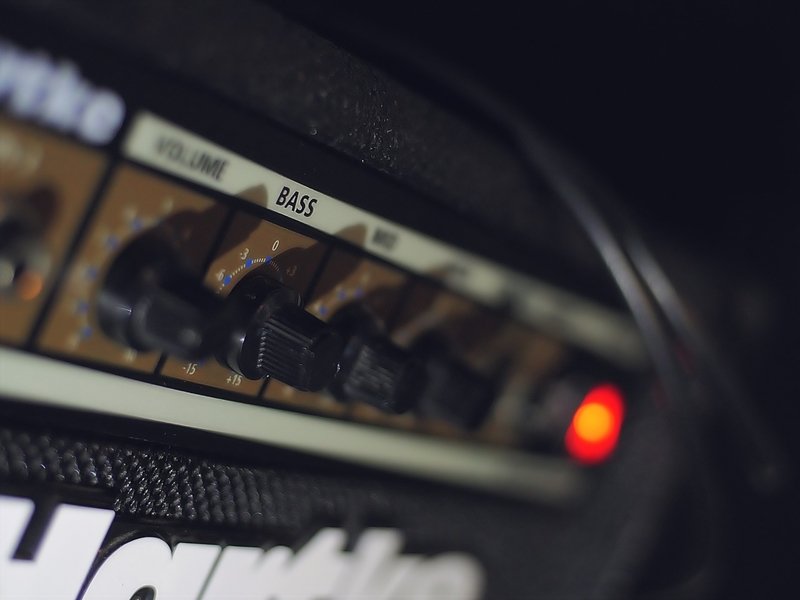
Is a Bass Amp a Better Option Than a Subwoofer?
A bass amp is not better than a subwoofer. It is simply a device with a different function than the subwoofer. Although they may be similar due to the type of sound they process and their appearance, each has specific characteristics that make them ideal for fulfilling their function.
Although both are responsible for bringing out the low frequencies, each one does it in its own way. To begin with, the construction of the subwoofer speaker has dimensions and layout that make it capable of reproducing frequencies in a shorter and lower range. Therefore, it only focuses on those frequencies and adds depth to the sound. It mostly plays audio files that are sent from a processor.
Instead, the bass amp speaker is between a subwoofer speaker and a regular speaker. Because of this, it can reproduce low frequencies without distortion or damage and a considerable percentage of mid and high frequencies. In this case, the amplifier reproduces analog signals picked up by a bass guitar’s microphone and translates them into sound.
There is a wide range of bass amp options of various sizes, some with built-in circuitry, some with external circuitry, and even with different types of amplification. You can find those that work through transistors, which tend to have smaller sizes and power and those that work through tubes, used by professionals or musicians who seek more character in their sound.
On the other hand, you can also find different variants of subwoofers, but the biggest difference is between active and passive. While the passive depends on an external amplification source to emit sounds, the active has an integrated source and some setting options that the passives do not usually include.
In short, the best option will be the one that covers your needs in a certain moment or scenario. If your goal is to play electric bass, you should use a bass amplifier, while if you need to enhance the low frequencies of a sound system, a subwoofer will be the indicated option.
Can an Active Subwoofer be Used as a Bass Amp?
An active subwoofer should not be used as a bass amp since it is not prepared to emit all the frequencies a bass can produce. This would result in a very poor sound since the absence of mids and highs would be evident, and it would also be difficult to process.
On the other hand, powered subwoofers are often very small in size compared to bass amp cabinets. Because of this, it would not be able to offer all the volume and resonance that bass needs to be heard clearly.
The connection is also something to consider. Active subwoofers often do not include TRS inputs which are standard on electric string instruments. Therefore, it would be necessary to use an alternative cable or some adapter that allows the connection of TRS to XRL or RCA.
Finally, if you get to the point of using a subwoofer as a bass amp and you connect an electric bass to it, you should know that the dynamics of the signal will be totally different. A subwoofer generally reproduces signals that come from audio files which have been compressed, equalized, and mastered to offer a balanced signal with fully controlled dynamics.
On the contrary, when a musician plays his bass connected directly to an amplifier, the dynamics of the signal are very high, having high peaks and very marked lows, especially when played aggressively. The fact of not having any compression or limiter can cause the subwoofer not to work properly, causing problems in the long term. For these reasons, using a powered subwoofer as a bass amp is not recommended.
What is The Best Position to Place The Subwoofer?
The best position to locate a subwoofer is on the floor, aligned with the other speakers and, if possible, below them, respecting the same distance from both. A certain distance from the walls is also convenient to avoid too many reflections and for the sound to spread evenly.
If there is something that you should avoid, it is placing the subwoofer in corners or too close to a wall. This is because the low frequencies, unlike the mids and highs, have an omnidirectional sound and great capacity to expand. Therefore, if you placed it very close to walls or corners, you would generate too many sound reflections, which would be reflected in noise.
The fact that the room in which the subwoofer is located is not littered with objects will facilitate the circulation of sound. Since it is difficult to keep a room totally clear to carry out this objective, it is advisable to have only the necessary objects occupying the place and, in this way, allow the sound to spread evenly.
Some home theaters have a self-calibration system that is executed thanks to a microphone integrated into the audio processor. If you have a device of this type, running it can be very useful for getting the best performance from your speakers and subwoofers.
It is also important that you use your judgment to determine where the subwoofer is best appreciated and at what volume it has a clear presence without being obtrusive or generating too much noise. Keeping in mind what position you will generally occupy when using it can also help achieve proper setup.
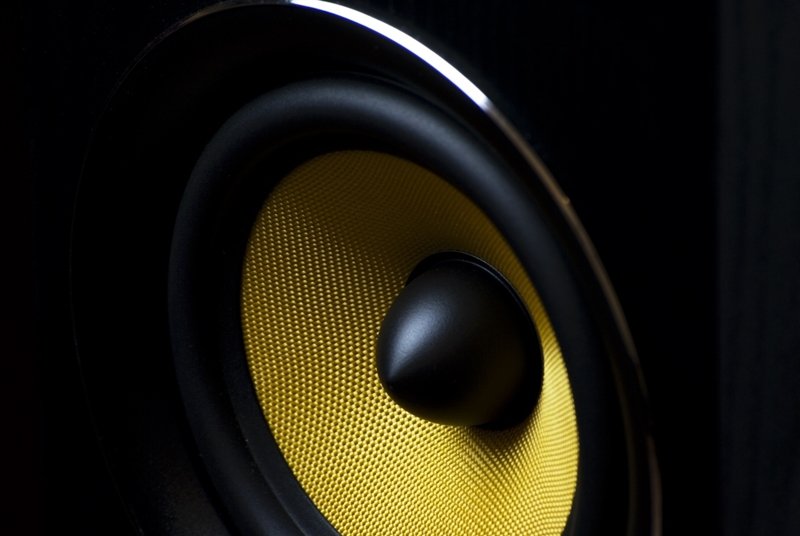
A 15-inch subwoofer is best only when used in an environment where it can fully realize its potential. Otherwise, a 12-inch subwoofer, is enough to cover your needs. Although it has more power, this is not necessarily reflected in better performance.
The 12” and 15” subwoofers occupy the mid/high power range within the low-frequency amplification. This is because from 12”, the speaker has a considerable power level and can still be used for home use. Although there are smaller speakers (for example, 8” and 10′‘), the 12” allows a wide range not only for small environments but also for environments with a certain number of people.
On the other hand, the 15” subwoofer offers a greater range. Although there are even larger speakers (such as 18”), from this measurement, it is already enough to cover a room with a large audience with music at high volume, and the bass spread evenly throughout the venue.
More than the 15” has more power than the 12′‘, and each fulfills the required function in different environments. If you used the 15” for home use and small rooms, you would not be taking advantage of its full potential, and you would invest too much money without any sense. On the other hand, if you try to use the 12” in a large crowded venue, surely its power will not be enough to be heard correctly from all positions, and you will end up forcing the subwoofer to work beyond its capacity. First, analyzing the context in which the subwoofer will perform would be the most appropriate.
When is it Necessary to Replace my Subwoofer?
It is necessary to replace the subwoofer when it has a fault that cannot be repaired, when it is very deteriorated due to prolonged use, or when you need to incorporate a larger speaker since the one you have is insufficient. You can also replace it when looking for an upgrade in sound quality.
Subwoofers tend to last a long time, especially with responsible use. Like any electrical device, it will be influenced by the conditions in which it performs. Beyond this, all subwoofers have a certain lifespan, and after that time, their components start to fail more frequently, necessitating a replacement with a new subwoofer.
However, some unexpected failures can happen even when you use your device correctly, for example, the overheating of an electrical component, the breakage of some speaker element, or perhaps some part that may begin to loosen due to vibrations.
Although many of these failures can be repaired by taking it to a qualified technician, at some point, you may run into a failure that cannot be solved or that the cost of repairing it does not justify the investment. In that case, the best option will be to replace the subwoofer completely.
Another scenario in which it may be necessary to replace your subwoofer is when you want to leap in quality. It is a reality that some manufacturers offer superior quality subwoofers, which are generally more expensive. Brands like Rockford, JBL, MTX, or Rock Series, are some of the most recommended. This is because they are built with high-quality, tested, and guaranteed components, making them work optimally and last longer than generic subwoofers.
Another reason why you might replace your subwoofer, besides improving sound quality, is if you need more power. So you will need a larger one. A subwoofer that works properly in a home environment, or a small room, may not be enough when entertaining a large room or a space with many people.
Conclusion
Sound processors and related accessories are a fundamental part of people’s daily lives, and when used correctly, they can offer truly satisfying experiences.
While there are situations where it is possible to replace a subwoofer with a bass amp or vice versa, each device works best within the context for which it was designed. Because of this, although the task will be completed, it will be partially completed, and you will not get the same results.
However, knowing in depth and experimenting with the capabilities of your devices, as long as you do not put your integrity or security at risk, can be positive to better understanding how they work. Informing yourself and investigating its possibilities will help you solve problems more easily whenever they arise. I hope this article is useful for you. Thanks for your time!

The Integraudio Editorial Team consists of experienced music producers, audio engineers, and plugin enthusiasts dedicated to providing in-depth reviews and guides for music production software.