

This article will take you through the recommended overdrive pedals to pair with a solid-state amp.
Since I started playing gigs two decades ago, I realized that I’m at the mercy of the amps at a venue. I only brought my guitar and pedalboard when I started playing bar gigs. That time, I didn’t even own an amp of my own. I had to make do with what the backline had to offer. More often than not, the backline amp was a solid-state amp, often beaten up with years of use and even abuse.
Which is why I became reliant on overdrive pedals. Often, the amps at the venues don’t even have a footswitch available to use, so I needed an overdrive pedal to bring in overdrive tones. Although in recent history, when I started playing again since the pandemic began, I also started to bring an amp to every gig.
But even with me bringing an amp to gigs, I still rely on my overdrive pedals. There are some things I can’t get with a solid-state amp that overdrive pedals can help me compensate with.
Why to use an overdrive pedal with a solid-state amp?
Solid-state amplifiers don’t have the warmth that a tube amp offers. But that doesn’t mean you can emulate that warmth. A good overdrive pedal allows you to imbue tube-like saturations into a solid-state amp. Pedals like the tube screamers introduce tube-like saturation when used with a solid-state amp.
Another reason to consider using an overdrive pedal with a solid-state amp is to change the amp’s voicing. While you’d want your amp to sound how you want it, it is sometimes not feasible, considering how much a good amp costs nowadays. But amp-in-a-box pedals can give your amp a different voice. As many solid-state amps are pedal platforms, a good amp-in-a-box will do wonders in introducing newer characteristics.
Sometimes, an amp’s existing overdrive channel lacks enough gain. This is common for budget-friendly solid-state amps and even practice amps. Adding an overdrive pedal can push your amp’s current overdrive channel and get it into the high-gain territory.
What are the different types of overdrive pedals?
There are different types of overdrive pedals in the market. They have different characters, which gives them varying applications and different results. In this article, you will encounter these overdrive pedals and see how they interact with solid-state amps.
Tube Screamer Overdrives
Tube screamer-type overdrives are based on the Ibanez Tube Screamer. Known for their mid-hump, these pedals are a common choice in many bands, as they can do a good job of tightening an overdrive sound and boosting a signal.
Tube screamer pedals are also known for their low gain settings, making them the choice for blues players and even for boosting another overdrive.
Transparent Overdrive
Transparent overdrives are known for maintaining the characteristics of your amp or guitar. Unlike the tube screamers, transparent overdrives don’t have a boost in frequencies but can feature tone or EQ controls to help your tone stand out in a mix.
This type of overdrive can be low or high gain at some point. If you have a good solid-state amp but don’t want much alteration in your tone, a transparent overdrive will do wonders. Good examples are the Boss Blues Driver and TC Electronic Cinders Overdrive.
Klon clones
The Klon clones are based on the Klon Centaur, a very expensive overdrive pedal that has gained a lot of hype in recent years. It’s known to add some tube-like tones into a solid-state amp without using an actual tube.
Klon clones are known for their gain control. Klon-style pedals will have a more bass-friendly tone on lower settings, while the mids are more emphasized when the gain is turned up.
Amp-In-A-Box
Amp-in-a-box overdrive pedals are known for emulating the preamp section of an amp. There are plenty of amp-like overdrive pedals, with offerings that include Marshall, Mesa, and even Dumble-style amps.
Amp-in-a-box overdrive pedals are a good replacement for the preamp section of any solid-state amp. All you need to do is plug them into the effects loop, set the EQ control flat or in the middle, and let the amp-in-a-box pedal do its thing.
Stacking Overdrives Together
One popular way to use overdrive pedals is to stack them in the signal chain. You can stack an overdrive pedal with a solid-state amp’s overdrive channel or even stack two overdrive pedals together for a different tone. You get different results based on how you set these overdriven signals.
A light overdrive combined with another light overdrive pedal can produce creamy, crunchy overdriven tones that are good for rhythm guitars. In my case, I’ve tried stacking the Electro-Harmonix Crayon overdrive with a Mesa preamp modeler, both set to low gain. Normally, the Crayon into a clean channel of an amp won’t produce much overdrive sounds. But with the preamp, I got a crunchy tone that’s good for rhythm guitars.
You can also stack light gain overdrive into a medium or high gain overdrive signal. This method allows the light gain overdrive to increase saturation to the overall signal. This is a popular option for anyone who wants to push their amp into distortion territory. It’s also a popular technique used by metal players.
Another popular stacking technique is pushing a medium to high gain overdrive into a light gain. For this method, you can use the light gain to help you cut through a mix during a solo.
14 Best Overdrive Pedals For Solid State Amp
1. Boss SD-1 Overdrive
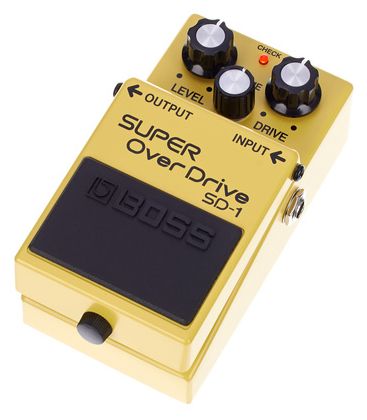
The Boss SD-1 is one of the brand’s most popular overdrive pedals to date. This pedal was made as a response to Ibanez when the latter released the Tube Screamer overdrive. But unlike the Tube Screamer, this pedal is known for its asymmetric clipping and is often used to boost an amp or another pedal.
Notable users who have made the Boss SD-1 popular include Zakk Wylde. It’s a pretty versatile pedal, considering the applications for this pedal. It’s a good option for anyone boosting a signal for solos, as it can function as a volume, gain, or even mid-boost since it has a mid-hump. It’s also popular for tightening their tones, even for metal players.
This overdrive pedal works well with tubes and even solid-state amps. I’d say it’s a good option to consider if you’re looking for light gain or something to boost your main dirt pedal. Blues players will also love this pedal as a standalone overdrive with a solid-state amp, considering how much gain it drizzles on the tone.
Key Features:
As the Boss SD-1 was a response to the Tube Screamer, this pedal features similar characteristics that make it a choice for many guitar players. Specifically, the tone and gain controls are the heart of this pedal.
- Tone Control
On its own, the Boss SD-1 has this mid hump present, being a derivative of the Tube Screamer. This mid-hump becomes more prominent when you adjust the tone knob away from the center. - Gain Control
For those looking for the ideal overdrive pedal for solos, the Boss SD-1 adds a light amount of gain, which compliments any overdriven tone from a tube or solid-state amp.
Pros:
The Boss SD-1 uses a classic design that many manufacturers have copied. But one thing to like about this overdrive pedal is how it is a good platform for modifications. Brian Wampler of Wampler Pedals once released a list of mods you can to the Boss SD-1, and even the Ibanez Tube Screamer, which shares very similar architecture. These mods are guaranteed to work with any solid-state amp.
Another thing to like about this overdrive pedal is the mid-hump. Granted that mid-humps can be an acquired taste, for the most part, the added mids can help any guitar player cut through the mix in a band setting.
The Boss SD-1 overdrive pedal is also versatile to pair with any tube and solid-state amp. If you like using the overdrive channel of your solid-state amp, the Boss SD-1 can help you sculpt tighter overdriven sounds that you can use for any genre, including metal. I’d say this one pedal that any working guitar player should have in his pedalboard or collection.
Cons:
The mid hump on the Boss SD-1 can’t be sculpted out that easily. Since the overdrive pedal adds mids to your tone, you may want to pair this pedal with a guitar or solid-state amp that doesn’t have many mids. Too much mids can be honky, which might cut you through a mix, but it can also affect how your overall tone, including other frequencies.
For the tone purists, the Boss SD-1 overdrive pedal isn’t true bypass. It uses a buffered circuit for its bypass, which is quite decent by today’s standards. Personally, I don’t mind if an overdrive pedal, or any other effect, is true bypass or not. If it sounds good to my ears and does justice to the songs I use it on, then I’m good.
2. Maxon OD-808
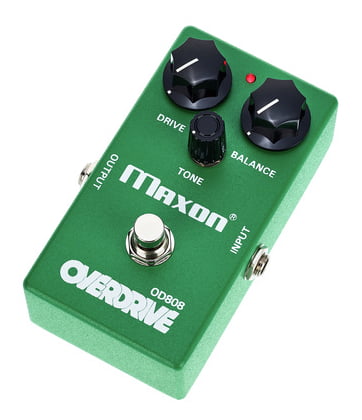
The Maxon OD-808 overdrive pedal has some interesting history to it. The brand’s Japanese factory produced the famous Ibanez Tube Screamer, starting with the TS 808. Maxon’s design for Ibanez allowed them to produce their take on this pedal.
It was in the Maxon factory that Ibanez produced the famous JRC4558 chip, which was popular for tube screamer pedals made in the Maxon factory in Japan. Maxon produced the TS-808 for Ibanez until 2002 when their ties ended. Using the knowledge gained from building this pedal, Maxon decided to build their take on the tube screamer, but with some differences.
Now, it’s worth noting that this overdrive pedal was originally designed as a competitor to the Boss OD-1 and the MXR Distortion+. I’d say this pedal remains a classic, as many brands continue to make derivatives of it, adding some variety to it. A testament to it would be Maxon continuing its production of these pedals under its name.
Key Features:
Like the Boss SD-1, the OD-808 works nicely with solid-state amps. Pair it with any solid-state amp, for that matter, and you get a nice blues machine that can give searing leads. Use it to push your amp for more overdrive or cut through the mix.
- Tone
The OD-808 shares similar architecture to the Ibanez TS-808 as they both feature mid-humps that help guitars stand out. But you’ll notice here that the OD-808 has a lower noise floor than the Ibanez TS-808. Now that’s not surprising, as the OD-808 overdrive pedal isn’t a direct copy of the TS-808, as the former is based on the TS10 by Ibanez, which gives it more subtle differences. - Gain
The gain on the OD-808 is relatively the same as other derivatives of the tube screamer overdrive pedal. It adds a smooth overdrive to any clean solid-state amp yet can provide even more when pushed and combined with an overdriven solid-state amp. But what sets this overdrive pedal apart from other tube screamer variants is that it has a little more gain. Diming or setting the gain control at full yields more gain than the standard tube screamer pedal.
Pros:
If you’re particular about the noise levels your pedals produce, the OD-808 overdrive pedal gives you the advantage of having a lower noise floor. You might not need a noise gate if using this pedal for heavier music, as the OD-808 isn’t as noisy as its Ibanez counterpart.
The OD-808 also has interesting tone sculpting capabilities that work with many solid-state amps. You can opt to use this pedal as an always-on pedal in your guitar rig and enhance the overall mid frequencies of your tone. This overdrive pedal can compensate if your pickups or solid-state amp tends to scoop mids.
This pedal has the most compact form factor among other tube screamer variants. This is it if you only need one overdrive pedal to pair with your tube or solid-state amp. You can put the OD-808 in your gigbag to take anywhere you need it.
Cons:
The OD-808 tends to be a little muddy in sound. Now that isn’t a bad thing, but you may need to tweak the EQ on your amp and pedal with respect to the gain knob. But when tweaked properly, you can make this pedal a tool for a more massive tone.
I was disappointed that this pedal isn’t a direct copy of the Ibanez TS-808. I had high hopes, considering it’s cheaper than the reissue of the TS-808 overdrive pedal, more so the original pedal. But that said, it’s still a viable tube screamer variant worth having.
3. Ibanez TS9 Tube Screamer
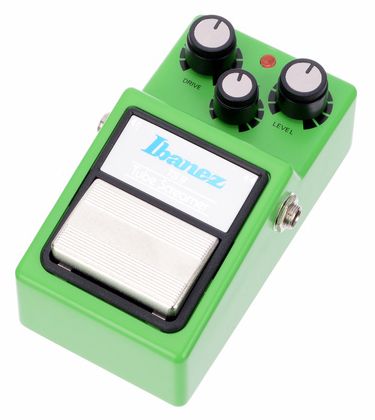
The Ibanez TS9 is the more affordable version of the classic green pedal that many guitar players have known to love since it was first released in the 1980s as a follow-up to the TS-808. It’s been reissued ever since, just like the TS-808, being marketed as a more affordable premium overdrive pedal.
What sets the TS9 apart from the TS-808 overdrive pedal is that it uses different op-amps instead of the JRC4558 chip, making the tube screamer popular. As a result, the TS9 slightly increases gain with added grit compared to the TS-808 overdrive pedal. Nonetheless, using this overdrive pedal with a solid-state amp gives you a good replication of that tube grit.
Like the other tube screamer variants listed in this article, I’d say this is a versatile overdrive pedal to consider. However, some tonal qualities make it different than other tube screamers, so your mileage will vary here.
Key Features:
Like many of the tube screamer variants, this overdrive pedal has the standard volume, tone, gain control, and the automatic mid-hump you’d expect from pedals of this pedigree. The magic happens when you tweak the tone and gain control.
- Gain
Compared to the classic and reissue TS-808, the TS9 overdrive pedal introduces more grit into your signal chain. This isn’t bad, as you can use this pedal to drive more clipping or overdrive into a solid-state amp. Solid-state amps often have this tendency not to have high gain tones unless specified. The TS9 remedies turning your solid-state amp into a heavy metal machine. - Tone
The TS9 overdrive pedal tends to sound less bassy compared to the TS-808. This tonal characteristic is good if you’re looking not to exaggerate the bass frequencies of your guitar rig. The tone control on this pedal is rather straightforward; the lower half is to boost low frequencies, while the upper half is for the treble side.
Pros:
Among all the three-knob tube screamer variants I’ve tried, the TS9 remains my favorite precisely because of the added gain. In where I gig before I started bringing my amp, I’d be at the mercy of the backline amps, often solid-state amps. The added gain that the TS9 offers was good enough to compensate, as I could set the amp to have a slight crunch, sitting between clean and overdriven sounds, then let the TS9 do the work when I needed to go into full overdrive.
Another thing to like about the TS9 is that it’s a good pedal platform for modifications. You can use the mods listed for the Boss SD-1 and implement them on this overdrive pedal. The pedal modding route is good to help you enhance the sound that comes from your solid-state amp.
Cons:
First and foremost, I’d say this isn’t a straight alternative to the coveted TS-808. If you hope to get the same sound, you can, but with limitations. For one, the added bass response on the TS-808 can be replicated with a little more dip in the tone control on the TS9.
If you want to bring the TS9 close to TS808 specs, you need to mod it, which entails replacing some resistors and the op-amp.
4. Friedman BE-OD Overdrive
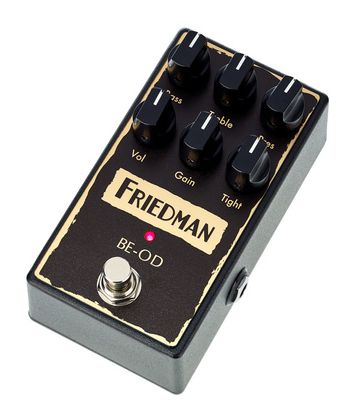
The Friedman BE-OD overdrive is an amp-in-a-box pedal that cops the tones of the BE-100 amplifier from the same brand. As many solid-state amps work well with pedals, this overdrive pedal makes a good platform to introduce a different flavor to your amp.
If you like the response of a tube amp without spending an arm and a leg for it, then this pedal is for you. This pedal can introduce light overdrive and searing distortions when needed. It’s good for rhythm and leads and can cop almost any gain level you need.
This overdrive pedal remains popular with solid-state amp users, considering the amount of gain you can churn out with this pedal. Pair it with a lightly overdriven amp, and use this pedal to create saturated tones. If your overdrive is always on, plug the BE-OD into the effects return of your amp to replace the preamp section.
Key Features:
There are some landmark features for me on this pedal that allow you to create different tones on your amp, which makes this overdrive pedal special. As this pedal is designed to emulate the preamp section of the BE-100 amp, you can expect this pedal to behave like an amp.
- EQ Section
The BE-OD features an EQ that lets you sculpt your tone. You can use it as a booster for solos by adding and making certain frequencies more prominent. And because of its EQ, you can use this pedal to replace the preamp section of any solid-state amp with an effects loop. - Tight control
The Tight control is used to give certain bass frequencies a boost. Increasing it gives you heavy overdriven amp-like tones you can use for metal. You don’t need to stack a tube screamer overdrive to tighten it, as one knob does it all. - Gain section
One thing to note about the gain control of the BE-OD. It’s quite sensitive, which gives you a lot of headroom. Light gain settings give you that edge of breakup tones while cranking gives you distortion that can bring out the glam rocker. There’s also an internal trimpot inside the BE-OD which lets you set the overall gain. You can think of this as an “attenuator” for the gain so that you can stay within the range you set the pedal to. - 9 – 18 Volts
The BE-OD can use power supplies from 9 – 18V DC. Using 18 volts maximizes this pedal’s potential by adding more headroom. When used with the internal gain control, you get better-overdriven tones on any solid-state amp.
Pros:
There are many things to like about the BE-OD pedal when paired with a solid-state amp. First is the headroom you can get with this overdrive pedal. More headroom means having a wider range to play around with when you tweak your sound. The internal gain trimpot is also a plus, as you don’t have to worry about losing your gain settings while in transit. It’s a good way to tame the sensitive gain knob.
I also like the EQ section. When possible, I use overdrives that have at least a two-band EQ. It allows me to have various tones on my guitar. Combined with tight control, you can create tight low ends. The added headroom when running the pedal at 18 volts is also a bonus. For me, the pedal sounds more massive when running on 18V.
Cons:
Accessing the master gain control, or the internal trim pot, can be a problem if you’re in the middle of a gig. Therefore, it is imperative to set it where it needs to be before your performance or even recording. One possible suggestion to improve this design is putting a trimpot hole that one can adjust with a screwdriver from the outside.
A three-band EQ would have also been welcome instead of just the bass, treble and presence control. By adding mid controls, you can maintain the note definition in the low and high frequencies, boosting or cutting the mids as needed.
Lastly, I noticed with this pedal that it sounds better when paired with a guitar with humbuckers. The tight knob shines when using a guitar such as Les Pauls, or PRS, which often come with humbucker pickups.
5. Boss BD-2 Blues Driver
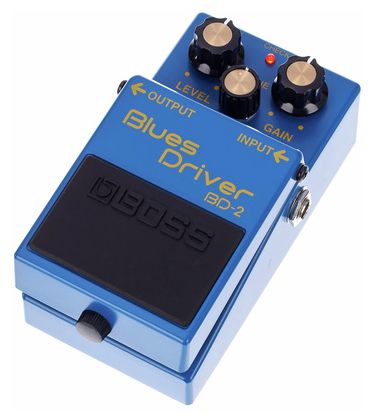
The Blues Driver is another iconic overdrive by Boss. Designed to deliver vintage overdriven tube tones to any solid-state amp, this pedal is known for its iconic blue color, making it stand out among other overdrives by Boss. This pedal has also been reissued under the Waza Craft series.
I believe the Blues Driver is one of Boss’ most versatile overdrive pedals currently in production. You can use this overdrive pedal as a booster to any solid-state amp or as the foundation of your main overdrive tone. Crank the gain on this overdrive pedal and play around with the overdrive channel of your solid-state amp, and you can get fuzz-like tones.
As someone who relies on overdrive pedals for the main dirt, the Boss Blues Driver remains a favorite of mine. It’s good enough to use on 90s alternative rock, delivering gritty rhythm guitar tracks.
Key Features:
The Boss Blues Driver is known for its gain and tone that isn’t light but can produce searing tones reminiscent of what you get from a distortion pedal. If you were to put it in a spectrum for its characteristics, it’s somewhere between the Boss Super Overdrive SD-1 and the Boss Distortion DS-1.
- Tone Characteristics
Unlike the Boss SD-1, the Boss Blues Driver doesn’t have that mid-hump associated with the former and other Tube Screamer pedals. Instead, it has more neutral mid-frequencies and a brighter tone. - Gain Characteristics
The Boss Blues Driver has gained characteristics that can be touch-responsive. Pick lightly, and the Blues Driver won’t have much gain on it. Increasing the pick attack can yield more raunchy tones. Setting it to full gain can yield fuzz-like sounds. It does cop that tube amp response quite well.
Pros:
What I like about the Boss Blues Driver is how it fits my taste in overdrive. It can go from light to searing hot without getting muddy. Despite being an overdrive pedal, I can use it for palm-muted power chords and maintain note definition with sufficient distortion. When plugged into a solid-state amp, this overdrive pedal takes your tone over the top. You’d probably think of a tube amp if you weren’t looking.
And as with other Boss pedals, the Boss Blues Driver is built like a tank. If you want to bring tube overdrive tones into a gig, this pedal should suffice, even if the backline is a solid-state amp. No more worrying about dislodged tubes during transit.
Cons:
I don’t see anything bad with this pedal. When I tested this pedal, it had everything I needed to get through a gig. It might not have two or three-band EQ, but I can live with that. That little nuance is something I can work around using the main amp, even a solid-state amp, or another overdrive pedal.
6. Maxon OD-9 Overdrive
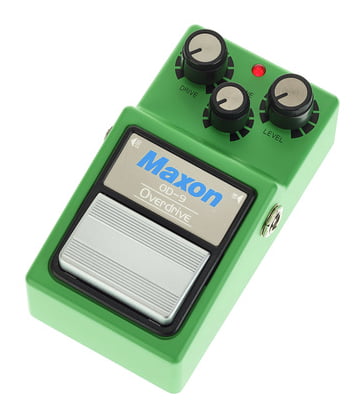
The Maxon OD9 overdrive pedal looks very similar to the Ibanez TS9. This isn’t surprising, considering that the Ibanez made the tube screamers previously in the Maxon factory in Japan. But there are some differences with this pedal compared to the Ibanez TS9.
I believe the Maxon OD9 shares a similar pedigree with the Ibanez TS9, but I also think it has qualities that make it stand out from other tube screamer-based pedals. When plugged into a solid-state amp, this overdrive pedal can deliver the same impact as the TS9, adding mids and some tube-simulated warmth.
The Maxon OD9 comes in a standard stompbox enclosure similar to the Boss regarding size, so it should be handy enough to bring for quick gigs, even when you’re unfamiliar with the amp provided by the backline.
Key Features:
The Maxon OD9 has some interesting features not present in the Ibanez TS9. Combined with a solid-state amp, this overdrive pedal delivers hot searing tones that you’d never thought possible with a tube screamer.
- True Bypass and Buffers
The Maxon OD9 features input and output buffers when engaged. This allows you to retain note clarity when the effect is on. It also adds some treble frequencies, although the effects of the buffer are more evident when running a long signal chain. - Gain Level
The Maxon OD9 has a slightly higher gain than other tube screamer variants. It might not be enough to act as a standalone overdrive for punk chords, but when combined with a decent solid-state amp, this overdrive can boost the amp. Turning up the gain control adds more compression, which is more evident here than in the Ibanez TS9.
Pros:
The addition of buffers in the circuit is unusual, but it works. If you have a large guitar rig, the added input and output buffers help compensate for tone loss. I also like the added gain that helps push any solid-state amp when it needs more.
I also like that the pedal is true bypass. Well, not that it matters for me, but for the tone purists who like the benefit of running things true bypass, the OD9 does it quite well, as this reduces the need for external buffers.
Cons:
Like the TS9, the mid hump is an acquired taste for many. Some like it, and some do not. I can say that the added mids introduced by this pedal help cut through a mix. If you like scooped sounds, or your solid-state amp has a natural scooped tone, then an overdrive pedal like the OD9 can help you compensate.
I also wished there was an option to turn off the buffers. Sometimes the buffers are unnecessary; sometimes, not having a buffer can also help you sculpt your tone. If you use a fuzz pedal after the tube screamer, the ability to turn off the buffers will be helpful for the fuzz to react better.
7. Wampler Tumnus Overdrive
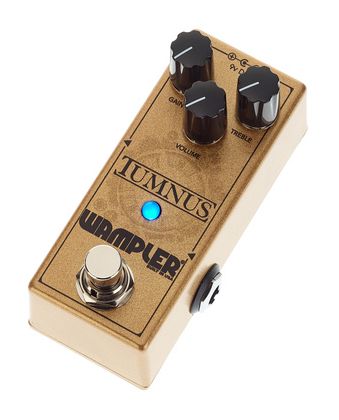
The Wampler Tumnus overdrive pedal is Brian Wampler’s take on the famous Klon Centaur but in a smaller package. The Klon Centaur, which had received a lot of hype, is known to rake in a few thousand dollars. Wampler’s take on this pedal costs much less and is a viable alternative.
The Tumnus delivers the same tube overdrive tones in a pedal while yielding a smaller footprint than the original Klon Centaur. Plug it into a solid-state amp, and you can easily get that tube sound. If you love the tones on the Klon but don’t want to buy into the hype, then this pedal is just for you.
The Tumnus has a bigger brother, the Tumnus Deluxe if you want something versatile. Other similar pedals like the Tumnus, such as Electro-Harmonix Soul Food and JRocket Archer.
Key Features:
The Tumnus is a Klon Centaur made smaller and cheaper but without the fancy hype that goes with it. Compared to the reissue of the Klon, the KTR, and the Tumnus have very little difference. You can expect the same controls and characteristics if unfamiliar with the Klon Centaur pedal.
- Treble Control
Klon Centaur-based circuits tend to be trebly, and the Tumnus is no exception. The Tumnus also features a treble knob that boosts or cuts any treble frequencies in the mix. - Gain Control
The gain control of the Tumnus is the same as the Klon Centaur. As you increase the gain, you also adjust the bass-mid control. Higher gain means less bass and more mids. Set it to low gain, and with a few tweaks, the Tumnus can also be used to tighten your tone. - Small form factor
This is perhaps one of the greater advantages of the Tumnus. Unlike the original Klon Centaur, the Tumnus takes up a fraction of the space. And because it is smaller, it becomes easier to bring to gigs when you only need one pedal.
Pros:
What I like about the Tumnus is how it brings the Klon Centaur sound in a more affordable package. It does have that transparency while inserting that tube-like warmth. I have to admit, though, that I’m not a huge fan of Klon Centaur-based pedals (but I own one), but the Wampler Tumnus does have that gain I’m looking for when plugging into a tube or solid-state amp.
The small form factor is also ideal for anyone building a travel-friendly guitar rig, given its size. If you’re looking for one more drive pedal to add without taking up much space, the Wampler Tumnus is worth considering. Any solid-state amp will benefit from this overdrive pedal.
Cons:
First, I don’t like the dual potentiometer they used for the gain stage. I want to control frequencies independently from the gain knob. These are specialized components, too, so it might be challenging to look for a replacement part if something breaks. If I were looking for a Klon-based pedal, I am leaning toward its bigger brother, the Tumnus Deluxe.
Second, this is just my preference, but I prefer bigger stompbox enclosures unless I’m keeping this pedal always on. I just find the mini pedal enclosure too small for my preference, especially if I keep toggling between it. I sometimes step on another pedal whenever I use pedals as small as the Tumnus.
And because of the size, it cannot accommodate a battery. That means I’ll need a separate power supply if I just bring this to a gig.
8. Behringer TO800 Vintage Tube Overdrive (Budget)
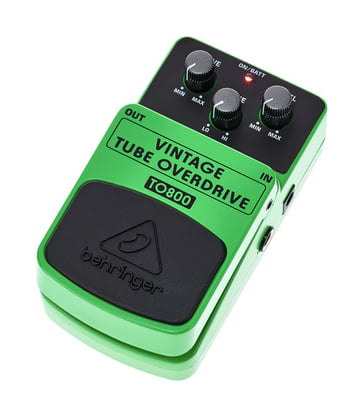
The Behringer TO800 Vintage Tuber Overdrive is a budget version of the TS808. This is the second tube screamer-type pedal they’ve come up with, the first being a TS9 copy known as the TO100.
As Behringer is known for making affordable versions of popular pedals, it has made the TO800 close to the specs of the original TS808 by Ibanez, even going for the green finish, albeit a different shade. The only difference here is the enclosure used.
But just the same, using this overdrive pedal with a solid-state amp will do wonders for your sound.
Key Features:
Like many tube screamer variants available today, the TO800 delivers tube warmth to your amp without putting too much gain on it. Since it is close to the TS-808 pedal, you can expect less gain compared to the TO100 that Behringer released.
- Tone Characteristics
The TO800 exhibits similar tones as the TS-808 overdrive by Ibanez. It works as a good booster for any overdriven solid-state amp. With a high-gain solid-state amp, such as those made by Randall, this overdrive pedal can do an excellent job of tightening the overdrive tones on the amp. - Gain Control
Like the Ibanez TS-808, the TO800 offers a light gain staging for your amp. Unlike the Blues Driver, it doesn’t provide much gain but does an excellent job of enhancing an existing overdriven tube or solid-state amp.
Pros:
One thing to like about this pedal is how it comes close to the Ibanez TS-808. You can get those vintage overdrive tones that the famous green overdrive delivers at a fraction of the price. It might not have the same vintage chip, but it uses something close to it.
Another thing to like is the price. Beginners are likely to use a solid-state amp for practice, thus, this pedal is ideal for any novice learning to use overdrive pedals. This cheap overdrive pedal is an excellent introduction to learning how overdrive pedals interact with solid-state amps. And because it’s cheap, you can easily replace it if it breaks or resell it to try another overdrive pedal in case the tube screamer type isn’t for you.
Cons:
Like most Behringer pedals I’ve used, I’m not too fond of the plastic enclosure this overdrive pedal comes in. It doesn’t have a premium feel to it, considering that plenty of other budget-friendly tube screamer derivatives in the market today use more durable enclosures.
Another issue I have with the TO800 is the switch. Again, like many Behringer pedals I’ve tried, this overdrive pedal has a switch that tends to break if not careful enough. It would be best to exert extra care when using this pedal, especially when toggling between bypass and effects. But considering how much this pedal costs, replacing it in case the switch breaks is still cheap.
9. Harley Benton Ultimate Drive
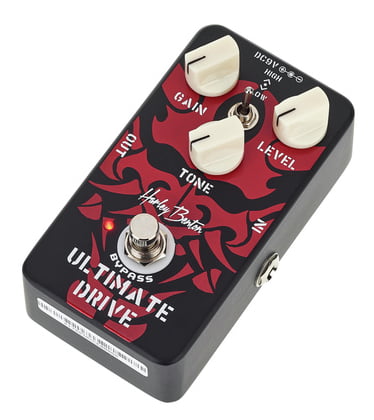
The Harley Benton Ultimate Drive is a powerful and versatile overdrive pedal. Many users claim this pedal was patterned after the Fulltone OCD pedal and exhibits similar tonal qualities. As Fulltone has shut down its operations, this overdrive pedal is a viable alternative to OCD.
The Ultimate Drive’s versatility is on par with the Boss Blues Driver, but they have different voicings. The Ultimate Drive is considered a transparent overdrive pedal, which means it won’t affect the tone you get from the effects before it. The Ultimate Drive also introduces added grit and searing sustain for solos when paired with a solid-state amp.
Cranking up the gain allows you to take this overdrive pedal to distortion territory. But even at high-gain settings, the Ultimate Drive responds well to picking dynamics. Changing your picking attack can quickly go from light to high gain.
Key Features:
The controls on the Ultimate Drive are standard, like many other overdrive pedals on the market. However, the tones you can get from it sets it apart.
- Tone Control
The tone control works well in tweaking the low to mid frequencies. When compared to the OCD, the Ultimate Drive has a slightly narrower tone sweep; if the tone knob on the OCD were set to the middle, the Ultimate Drive approximates this setting somewhere at two o’clock. Thus, you won’t have much of an increase in treble when using the Ultimate Drive. - Gain control
The gain control on the Ultimate Drive is quite interesting. Set it low, and it sounds good to add warmth to any solid-state amp, whether clean or overdriven. Putting it somewhere in the middle gives it good searing tones with added sustain. Going towards past two o’clock on the gain knob gets you into distortion territory, with more sustain. Combined with a solid-state amp, this overdrive pedal gives you more punch. - High and Low switch
The Ultimate Drive has a high and low switch in the middle that lets you toggle between the voicings of the overdrive pedal. The Low setting is perfect as a compliment to any overdriven tone, including those made by a solid-state amp. You get to unlock higher gain settings on the high setting, similar to British amps.
Pros:
I like this pedal’s versatility, thanks to the High and Low switch. I’ve used this pedal as my primary overdrive tone to deliver some medium to high gain tones that are good for playing grunge and even punk. It’s also an excellent compliment to any solid-state amp or even preamp simulators, such as those made by Tech 21 and Harley Benton.
I also like the compact form factor. It’s not a mini pedal like the Wampler Tumnus, but it’s still small enough to fit in my gig bag. If needed to bring only one amp to a gig, I will seriously consider bringing this overdrive pedal, especially if the backline amp doesn’t have an amp foot switch or overdrive channel.
Cons:
My only gripe with this pedal is its tone control. I hoped the tone control was close to what the OCD pedal had inside. The Ultimate Overdrive could become a potent amp in a box pedal if it had a broader tone sweep. But I still think this overdrive pedal is a strong contender to pair with a solid-state amp in the budget category.
Another area for improvement, although this is already nitpicking, is the graphics and branding on this pedal. Some may think it’s an overdrive made to do high-gain tones like the BE-OD when it isn’t. It produces high gain, but not something to take you to metal territory.
10. Ibanez TS808 Original Tube Screamer
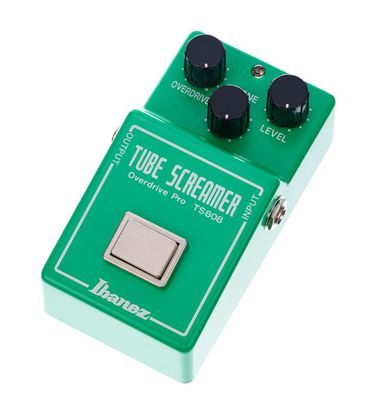
The Ibanez TS808 is one of the most famous overdrive pedals in the history of guitar pedals. This pedal had become one of the benchmarks in overdrives, creating other derivatives in the market. Some brands that made their take on the tube screamer design include JHS, Boss, and Electro-Harmonix.
The TS808 didn’t just inspire other brands to create their takes on this pedal. Ibanez made different variants of the Tube Screamer, including the TS10, Nu Tube Screamer, Mini, and a bass Tube Screamer.
This overdrive pedal continues to be an icon among other dirt pedals. Notable players who used the TS808 include Stevie Ray Vaughan, John Mayer, Paul Gilbert, and Mick Thompson.
Key Features:
The TS808 is known for its mid hump, which boosts the middle frequency of your signal when engaged. Because of its mid hump, the TS808 is a popular choice for cutting through a mix during solos. And with how it enhances the overall sound, the TS808 is a versatile choice for any musician wanting to enhance the sound of their amp.
- Tone Control
Unlike some overdrive pedals, the TS808 keeps the mid-frequency relatively steady. The tone control serves as a sweep between low and high frequencies. Setting below noon increases the bass frequencies, making this overdrive pedal a popular choice for bass players. Past noon, this overdrive pedal makes treble frequencies more prominent. - Gain Control
The TS808 is known for its low gain and symmetrical clipping sound. Unlike other popular overdrive pedals, the TS808 does its magic with low gain levels. You can pair this pedal with a solid-state amp or another overdrive pedal. This pedal also does wonders when paired with fuzz, as it can enhance the tones without adding much grit. - JRC4558D Chip
The TS808, while no longer made in the Maxon factory that first produced this pedal for Ibanez, still sports the same JRC4558D chip and circuit. You get the same tones from before, without any differences from its previous version. Many overdrive enthusiasts believe that this chip is what defines the Tube Screamer.
Pros:
If you’re looking for the real deal tube screamer, the TS808 is it. Unlike other pedals that have been reissued, this overdrive pedal sports the same circuit and components used by the first TS808 released in the market. It sounds the same as its ancestor and retains all analog properties.
The TS808 works as a great enhancer to any solid-state amp. You can use it to add more sustain to an amp’s overdrive channel or create smooth and creamy overdrive tones on an amp’s clean channel. Metal players even love this pedal, as it can tighten an existing overdrive tone to make it heavier.
Cons:
While this overdrive pedal is the cream of the crop of overdrive pedals, I found some quirks on the TS808.
First, it doesn’t use most pedals’ standard DC barrel jack. While it does have a converter cable, that would mean one more possible connection that could break when using this pedal.
Another issue I found with this overdrive pedal is the switch. The switch tends to be harder to engage, given the design. This is something that Ibanez should work on, considering that other pedals have adapted more practical switching, such as those found on the Cool Cat series of Danelectro, which have 3PDT or true bypass switches on them.
11. Vemuram Jan Ray Overdrive
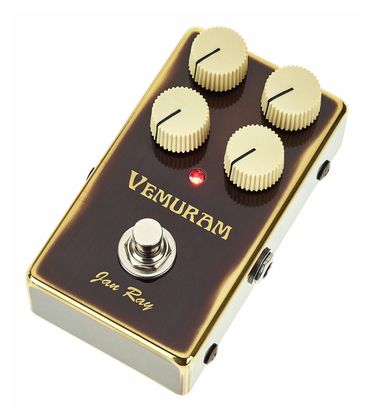
The Vemuram Jan Ray Overdrive pedal is an amp-in-a-box pedal that was made to emulate the blackface Fender amp in the 60s. Unlike many overdrive pedals, the Jan Ray overdrive pedal was designed to have less compression while maintaining punchy tones.
The Jan Ray deviates slightly from the more famous Marshall or Mesa-style amp-in-a-box pedals. As many amp-in-a-box pedals tend to offer more high-gain sounds, the Jan Ray instead positions itself as a potential foundation for your overall tone.
I’d say this pedal has made its own name in the guitar industry. Vemuram collaborated with Ibanez to create the TSV808, a combination of the TS808 and Jan Ray overdrive pedal. There’s also another version of the Jan Ray that’s marketed as the Mateus Asato signature pedal.
Key Features:
The Jan Ray has exciting tone-shaping features that allow you to get the most out of this overdrive pedal. At its core, the Jan Ray is quite transparent and comes with very little to no compression.
- Two-band EQ
The two-band EQ is at the core of the tone shaping of the Jan Ray pedal. This EQ section lets you adjust the bass and treble frequencies using the bottom row of knobs (the upper two are for volume and gain). - Saturation Trimmer
The saturation trimmer is what makes this pedal unique. Adjusting it allows you to adjust the amount of gain, similar to the internal trimpot on the Friedman BE-OD overdrive pedal. As this is a trim pot, you can adjust it using a small screwdriver.
Pros:
What I like about this pedal is the saturation control. It allows you to keep your pedals within a particular gain setting. It is a safety feature to ensure the gain is within what you need for a recording or live situation. It’s an excellent way to prevent significant changes in your sound after you sound-check your rig.
As this pedal mimics a 60s Blackface amp, I would consider running this pedal into the effects loop of any tube or solid-state amp. If you don’t like the preamp section of the solid-state amp you’re plugging into, this pedal should be an excellent candidate to work as a preamp.
The transparency on this overdrive pedal is also remarkable. Suppose you already have an excellent solid-state amp to serve as the foundation of your tone. In that case, the Jan Ray works exceptionally well to add gain without affecting too much of the characteristics of your guitar and amp. The lack of compression is also worth noting, making it compatible with humbucker guitars that already exhibit a certain amount of compression.
Cons:
One thing I didn’t like about the Jan Ray is the lack of labels on the controls. Of course, you can always look at the manual, but if you have to use this pedal without access to the manual, that can take off some minutes to help you get accustomed to how this overdrive pedal works.
Another thing that makes me think twice about this pedal is the price. It’s not exactly the cheapest pedal on this list, and other Fender-style overdrive pedals in the market are worth considering, including the Tech 21 Sansamp GT-2.
12. Strymon Sunset Dual Overdrive
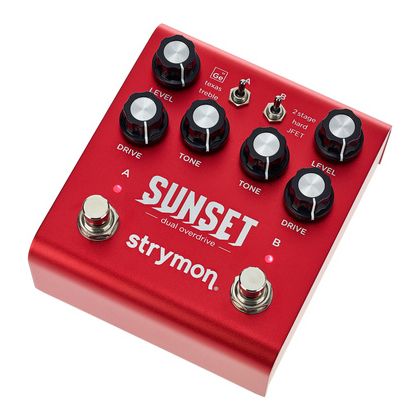
The Strymon Sunset Dual Overdrive is a two-channel overdrive pedal. While Strymon is more famous for its modulation, delay, and reverb effects, it offers the Sunset Dual Overdrive as its attempt to enter the dirt pedal market, along with the Riverside distortion.
The Sunset Dual Overdrive models six kinds of overdrive pedals, which you can choose with the toggle switch on each channel. You can set this overdrive based on these switches, giving you up to 24 combinations of overdrive tones. Used with a solid-state amp, this overdrive pedal will help you get the best sounds from any amp.
Among the pedals in this list, the Sunset Dual Overdrive is the only pedal in this list that’s considered digital. But that doesn’t make this pedal inferior due to the digital modeling it features.
Key Features:
I believe the Sunset Dual Overdrive has the most features among all the overdrive pedals on this list. You can find volume, gain, and tone knobs as a two-channel overdrive pedal. Most of the magic in the Sunset Dual Overdrive happens with the switches.
- Channel A Toggle Switch
The Channel A toggle switch offers you three modes. The Ge setting gives you an overdrive tone that’s soft and similar to the overdrive tones made by Germanium diodes. The Texas setting introduces soft clipping and mid boost identical to the Tube Screamer. The Treble setting decreases low frequencies and increases the treble side, similar to a treble booster pedal. - Channel B Toggle Switch
The Channel B switch features a different set of overdrive characteristics. 2stage gives you a soft-clipped signal driven into a complex clipping signal with much gain on tap. Hard clipping introduces a lot of gain, which allows you to cover a wide range of gain, and even tread on fuzz territory. The JFET setting functions as a clean boost to increase the signal volume without adding much gain to the overall output. - Brightness
The brightness switch is a three-way toggle switch that lets you smoothen the overall sound from the Sunset overdrive. The minus setting reduces the treble frequencies to work with extra bright amps. The middle setting gives you a more neutral response that works with many solid-state amps, and the plus settings add more treble frequencies. - A+B Switch
The A+B switch lets you switch the channel order of the pedal. You can make Channel A go first and vice versa. Setting the switch in the middle lets you run the overdrive channels in parallel. - Noise Reduction
The level knob on channel A features a noise reduction control. You can use this to tame any excess noise produced by the pedal. To access this feature, press and hold the channel B button. - Fav Jack
The Fav jack or favorite button lets you switch to a preset of your favorite overdrive combinations in the Sunset Dual Overdrive. The Fav footswitch must be plugged into the Fav jack to use this feature. - Expression Jack
The Expression jack allows you to connect an expression pedal to adjust the controls on the Sunset Dual Overdrive. You can set it to control a single or all the knobs of the pedal. You may also use the expression pedal as a volume pedal to control the overall output of the pedal.
Pros:
What I like about the Sunset Dual Overdrive are the possible combinations you can make using this pedal. As pointed out, you can make up to 24 possible combinations from this pedal, with three different voicings available per side and the ability to switch the order of the pedals. Considering how much power this overdrive pedal has, you can make it also your go-to pedal for quick gigs.
Plus, the Brightness switch allows you to play around with the overall output to match the amp that you’re using. Solid-state amps have different characteristics. The Brightness switch will enable you to match the pedal with your amp. This is handy, especially if you use this pedal for bass or keyboards.
I also like that this pedal responds well to single coil and humbucker pickups. It can add more punch to a single coil or make your humbuckers sound beefier.
Cons:
Discerning ears can tell the difference here. As the Sunset Dual Overdrive incorporates digital processing here, there’s some smoothness missing on the treble side, which is very prominent in analog drive pedals. Your mileage may vary here. Some are okay with it, while purists may not exactly be a fan of it.
13. TC Electronic Tube Pilot Overdrive
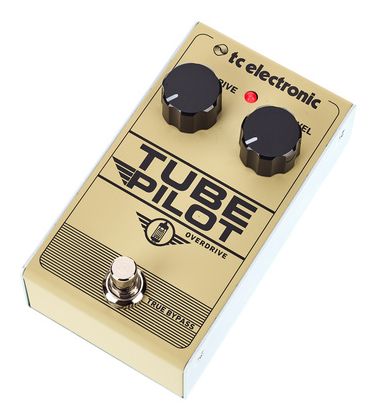
The TC Electronic Tube Pilot is the only overdrive pedal in this round-up with a built-in tube. Running at only nine volts, this overdrive pedal can do wonders for solid-state amps by delivering tube warmth and saturation. The controls are relatively straightforward, making them easy to use.
This pedal is quite surprising for something that falls under the below $100 category. I would say it’s an underdog for what it can do to your solid-state amp. I’m actually reminded of the Butler Tube Driver with this pedal.
Key Features:
Looking at the pedal, you could say it’s relatively straightforward. With only two knobs that control the volume and gain, you may think it’s a one-trick pony. Well, it only does overdrive but delivers overdrive tones extraordinarily well.
- Built-in 12AX7 Tube
The main feature of this overdrive pedal is the built-in tube. The Tube Pilot uses a single 12AX7 vacuum tube to add some tube saturation to your tone. This pedal must warm up a little like any tube amp to get the best tones. - Gain Characteristics
The built-in tube adds that tube saturation to your tone. This overdrive pedal makes your amp sound warmer when used with a solid-state amp. But also worth noting is how it responds dynamically. By cranking up the gain, you can get light overdrive tones for solos and even get into fuzz territory.
Pros:
What I liked about this pedal are the tube tones you get with it. I felt the tube warmth of the 12AX7, although it is still lacking for me. The added saturation makes this pedal a reasonable consideration if you’re on a budget.
The dynamics response is another thing I liked about this pedal. I can go from light overdrive to full-searing lead tones by changing how I pick the guitar. It also helps that it can get fuzz-like tones.
The price is also another thing to like about the Tube Pilot. If you don’t want to spend for the Butler Tube Driver, which runs at higher voltages, the Tube Pilot is a good alternative. It’s not as close, but it should do.
Cons:
I must admit I’m not a fan of starved tube designs or running vacuum tubes at low voltages. While the tube characteristic is there, it isn’t at its full potential when running at low voltages.
Another thing this pedal should have is a tone control. Granted that it may need a bigger enclosure to accommodate, it would be worth it, even if it will also entail an increase in the cost of the pedal. But that said, a solid-state amp’s EQ section should suffice in sculpting the tone for this pedal.
14. KMA Audio Machines Logan Overdrive
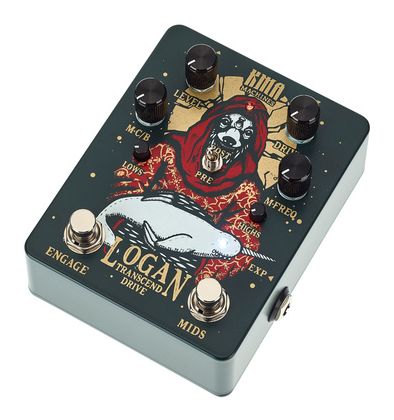
The KMA Audio Machines Logan Overdrive is more than just another overdrive pedal. It also works as a preamp pedal that compliments any cabinet simulator or IR loader. This overdrive pedal sounds good in front of a solid-state amp or in an amp’s effects loop to replace its preamp.
Among all the pedals in this list, this is the only pedal that offers a three-band EQ and Mid shift control to help you fine-tune the mid-frequency.
The controls on this pedal remind me of the Boss Metal Zone, except that this pedal works more as a low to medium gain overdrive or preamp.
Key Features:
The main feature of this pedal is its EQ. As it is, the EQ section features the essentials that I need to use as a preamp. But some added features make the Logan Overdrive special.
- Mid Shift
The Mid Shift lets you sweep the whole mid-frequency range to sculpt your mids within the spectrum. This is handy if the amps you use differ every night during gigs. As amps have different voicings, the mid-shift lets you pinpoint where to boost or scoop the mids. - Mid Switch
The mid switch lets you boost or cut the number of mids in your signal. You can opt to add or subtract mids by turning on the switch. Turning off the switch bypasses the mids control, which defaults to the mid characteristics of your signal. - Pre/Post EQ
This switch lets you move the EQ section before or after the gain stage. Putting it before the gain stage allows you to sculpt the frequencies of your guitar before overdriving it. - Expression Pedal Control
This setting allows you to sweep through the mid frequencies, like how a wah pedal interacts with your signal. You must plug an expression pedal into this jack to use this feature. To help you tweak the sweep, you can adjust the bandwidth of the sweep through a trimpot hole under the pedal. - Blend Control
The Blend control is a hidden control inside the pedal, which you must remove to access. This trimpot allows you to blend your dry signal with the overdriven sound. With this blend control, you can use the Logan overdrive with bass or keyboards.
Pros:
What I like about the Logan Overdrive is the EQ section. Aside from having a three-band EQ, I like how you can toggle the mid controls to boost or scoop the mids. This helps if you need to cut through a mix but only have one overdrive for the job.
Another feature I like is the built-in wah feature. As expression pedals are lighter than full-sized wah pedals, this added feature makes traveling to gigs easier since you can travel with a lighter load.
The movable EQ section is another plus point since you can use this feature to create interesting tones. Likewise, the blend control is also welcome, as it can also make this pedal-friendly for bass players.
Cons:
If there’s anything I wish they could improve, it would be the blend control. If this pedal were mounted on a pedalboard, it would be hard to adjust the blend, as you need to remove the pedal and remove the cover to access the blend control. This should have been placed on top for easier access, especially if you need to make changes based on the acoustics or the amp you’re using.
Conclusion
Overdrive pedals have different characteristics, and there isn’t a single solution that works with solid-state amps. As it is, solid-state amps already have different voicings, so you need to audition other overdrive pedals to see which works best for you.
Now, I’d recommend overdrive pedals based on application.
If I were looking for an amp-in-a-box pedal, I would lean toward the Logan Overdrive since it is something versatile. The BE-OD is a close second, particularly if I want high-gain tones.
I would choose the Boss Blues Driver or Ultimate Drive for a straightforward, transparent overdrive. It’s hard to choose, as they can also get into distortion territory. But the nice thing about these two pedals is that they stack well together.
For boosting or light gain tones, I’m inclined toward the Maxon OD-808. This pedal has a wider gain range yet can still go into light overdrive territory.
Considering these recommendations, at the end of the day, you need to trust your ears for this one and try as many pedals as you can to get into your dream tones.

The Integraudio Editorial Team consists of experienced music producers, audio engineers, and plugin enthusiasts dedicated to providing in-depth reviews and guides for music production software.