

Audio devices are equipment that needs other elements to work together to deliver sound. On some occasions, some of these elements can fail or find incompatibilities that directly affect the device’s performance. Due to this, it is necessary to conceive the amp as a system that depends on multiple factors.
The most common failures that you can experience in your amp, such as clipping, humming, or loss of sound, in most cases are generated by configuration errors that are easy to solve. However, sometimes it can take some time and some other headaches to find the solution. The more understanding you have of how your amp works, the easier it will be for you to resolve any faults that occur.
One thing that you should keep in mind is that amps are audio devices that work with high voltage levels, so before attempting to resolve faults related to any electrical system, it is necessary to take the relevant security measures or relegate the repair to a qualified technician. In this article, we will discuss how some of the problems that your amp can arise and how to solve them.
Why Is My Amp Losing Volume?
Your amp can be losing volume due to deteriorating tubes, due to dirty or damaged potentiometers, or due to false contacts on the power supply board. These types of problems occur due to the wear and tear of the device over time and is important to solve them on time.
When an amp suddenly starts to lose volume, in addition to being a sign that something is wrong inside the device, it is also a very annoying situation for the user since it directly influences how the sound is perceived.
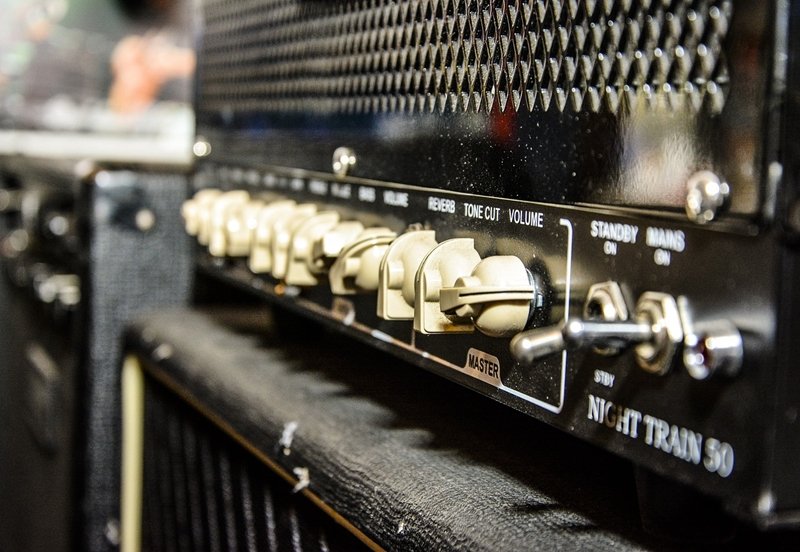
- One of the causes that directly affect the volume is the poor condition of the potentiometers. The potentiometers are in charge of increasing or decreasing the volume through the knobs generally found on the front of the amp. These components are exposed to constant wear caused by use, and over time they can accumulate dirt or moisture, causing them to rust and begin to fail.
Some of the failures that a deteriorated potentiometer can generate occur when you move the knob to increase the volume and this does not happen, or sometimes the volume even decreases, when moving the knob causes noise or interference in the signal, or when the volume is altered without even moving the knob. Whether the potentiometer is just dirty or definitely damaged, your options are to service it or replace it.
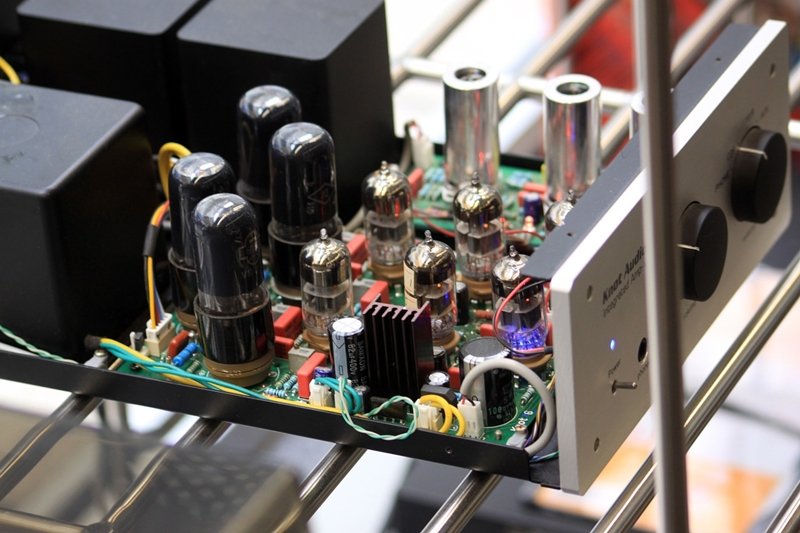
- Another reason that can cause the volume of your amp to decrease is that one of the valves is damaged. The types of amplifiers are divided between transistors and tubes. While transistor-powered ones are more stable and less powerful, tube-powered ones can offer a good amount of gain and sound but are more fragile and require more maintenance.
Amp tubes are fragile and can be damaged by overheating shock or everyday wear and tear. Regardless of the reason why the tubes have deteriorated, what you will be able to perceive when this happens is that the sound decreases. Other times the tone is altered, or even interference is perceived. If this happens, it can indicates that the valves are damaged and need to be replaced.
- Another reason why your amp is losing volume is a false contact in some of the amp’s circuitry. This happens when the contacts are unsoldered due to the high temperatures with which the amp works, causing the connections to break temporarily and the voltages to change.
This can also occur when some terminals are oxidized, making the connection difficult and causing cuts and failures that can alter the amp’s volume. If the origin of the problem is related to failures in the source or the amp circuits, the fix must be a priority.
Can Losing Volume Damage My Amp?
The loss of volume does not have consequences on your amp but on its performance and reproduction quality. However, the origin of what is causing your amp to lose volume can be a potential threat and damage other components of your device that function properly.
When an amp begins to alter its operation, it indicates that something can be wrong. Within these failures, you can find some that will be easy to correct and others that are somewhat more complex; the key is to find a solution when problems arise and not get used to living with them.
In most cases, the volume loss is usually related to a dirty potentiometer or to some compatibility error , which can be something simple to solve and does not imply great risks for the amp. However, other times the origin of the problem can be related to more sensitive components, which can seriously damage the amp and even render it useless.
Failures related to the power supply or the internal circuitry of the amp are the type of failures that, if not controlled, can burn the device. If, for example, the power supply is failing, voltage drops can cause the amp to be overdrawn to function, generating excessive heat. On the other hand, if the voltage throws peaks that are above what the amp requires, it is possible that some components burn or get damaged.
Although most modern amps have protection modes, fuses, and systems to prevent irreparable damage to the device, sometimes those systems fail or are not efficient enough to prevent damage, which is why it is best always to prevent this situation.
Due to this, it is key to avoid exposing your amp to unnecessary risks and to look for the quickest and most convenient solution when the problem arises. This means not underestimating the problems and ensuring your amp is safe before using it normally.
How to Prevent My Amp From Losing Volume?
To prevent your amp from suddenly losing volume, you must maintain it and make sure that the potentiometers are in good condition, that the connectors are correctly installed, and that the amp does not have damaged components or that needs replacement.
The first thing to check when you have volume problems or loss of sound are the potentiometers of your amp, which must offer an efficient operation and be free of noise or false movements. Over time they can accumulate dirt that impairs their operation when turning them, so it is necessary to apply electronic contact cleaning liquid to remove any remaining dirt.
This procedure sometimes requires the front of the amp to be removed to reach the potentiometers, so if you do not have the necessary knowledge, take your amp to a technician in charge of performing this type of maintenance. With a good cleaning, the potentiometers will work optimally again, and you will prevent them from rusting and getting damaged.
Another thing you can do to prevent your amp from failing to deliver volume or generally fail is to check connections and cables. Over time, some terminals can deteriorate and oxidize, causing false contacts and failed connections. You must make sure that all the connectors are firmly attached and without traces of rust or corrosion both inside and outside the device. These are the types of problems that appear over time, often caused by moisture from the environment entering the device.
In the same way, you must check that the cables are in good condition, correctly insulated, and with the necessary caliber that each component needs. The speakers’ impedance must follow what the amp offers so that everything works correctly. Otherwise, the amp will generate excess heat that can wear down the components quickly and damage them.
Once you have ensured that the potentiometers work correctly, the connections are correct, and everything is perfectly set up, if you still experience loss of sound, clipping, or any other operational problem, it is necessary to have a technician check your equipment.
How to Improve The Performance of My Amp?
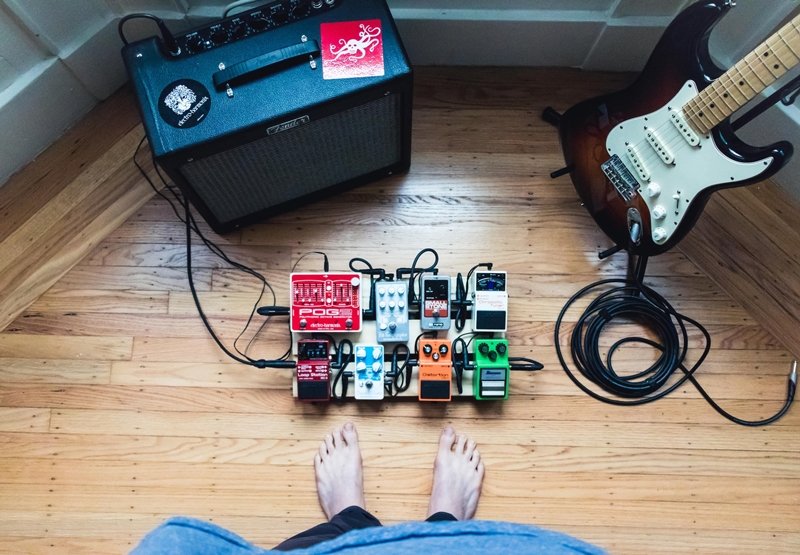
The best way to improve your amp’s performance is by setting the EQ correctly, using quality cables and connections, and replacing your old speakers with new ones. The higher the sound quality, the lower the power required for your amp to be heard clearly.
The equalization of audio devices plays a key role when it comes to appreciating the sound and details it offers. To set up the EQ of your amp properly, it is necessary to consider things such as the room’s dimensions, the size of your speakers, and if there are other sound devices that will also emit sound simultaneously.
Depending on the size of the space where the amplifier will perform, and the acoustic qualities of the place, it will be necessary to adjust the frequencies in one way or another. As a general rule, in large spaces with little furniture, the amount of sound reflections generated is much greater than in a small space. At the same time, in a room with lots of furniture or some acoustic treatment on the walls, you can slow down sound reflections, giving you better control over dynamics.
When the reflections accumulate and start to generate echoes, the sound quality decreases as we perceive it as noise. This makes it necessary to adapt the equalization concerning the acoustic properties of each site. For this, you must pay attention to the low frequencies, which are the ones that tend to generate the most sound reflections. Once the low frequencies are controlled, you can continue with the mids and later with the highs. The important thing is that you take the time to make the necessary adjustments.
Using good-quality cables and connectors will allow there to be no place for the equipment to pick up any kind of interference or external noise. Avoid cheap cables to prevent the signal from getting dirty or not reaching the necessary intensity. Using quality cables, you can ensure that the signal is properly isolated.
Something similar works with the connectors at the ends of the cables. Whether you use TRS or XLR jacks, the connectors must be of the quality and strength necessary to maintain connectivity at all times. Unlike cheap connectors that tend to wear out quickly and fail with continued use, using good quality connectors will prevent all those inconveniences and improve the quality of your sound.
Another option to increase your amp’s sound quality is replacing your speakers. Whether you choose to replace the one you already have or add a second to run simultaneously, adding a new speaker will always bring freshness to your sound. This is something that you will notice more clearly when your speaker shows deterioration generated by time and daily use.
Speakers lose definition and clarity over the years, especially when used at high volumes. The vibrations generated by the sound are wearing down the speaker components, which is also reflected in a certain decrease in output power. So a new speaker can add not only power but also tone and definition.
Conclusion
When solving problems related to the operation of your amp, it is important to consider that a proper setup can make things much easier for you. The better you know how your amp works, the easier it will be for you to solve problems that arise when using it.
Power is one of the most important factors when defining the capacity of an amp, so if your device shows difficulties, its performance will be clearly limited. Whenever you try to solve the failures on your own, take the necessary security measures to protect yourself. If the problem exceeds your knowledge, do not hesitate to consult a qualified technician to help you solve your problem.
I hope this article has been helpful to those who are experiencing issues related to the performance of their amp and audio devices. Thanks for your time!

The Integraudio Editorial Team consists of experienced music producers, audio engineers, and plugin enthusiasts dedicated to providing in-depth reviews and guides for music production software.