
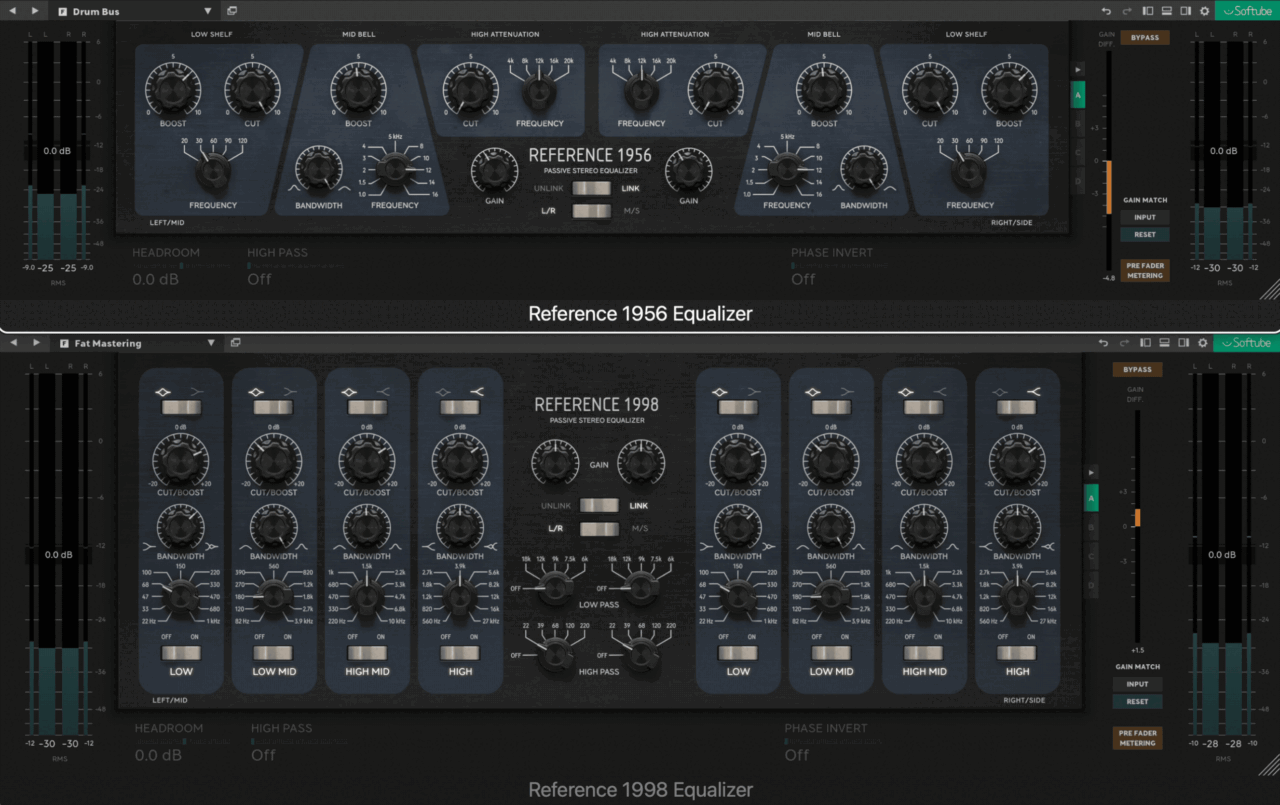
Softube Reference 1998 and Reference 1956 Equalizer: Review
More info and price:
Softube has modelled plenty of classic EQ hardware over the years, but Softube Reference 1998 and Reference 1956 approach vintage tone from two noticeably different directions.
Both are passive-style equalizers built for broad, musical moves rather than surgical correction, yet one leans toward warmth, saturation, and density, while the other focuses more on natural tonal balance and stereo shaping.
That distinction is what makes this pair interesting to me. Reference 1998 uses four parallel passive bands and a tube stage to add color and weight, whereas Reference 1956 brings a minimum-phase passive design together with modern additions such as Mid/Side processing, Headroom, and independent channel gain.
Neither is trying to replace a precise parametric EQ. These are tools I would look toward once the corrective work is finished and the mix needs more character, better overall balance, or a stronger sense of polish. Let me break them down for you!
Key Features
| Key Feature | Reference 1998 Equalizer | Reference 1956 Equalizer |
| EQ Design | Four parallel passive EQ bands with tube-stage coloration | Minimum-phase passive EQ designed for broad tonal shaping |
| Overall Character | Warmer, denser, and more colorful | Smooth, broad, and comparatively natural |
| Tube / Transformer Tone | Tube stage adds saturation, warmth, and headroom | Transformer character can be pushed with the Headroom control |
| Shelving | Wide, musical shelves that can become more colorful at stronger settings | Broad passive curves suited to large tonal moves |
| Low-End Shaping | Particularly strong for adding weight, punch, and density | Headroom control can emphasize a thicker transformer-style low end |
| Mid/Side Processing | No dedicated built-in M/S section highlighted | Built-in Mid/Side processing |
| Channel Control | Traditional stereo operation | Independent gain controls for the two channels |
| Best Uses | Mix bus, mastering, drums, synths, and sources needing extra character | Mix bus, mastering, stereo shaping, and broad tonal balancing |
| Softube Equalizers Integration | Loads into the Vintage slot of Softube Equalizers | Loads into the Vintage slot of Softube Equalizers |
| Console 1 | Console 1 Ready | Console 1 Ready |
Features
The two Reference EQs share the same broad philosophy, but they approach tone shaping quite differently. Reference 1998 is the more colorful option, while Reference 1956 feels better suited to wide tonal moves and stereo balance rather than adding obvious character.
Reference 1998
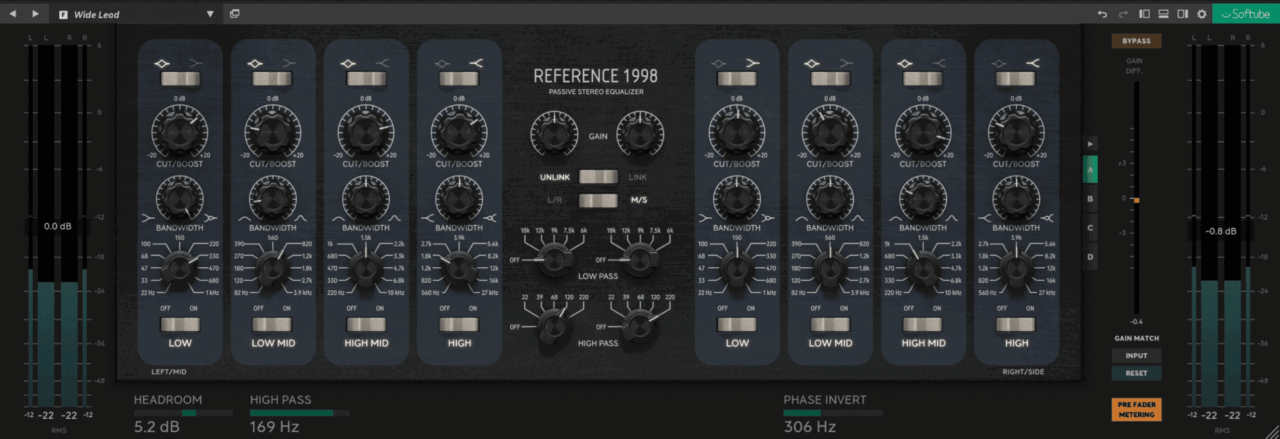
- Four Parallel Passive Bands
The main attraction of Reference 1998 is its four parallel passive EQ bands feeding a modeled tube stage. In practice, this means an EQ move can also change the perceived warmth, density, and forwardness of the source rather than simply adjusting frequency balance.
I see this being particularly useful on drum buses, synths, mix buses, and masters that already sound balanced but still feel a little cold or flat. It is more of a character tool than something I would use for transparent correction.
- Shelving and Low-End Shaping
The shelving curves are an important part of the 1998 sound, moving from broad and smooth shaping toward more colorful responses. The low end is especially interesting because the interaction between weight, definition, and saturation can make a bass-heavy source feel more substantial without simply turning it up.
I would start with very small moves here. On an already dense mix, too much low-end enhancement or tube color can quickly make the result feel heavier than intended.
Reference 1956
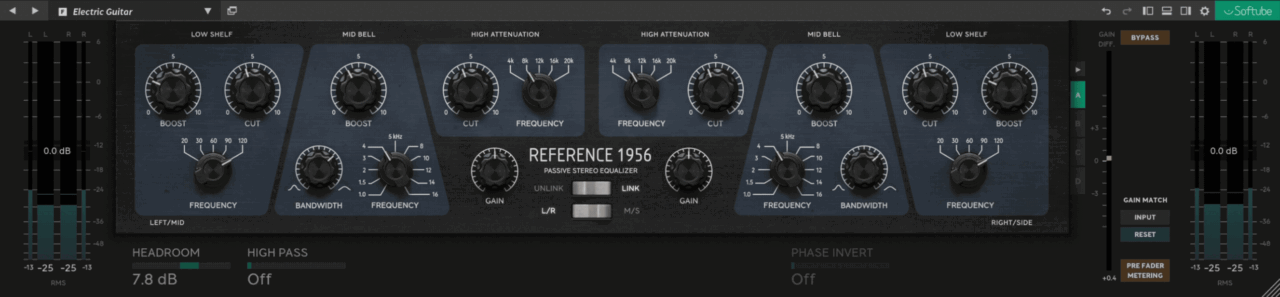
- Broad Passive Shaping
Reference 1956 takes a more traditional broad-stroke approach with its minimum-phase passive design. It is designed to move the overall tonal balance of a track or mix rather than target narrow resonances, which makes it particularly appealing for mix bus and mastering work.
What I like about that approach is that you can make surprisingly meaningful changes without feeling like you are dissecting the mix. A small low-end or high-frequency adjustment can shift the overall posture while keeping the arrangement intact.
- Mid/Side and Independent Gain
The 1956 becomes considerably more flexible once you bring in its Mid/Side processing and independent channel gain controls. This lets you treat the center and sides separately, which can be useful when the low end feels too dominant in the middle or the stereo information needs a different tonal balance.
For me, this is one of the biggest reasons to choose the 1956 over the 1998. It gives the vintage-style EQ a more modern role without turning the interface into a complicated mastering processor.
- Headroom Control
Softube also added a dedicated Headroom control to Reference 1956. Rather than relying only on EQ gain for additional weight, Headroom can emphasize more of the transformer-style low-end character and change the perceived density of the bottom end.
That gives the 1956 a little more personality than its otherwise smoother character might suggest. I would still treat it more as a broad tonal tool than a saturation effect, but the extra control is useful when a mix needs more foundation.
Softube Equalizers Integration
Both plugins can also be loaded into the Vintage slot of Softube’s Equalizers plugin. This adds modern tools such as curve visualization, additional EQ bands, frequency analysis, and dynamic EQ around the modeled circuit, effectively combining corrective and character processing in one workflow.
I like that concept because these Reference EQs make the most sense after obvious problems have already been handled. Keeping the surgical and tonal stages together can make the overall workflow faster without changing what each processor is fundamentally good at.
Interface and Workflow
Both Reference EQs keep the workflow deliberately traditional, which I think suits this kind of processing. You are not staring at a large analyzer or dozens of bands, so the focus stays on broad tonal decisions rather than chasing tiny frequency problems.
With Reference 1998, I found the workflow more instinctive and color-driven. The four parallel bands encourage you to make small moves, listen to how the tube stage changes the density, and then decide whether the source actually feels better rather than simply brighter or louder.
Reference 1956 feels slightly more methodical because of its Mid/Side controls, independent gain, and Headroom options. I would usually start with the main EQ first, then move into the extended controls only if the center, sides, or low-end weight still needed attention.
One thing I like about both is that they discourage overthinking. These are not plugins where I would spend five minutes sweeping for a resonance; I would make a broad move, level-match it, and decide quickly whether the mix feels more balanced or more alive.
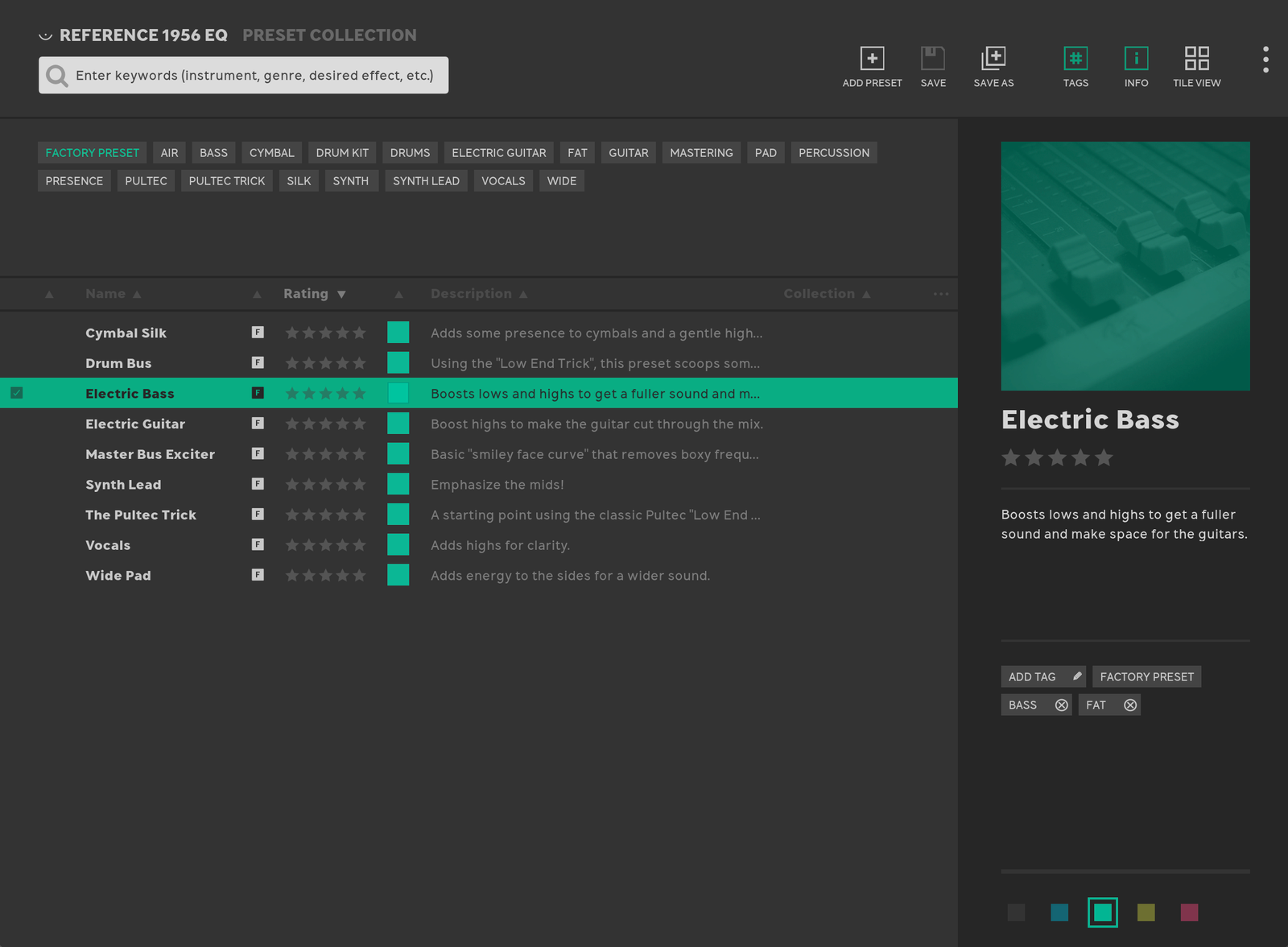
The integration with Softube Equalizers also gives the workflow a useful second layer. Loading either model into the Vintage slot lets you combine its character with more precise modern EQ and dynamic processing, which is probably how I would use them most often in a serious mix or mastering chain.
For me, the best workflow is to handle obvious corrective work first, then use one of the Reference EQs for the final tonal direction. That separation makes it much easier to hear whether the plugin is genuinely adding character or simply masking a problem.
First Impressions and Sound
The biggest difference I hear between these two is what they do to the overall character of a mix. Reference 1956 feels broader, smoother, and more structural, while Reference 1998 gives me noticeably more density, warmth, and saturation. I do not really see one as better than the other because I reach for them in completely different situations.
I usually reach for Reference 1956 when the mix already sounds good but the overall balance still feels slightly off. On a mix bus or pre-master, a small low-end move can give the track more foundation, while a gentle high-frequency adjustment can open things up without making the processing feel obvious. Its broad passive curves are exactly what I want when I am trying to reshape the mix rather than color it heavily.

The Mid/Side section also makes 1956 the more useful of the two when I am dealing with stereo balance. If the kick, bass, and vocal feel too dominant in the center, or the sides need a little more openness, I can make those changes without disturbing the whole image. I tend to use the Headroom control sparingly as well, mainly when I want a touch more transformer-style low-end weight without simply adding more EQ gain.
Reference 1998 is almost the opposite for me. I reach for it when a drum bus, synth bus, or full mix sounds technically balanced but still feels a little cold or lifeless. The combination of four parallel passive bands and the tube stage adds a sense of thickness and forward movement that I can hear even with relatively small EQ adjustments.
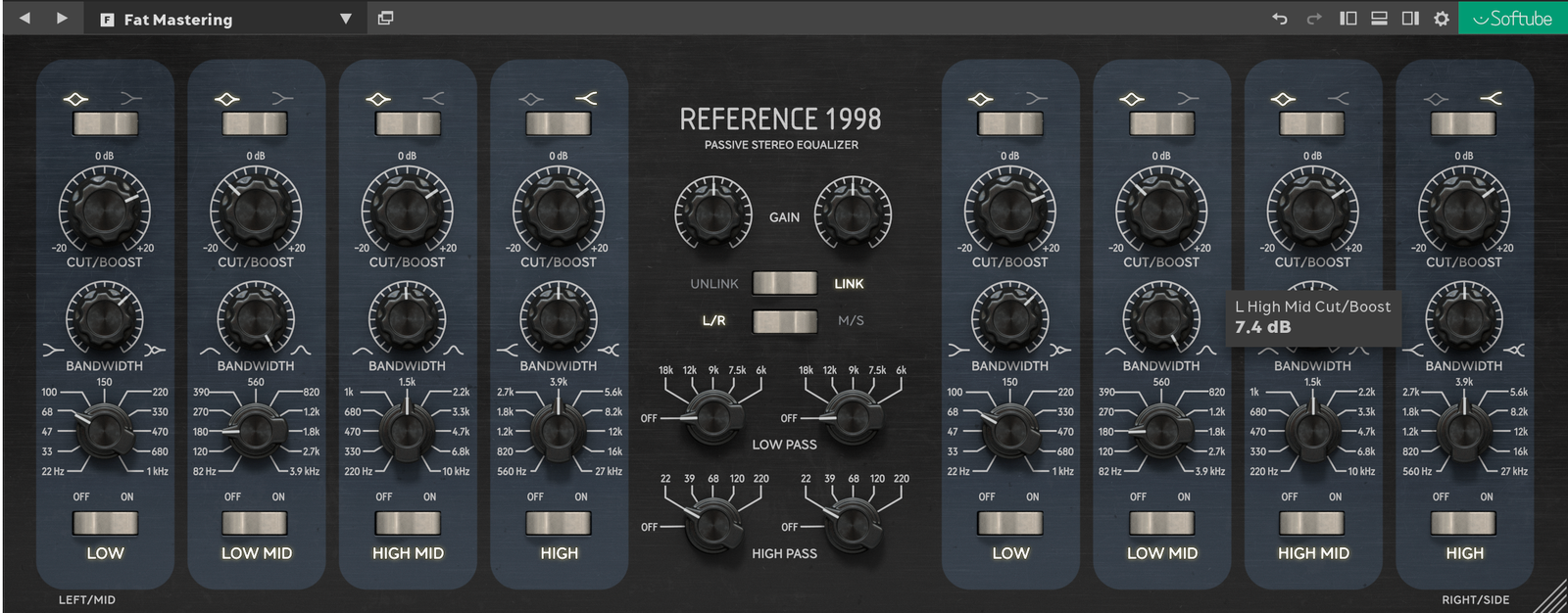
On drums, I like 1998 for adding more weight and body without immediately reaching for a separate saturation plugin. On synths, it can help a polished sound sit more confidently in a dense chorus, while on the mix bus I tend to use it much more cautiously. My tip is to start by shaping either the low end or the top end, level-match the bypass signal, and only then decide whether the extra color is genuinely helping.
If I had to simplify the choice, 1956 is the one I use for balance, while 1998 is the one I use for character. I trust 1956 more when I want subtle broad changes across an entire mix, whereas 1998 is more exciting when I deliberately want warmth, density, and attitude. The trade-off is that 1998 can become too heavy on an already saturated production, while 1956 may feel too restrained if I am looking for an obvious tonal transformation.
Compatibility
| Specification | Details |
| Plugin Formats | VST, VST3, AU, AAX |
| Operating Systems | Windows and macOS |
| Architecture | 64-bit hosts |
| Console 1 | Console 1 Ready |
| Softube Equalizers Integration | Both can be loaded into the Vintage slot of Softube Equalizers |
| Subscription Availability | Reference 1998: Flow Mastering & Complete Suite; Reference 1956: Flow Mixing & Complete Suite |
Both plugins should slot easily into a modern mixing or mastering setup, with support for the major native plugin formats. I also like that Console 1 integration is included, especially for this style of broad, tactile EQ work where I prefer turning controls rather than relying on a spectrum display.
The deeper integration with Softube Equalizers is probably the most useful workflow addition. It lets me combine the vintage character of either Reference model with modern corrective EQ, dynamic processing, and curve visualization without jumping between separate plugins.
Pros
- Reference 1956: broad, musical tone shaping
- Mid/Side, Headroom, independent gain
- Reference 1998: warmth, density, saturation
- Great on drums, synths, mix buses, masters
- Console 1 ready
- Softube Equalizers integration
Cons
- Not for surgical correction
- 1998 can get too heavy or saturated
- 1956 may feel too subtle for strong color
- Large boosts can create loudness bias
- Still needs a precise EQ for cleanup
Last Words
Reference 1956 and Reference 1998 may belong to the same family, but I would not use them for the same job. The 1956 is the one I prefer when I want broad tonal balance, stereo control, and subtle shaping, while the 1998 makes more sense when a mix needs warmth, density, and stronger character.
For mix bus and mastering work, I find Reference 1956 easier to trust when the goal is refinement rather than obvious coloration. The added Mid/Side and Headroom controls give it enough flexibility to feel modern without losing that wide, passive-EQ character.
Reference 1998 is the more exciting choice when a drum bus, synth bus, or full mix feels technically balanced but still lacks personality. Its parallel bands and tube stage can add weight and forwardness very quickly, although I would use smaller moves on already dense material.
If I had to choose only one, I would base that decision entirely on the role I need it to fill: 1956 for balance, 1998 for color. Together, they cover two very different sides of broad-stroke EQ processing without trying to replace a precise corrective equalizer!
More info and price:

Berk is a multi-instrumentalist musician from Istanbul, Turkey. He has been playing guitar, handpan, and percussion for over ten years, developing a sound that blends melodic sensitivity with rhythmic depth.
He began his musical journey as a teenager, learning guitar and performing in several bands. In 2016, he discovered the handpan, an instrument that immediately resonated with him on a deeper level and gradually became central to his artistic identity.
Since then, he has performed in streets, festivals, bars, and concert venues across different countries, connecting with diverse audiences through both intimate and large-scale performances.
Alongside his live work, Berk is deeply involved in studio production. He works from his home studio, where he composes, records, and produces his own music. His studio serves as a creative space for layering handpan, guitar, and percussion with modern production techniques, allowing him to shape fully realized, atmospheric compositions from start to finish.
His music explores a wide range of genres and textures, combining organic acoustic instruments with detailed studio production to create immersive and expressive soundscapes.