
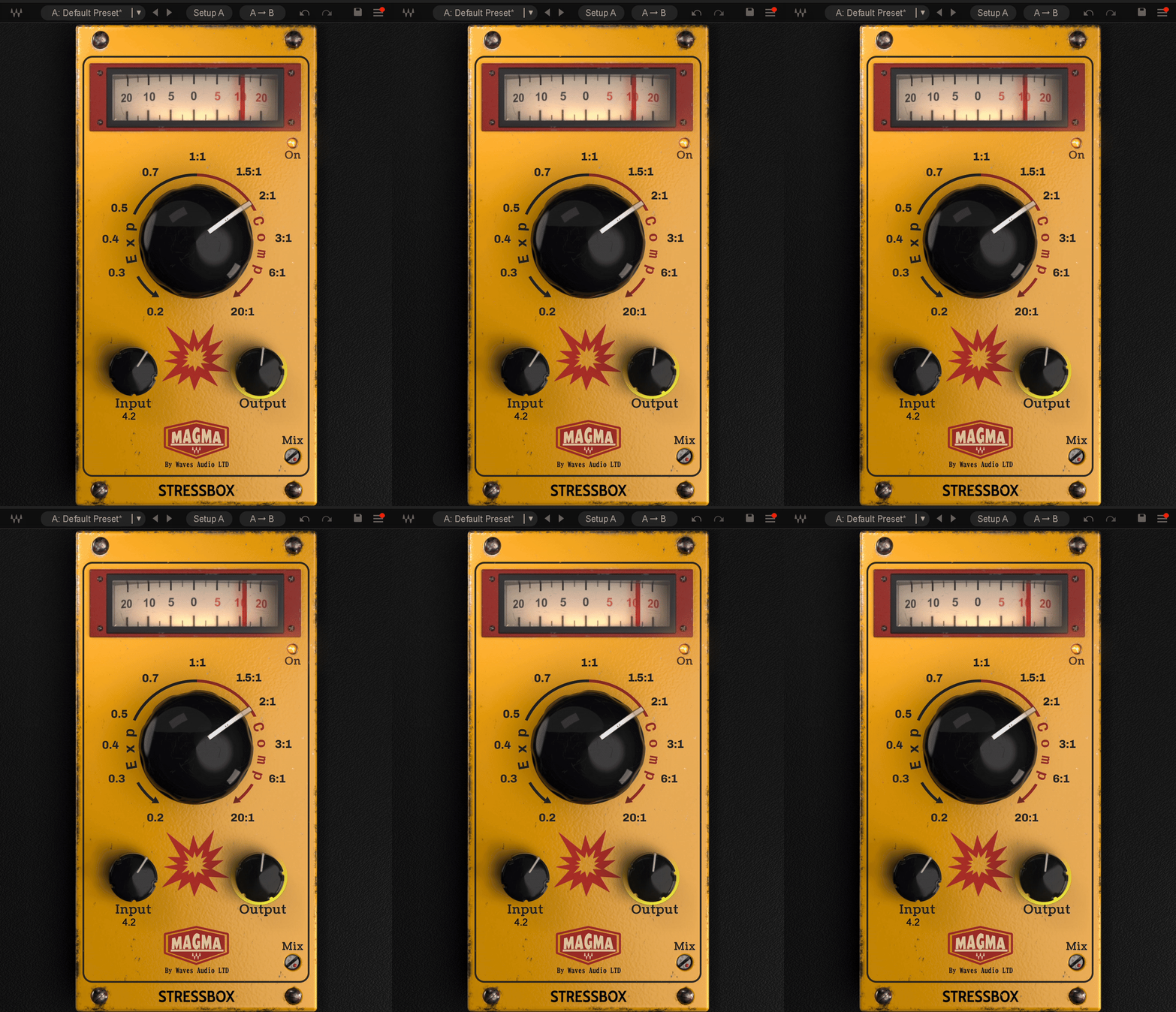
The new 2026 plugin from Waves, Magma StressBox, is a one-knob dynamics shaper built to inject real movement, drama, and attitude into any source.
The moment I tried this new VST, I knew exactly what it was meant for: fixing those flat, lifeless tracks that refuse to feel right no matter how much EQ or compression you throw at them.
Waves Magma StressBox is a one-knob attitude dial; turn right and everything slams forward with punch and urgency, turn left and the sound pulls back into this tight, cinematic intimacy. It’s the kind of plugin you try “just for a second,” and suddenly you’re automating it across verses and choruses because the movement feels so natural.
It is a pretty straightforward yet effective plugin, so let’s get into more detail!
| Feature | Description |
| One-Knob Dynamics Control | Turn right for punchy compression, left for transient-focused expansion—one continuous curve between cinematic soft and explosive hard. |
| Real-Time Tension Shaping | Instantly adds movement, contrast, and emotional lift to otherwise flat or static sources. |
| Multi-Character Ratio Curve | Smoothly transitions through ratios from 0.2 expansion → 1:1 → 20:1 compression, each with its own feel. |
| Input / Output Gain | Simple gain staging that lets you push into more grit or keep things clean and controlled. |
| Mix Knob | Easy parallel processing for subtle glue or dramatic impact. |
| Vintage Magma Aesthetic | Classic hardware-style interface with a clear gain-reduction meter and dead-simple layout. |
| Automation-Ready | Designed to ride throughout a track for verse-to-chorus lifts, drops, and energy shifts. |
| CPU-Light Design | Runs effortlessly across multiple tracks, even in large sessions. |

Key Features
- One-Knob Dynamics Control
The heart of Magma StressBox is that single, oversized knob, and honestly, it changes the workflow more than anything else. Instead of juggling thresholds, ratios, knees, and envelopes, you just turn the knob and feel the sound shift.
As you sweep from expansion into compression, the ratio curve evolves smoothly underneath, which means every tiny movement gives you a different emotional contour. It’s the kind of control that makes you want to automate it across the whole track, turning tension into something you can literally “play” in real time.
- Instant Movement for Section Lifts & Drops
What hit me immediately is how quickly Magma StressBox adds life to a track that’s just… sitting there. A small move left tightens transients and pulls the room back; nudging right brings the space forward and adds urgency.
It makes verse-to-chorus transitions feel intentional without needing two plugins and a macro chain. The speed of it genuinely changes how I approach arrangement energy.
- Fast Gain Staging & Parallel Blend
The Input, Output, and Mix controls look basic, but they keep things flowing. You can push the input for more bite, trim the output to keep levels sane, and use the Mix knob to dial in anything from subtle lift to aggressive smash.
- Readable, Musical Metering
The big, vintage-style GR meter ends up being surprisingly helpful. You can see exactly how much the dynamics are opening or clamping down, which makes it easy to repeat settings or push extremes intentionally. It’s one of those little usability touches that makes the plugin feel like a physical tool rather than another digital block on the screen.
Interface & Workflow
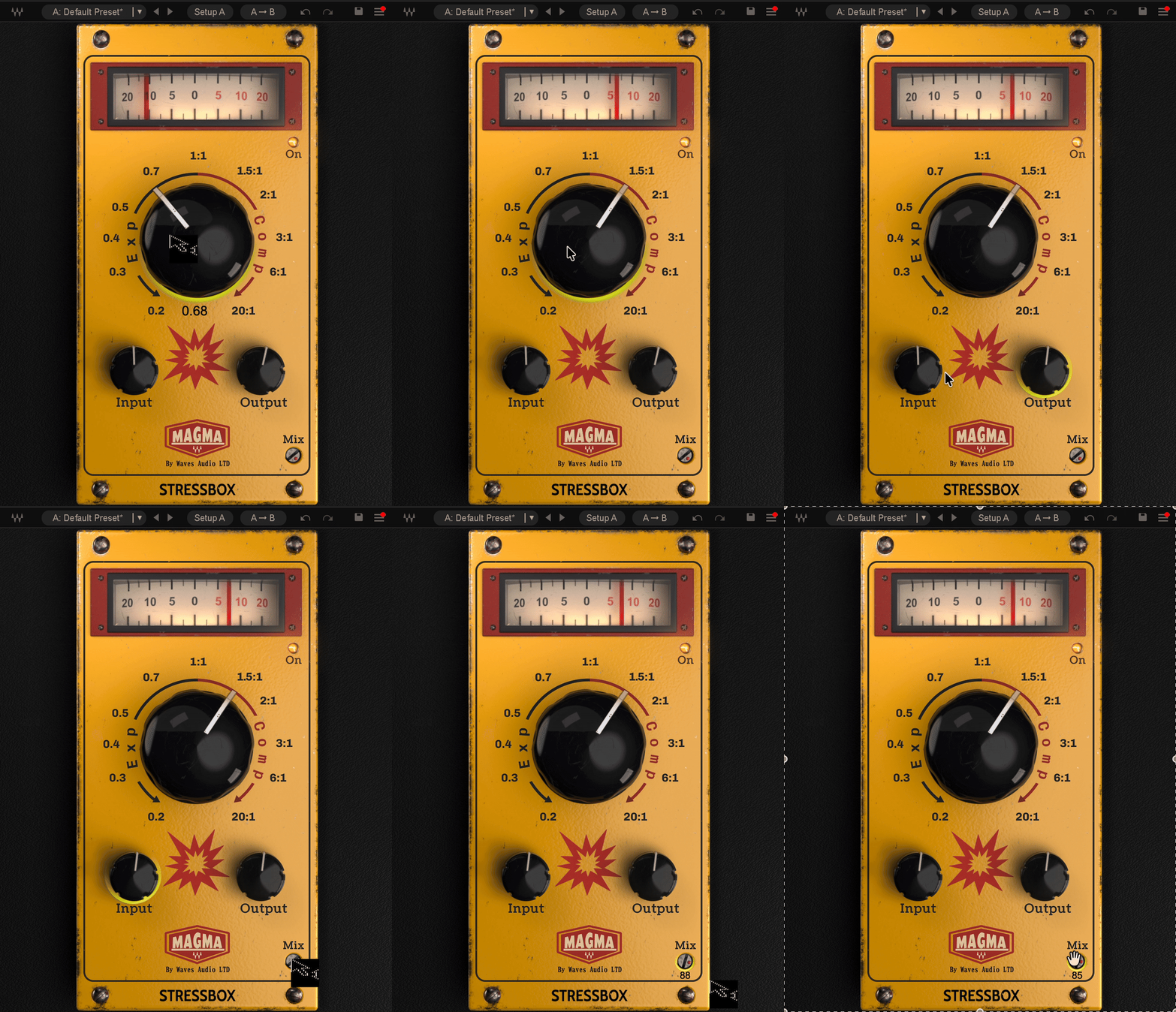
My first impression of Magma StressBox is that it feels pretty clean and intentional. Waves didn’t clutter this thing with endless controls or hidden menus, as it’s built around that massive central knob, the GR meter, and just a few essentials. And honestly, that simplicity is what makes it so fast to work with.
I liked the realistic yellow vintage-style stompbox as well as the red decorations on it. The knobs are big and pleasing but the Mix knob at the corner could be bigger for easier control.
Everything you need is right in front of you. The knob responds smoothly, and every small move gives audible feedback, so you quickly learn how the plugin “behaves.” I never feel like I’m guessing or hunting for a parameter; I just turn it until the track breathes the way I want.
The GR meter is big and musical, too, almost like watching a hardware needle. It instantly shows whether you’re tightening the sound or smashing it forward, which makes dialing in dynamics almost instinctive.
Workflow-wise, Magma StressBox is built for speed. Insert it, turn the knob, adjust gain, done. If you want personality, push the input. If you want subtlety, use the mix knob. And because the whole engine is wrapped around one macro movement, automating the plugin becomes incredibly expressive.
A single automation lane can shift the tone of a full section: tighten the verses, explode into the chorus, pull back again for the breakdown. It’s the kind of workflow that makes arrangement choices feel physical.
If you value flow over fiddling, the interface hits the sweet spot. It’s simple, but not simplistic. Direct, but still expressive. Exactly the kind of tool you want on a fast-moving mix day.
Impressions & Sound
What really surprised me with Magma StressBox is how expressive the sound is, even though the interface is almost deceptively simple. The plugin has this very “alive” quality, since each turn of the knob shifts the tone, space, and movement in a way that feels musical rather than mechanical.
When you turn left, the expansion side gives you this intimate, cinematic tightness. Transients snap forward, room tone pulls back, and the whole source feels leaner and more focused.
It’s the kind of sound that makes guitars feel closer to the ear, vocals feel more exposed, and drums feel tighter without losing their identity. It’s not clinical; it actually reduces clutter while adding this subtle emotional tension.
Turning right flips the vibe completely. The compression side has that punchy, forward momentum that makes a source jump out of the speakers. There’s weight, urgency, and this almost “room-bloom” quality where the ambience gets more present. It never felt harsh to me, even at heavy settings; the sound stays rounded and deliberate, more like a character compressor than a clean utility tool.
I also enjoyed how naturally Magma StressBox transitions between these states. You’re not jumping from one processing style to another; you’re sliding through a whole spectrum of dynamic personalities. That’s what makes it so effective for automation and musical movement, as you can push a sound from tight restraint to explosive impact in a single sweep, and it feels intentional every step of the way.
If there’s one con, it’s that Magma StressBox definitely has a sound of its own. It’s not a transparent utility compressor, and sometimes that baked-in character becomes noticeable if you’re aiming for clean, invisible gain control. It’s fantastic for vibe and movement, but less ideal if you need surgical precision.
Overall, the sound is bold when you want it to be, subtle when you keep it tame, and always usable. It’s less about pristine transparency and more about enhancing the emotional arc of a track, and Magma StressBox leans into that identity beautifully.
Compatibility & Performance
In day-to-day use, Magma StressBox is pretty light on the CPU, much lighter than you’d expect from a plugin that’s constantly reshaping dynamics in real time.
I can drop it on multiple tracks without worrying about spikes or sluggish sessions, and automation runs smoothly with no zipper noise or lag. It behaves like a true “set it and go” tool: instant response, no noticeable latency, and stable even in larger projects where every percent of CPU matters.
| Category | Details |
| CPU Usage | Low; safe to use on dozens of tracks |
| Latency | Practically zero in real-time use; ideal for tracking and automation |
| Automation Response | Smooth, musical, no stepping or artifacts |
| Session Impact | Lightweight enough for large mixes and heavy plugin chains |
| Stability | Consistent across long sessions; no spikes or dropouts |
Last Words
Magma StressBox is one of those “good-to-have-in-the-arsenal” plugins. It takes something as complex as shaping tension and movement and turns it into a single, expressive control you can actually play.
Whether you’re tightening a verse, exploding into a chorus, or just trying to give a dull track some emotional lift, Magma StressBox makes the process fast, musical, and weirdly addictive.
It’s not pretending to be a transparent mastering compressor or a vintage clone, cause its whole strength is vibe, feel, and energy. And for that purpose, it hits way harder than its simple interface suggests!

Berk is a multi-instrumentalist musician from Istanbul, Turkey. He has been playing guitar, handpan, and percussion for over ten years, developing a sound that blends melodic sensitivity with rhythmic depth.
He began his musical journey as a teenager, learning guitar and performing in several bands. In 2016, he discovered the handpan, an instrument that immediately resonated with him on a deeper level and gradually became central to his artistic identity.
Since then, he has performed in streets, festivals, bars, and concert venues across different countries, connecting with diverse audiences through both intimate and large-scale performances.
Alongside his live work, Berk is deeply involved in studio production. He works from his home studio, where he composes, records, and produces his own music. His studio serves as a creative space for layering handpan, guitar, and percussion with modern production techniques, allowing him to shape fully realized, atmospheric compositions from start to finish.
His music explores a wide range of genres and textures, combining organic acoustic instruments with detailed studio production to create immersive and expressive soundscapes.