
Some instruments never lose their place in music, and the electric piano is one of them. From the unmistakable sparkle of a Rhodes to the gritty bark of a Wurlitzer, these keyboards have shaped everything from jazz and soul to rock, pop, and modern R&B.
What I love most about electric pianos is how expressive they feel. A light touch produces warm, mellow tones, while playing harder unlocks the bite and character that made the originals so iconic. Thankfully, today’s plugins capture that personality better than ever, whether through meticulous sampling or advanced physical modeling.
In this guide, I’ve rounded up the 10 best electric piano plugins available today, from faithful vintage recreations to versatile modern instruments that deserve a place in any producer’s toolkit.
Rhodes V8
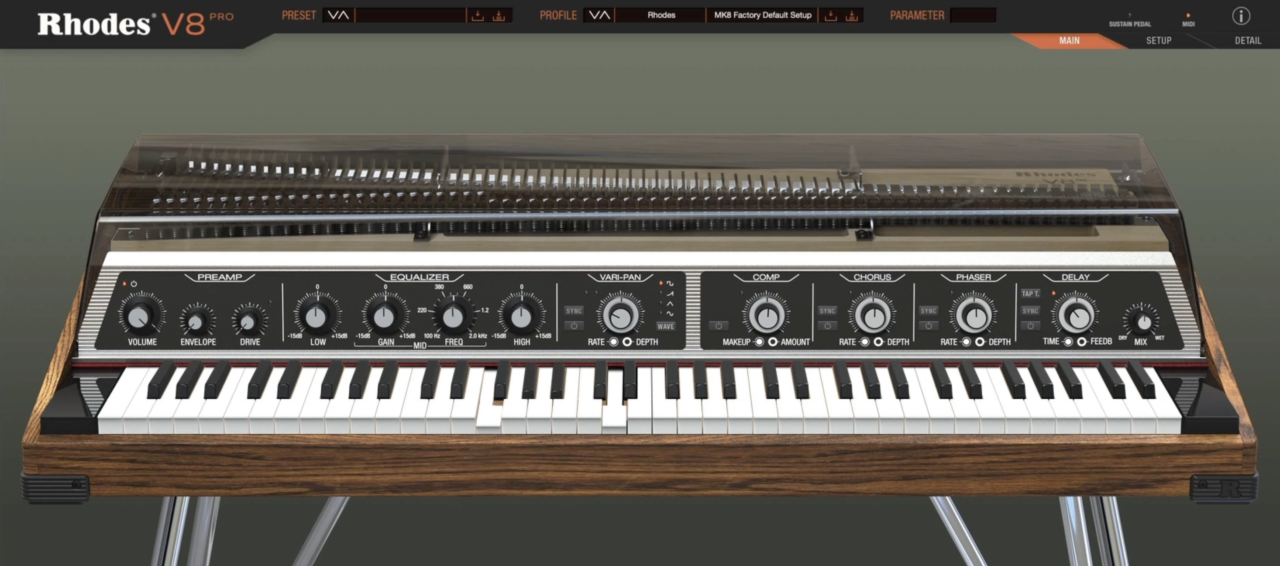
The first time I loaded Rhodes V8, I expected another excellent Rhodes library. What surprised me wasn’t how good it sounded on a few sustained chords, but how convincing it remained after twenty or thirty minutes of actually playing it.
I found myself improvising more than testing because the instrument kept responding the way I expected it to. That’s something I can’t say about every Rhodes plugin I’ve used.
Being the official Rhodes virtual instrument certainly helps its credibility, but what stood out during my testing was the consistency. Whether I was playing soft jazz voicings, funk rhythms, or more expressive neo-soul parts, the dynamics never felt artificial or exaggerated. It simply behaved like a well-maintained electric piano.
- 127 Velocity Layers
I usually don’t pay much attention to velocity layer counts, but Rhodes V8 is one of the few instruments where the numbers actually translate into a better playing experience.
With up to 127 velocity layers per key, transitions between soft and hard playing feel remarkably smooth. Even repeated notes avoid the obvious sample repetition that I occasionally hear in other electric piano libraries.
- MK8 Preamp & Effects
I spent much more time with the built-in processing than I expected. The modeled MK8 preamp gives you Drive, Low and High EQ, plus the signature Vari-Pan effect, and I found all of them genuinely useful rather than included for the sake of having more controls.
The phaser and chorus especially captured the classic Rhodes movement I normally build using separate plugins.
- Mechanical Detail
One thing I kept noticing was everything happening around the notes rather than just the notes themselves.
Sympathetic resonance, release noises, and subtle mechanical sounds don’t jump out at you individually, but together they make the instrument feel much less static during longer performances. After switching back to simpler Rhodes libraries, I immediately missed those details.
- Per-Note Editing
Most users will probably live happily inside the presets, but I appreciated how much control Rhodes gives you if you want to dig deeper. Individual note adjustments, microphone options, amplifier settings, and detailed voicing controls make it possible to shape the instrument in ways that go well beyond basic EQ or effects.
I didn’t need those features for every session, but I liked knowing they were there when I wanted to fine-tune the instrument.
Available in VST3, AU, AAX, and Standalone formats.
Lounge Lizard EP-5
I don’t usually think of Lounge Lizard EP-5 as “my Rhodes plugin” or “my Wurlitzer plugin.” It’s the one I reach for when I haven’t decided what the song needs yet.
Sometimes I start with a mellow Rhodes sound and end up somewhere completely different twenty minutes later without ever changing instruments. That flexibility is what keeps bringing me back.
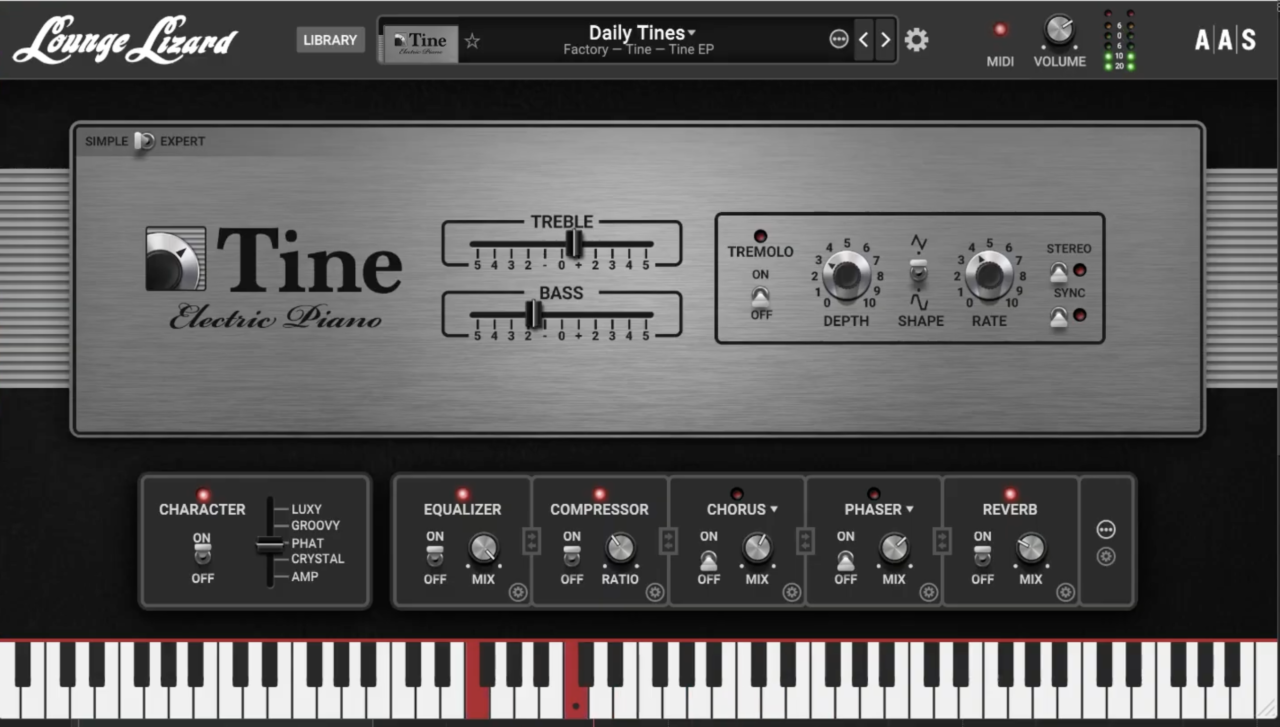
Unlike many electric piano plugins that try to cover everything with a single engine, EP-5 uses separate physical models for tine and reed instruments. During testing, that decision made a noticeable difference.
The Rhodes models had their own identity, while the Wurlitzer patches responded with the bark and midrange bite I’d expect from a dedicated instrument instead of feeling like slight variations of the same sound.
- Dedicated Rhodes & Wurlitzer Engines
The biggest improvement in EP-5 is the dual-engine architecture. Rhodes and Wurlitzer sounds aren’t created by stretching one model in different directions, they’re generated by separate physical simulations. I found this especially noticeable when switching between the two during a session because neither felt compromised.
- Physical Modeling
Since EP-5 relies on physical modeling instead of samples, I never found myself thinking about velocity layers or sample transitions.
The harder I played, the more naturally the sound opened up, and softer passages retained warmth without suddenly dropping into another recorded layer. It felt responsive in a way that’s easy to appreciate when you’re improvising rather than programming MIDI.
- Simple & Expert Modes
I spent most of my time in Simple Mode, which made it easy to dial in sounds without getting distracted. When I wanted to explore further, Expert Mode exposed the underlying mechanics, including pickups, hammers, dampers, and other physical parameters.
- Beyond Vintage Electric Pianos
Although EP-5 is excellent at traditional Rhodes and Wurlitzer sounds, I ended up enjoying it just as much for less conventional textures.
The combination of over 150 presets, physical modeling, and a comprehensive effects section made it surprisingly easy to move into ambient, cinematic, or experimental territory. That versatility is probably what impressed me most during testing, not because every sound was better, but because I rarely felt limited by the instrument.
Available in VST2, VST3, AU, AAX, and Standalone formats.
UAD Electra 88
Some plugins immediately make me start tweaking settings before I’ve even played a full chord. Electra 88 had the opposite effect.
I spent most of my first session simply playing because it already sounded remarkably close to a finished record. Not necessarily because the Rhodes itself is dramatically better than every competitor, but because Universal Audio clearly designed the entire plugin around the complete recording chain rather than just the instrument.
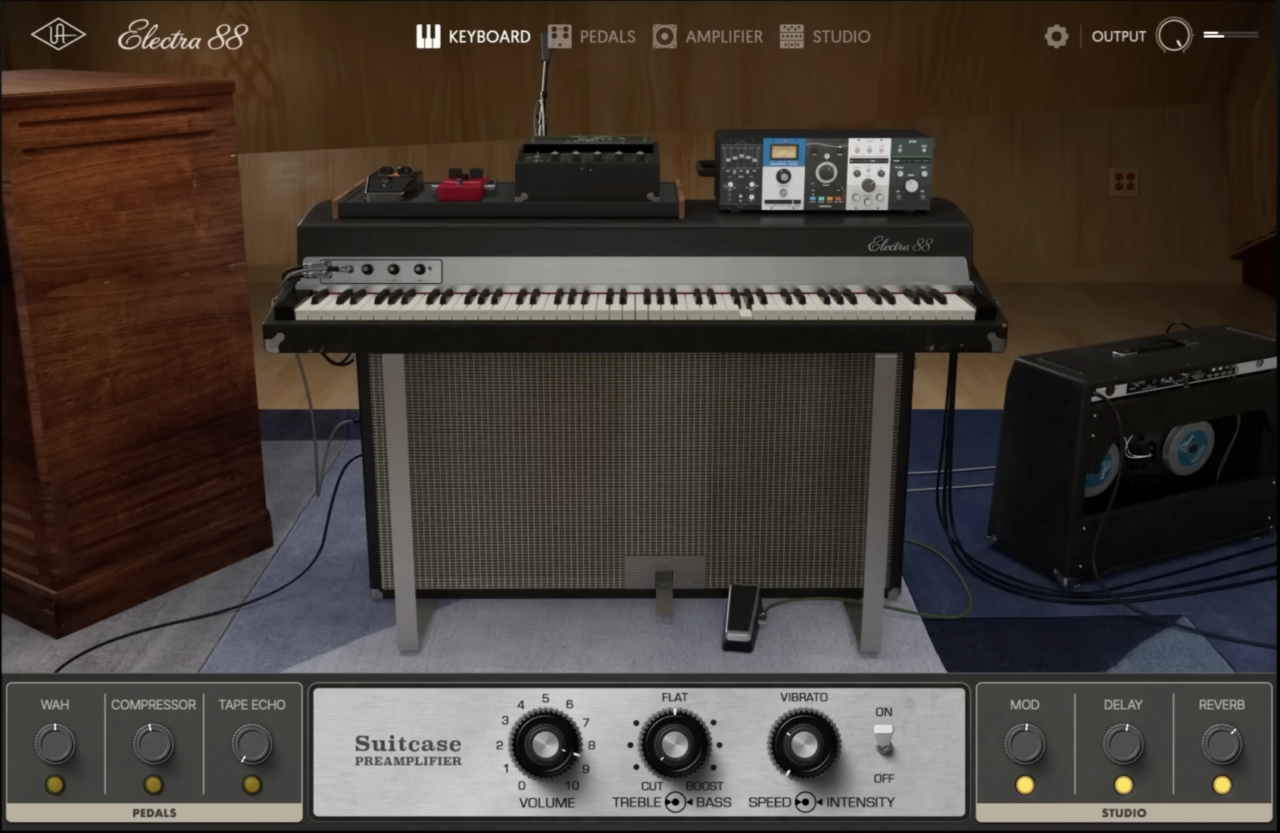
The sampled 1974 Rhodes Suitcase Mark I sounds excellent on its own, but what kept me coming back was how quickly I could arrive at a mix-ready sound. Instead of opening an amp sim, compressor, modulation plugin and delay one after another, most of what I wanted was already inside Electra 88.
- 1974 Rhodes Suitcase
The core Rhodes is expressive without feeling overly polished. I noticed the dynamic response more than anything else. Gentle playing stays warm and rounded, while digging into the keyboard naturally introduces the bite I’d expect from a real Suitcase Rhodes.
During longer playing sessions it continued to feel responsive instead of exposing obvious sample transitions.
- Complete Studio Chain
This is easily the feature I appreciated the most. Electra 88 doesn’t stop at recreating the instrument; it recreates the way I’d normally record one.
Between the pedals, amplifier models, speaker cabinets, EQ, 1176-style compressor, delay and modulation effects, I rarely felt the need to leave the plugin. That made writing sessions noticeably faster because I spent more time performing than assembling processing chains.
- Amp & Speaker Options
I found myself switching between the different amplification options depending on the arrangement rather than treating them as novelty presets. The classic Suitcase configuration remained my favourite for wider stereo parts, while the tube combo introduced enough grit for indie and rock productions.
The rotary option also worked surprisingly well whenever I wanted the keyboard to become more of a featured instrument.
- Performance Controls
One detail I didn’t expect to use very often was the tuning section. Being able to move between New, Vintage and Worn tuning conditions subtly changes the personality of the instrument without feeling artificial.
It’s the kind of feature that’s easy to ignore until you’re trying to match the feel of an older recording, and then it suddenly becomes incredibly useful.
Available in VST3, AU, and AAX formats.
Arturia Stage-73 V2
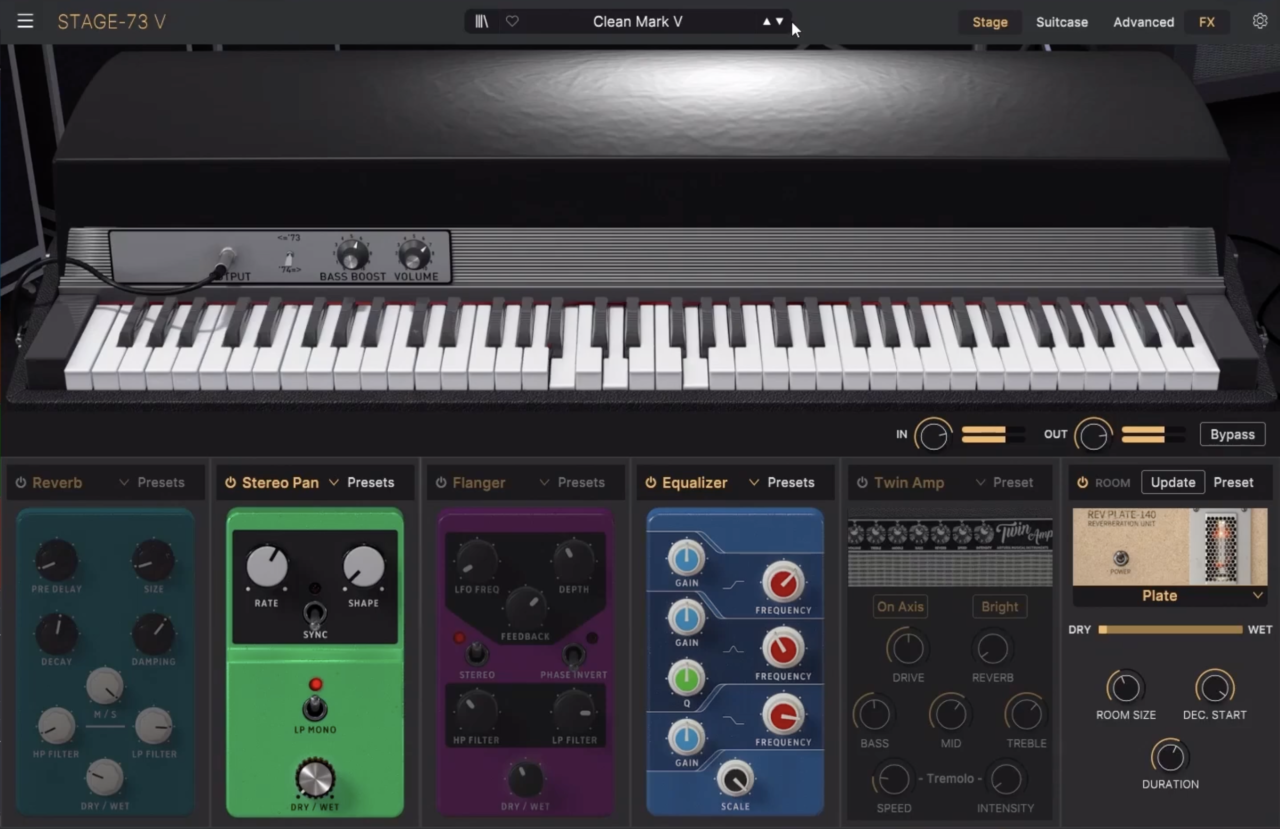
I’ve always found physically modelled electric pianos interesting because they ask a different question than sampled instruments. Instead of asking, “How accurately can we record a Rhodes?” they ask, “Can we recreate how a Rhodes behaves?” Stage-73 V2 is one of the few that genuinely convinced me the second approach has real advantages.
The first thing I noticed wasn’t the sound, but the responsiveness. Fast runs, repeated notes and subtle velocity changes all felt continuous rather than stepping between recorded layers. It’s a different experience from a large sample library, and after a while I stopped thinking about the technology altogether.
- Physical Modeling
This is the heart of Stage-73 V2. Because everything is generated in real time, I found the instrument reacting naturally to changes in touch, especially during more expressive performances.
I never caught myself hearing the same sample repeating or wondering where one velocity layer ended and another began. It simply felt consistent under my fingers.
- Stage & Suitcase Personalities
Rather than offering dozens of nearly identical presets, Arturia focuses on two classic Rhodes configurations.
I ended up using both more than expected. The Stage model has a more direct, focused sound, while the Suitcase version introduces the familiar stereo vibrato and preamp character that instantly evokes countless vintage recordings.
- Mechanical Controls
This is probably the deepest editing section in the plugin. Parameters like pickup distance, tine angle, tone bar response, hammer noise and damper behaviour actually reshape how the instrument behaves instead of simply changing EQ or effects.
I didn’t need these controls every day, but when I wanted to push the Rhodes towards a particular vintage character, they were genuinely useful rather than feeling like unnecessary complexity.
- Built-In Effects
I appreciated that Arturia resisted the temptation to overload the effects section. The included phaser, chorus, delay, amp simulations and rotary speaker cover the classic Rhodes sounds I’d realistically reach for during a session.
Most of my testing involved only small adjustments to the built-in chain rather than replacing everything with third-party plugins, which is usually a good sign that the effects are doing their job.
Available in VST, VST3, AU, AAX, and NKS formats.
AIR Velvet 2
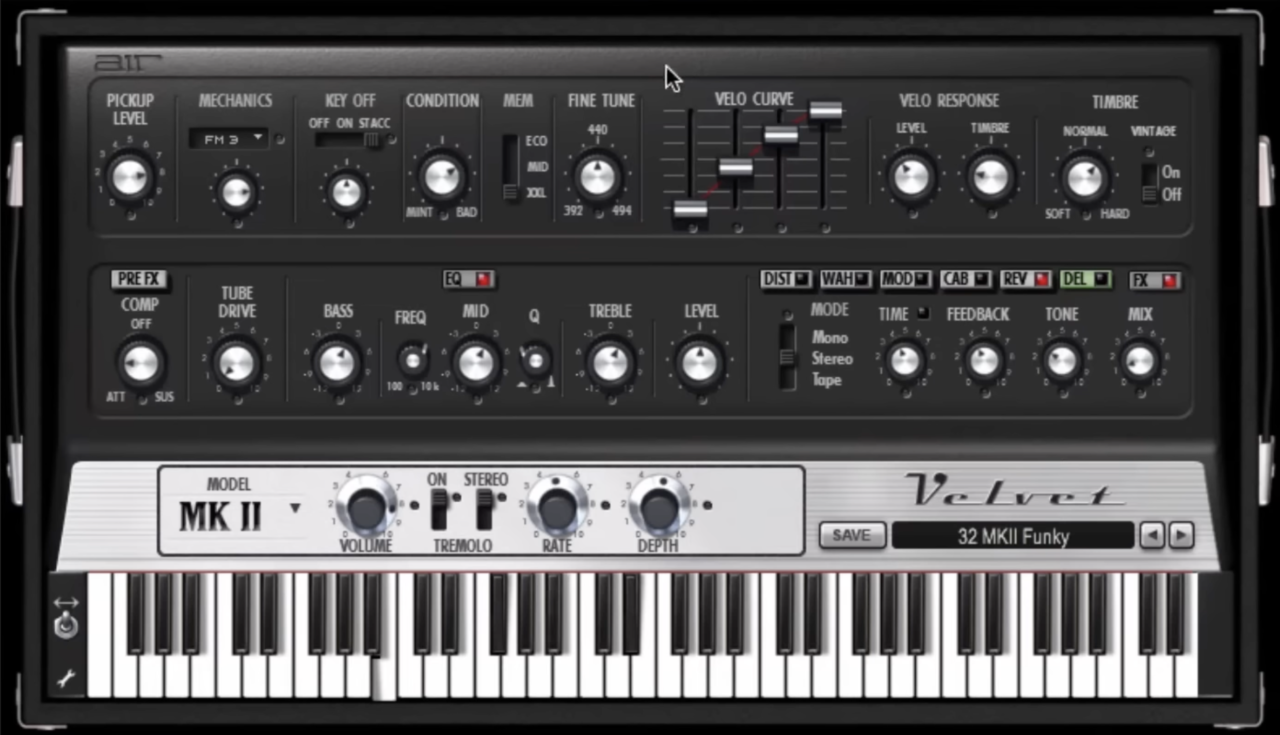
I have a soft spot for plugins that don’t try to do everything, they just try to cover the things musicians actually need. That’s exactly how I felt about AIR Velvet 2. Instead of chasing every obscure electric keyboard ever built, it focuses on the five classic electric pianos that appear on countless records. During testing, I found myself bouncing between Rhodes, Wurlitzer, and Pianet sounds without ever feeling like I was compromising by staying inside one plugin.
It isn’t the deepest recreation of every individual instrument on this list, but that’s also missing the point. Velvet 2 is about convenience without sacrificing musicality, and I think it succeeds. If I were opening a songwriting session and didn’t know whether the track wanted a Rhodes or a Wurli yet, this is probably where I’d start.
- Five Classic Electric Pianos
Having Rhodes Suitcase, Rhodes Mk I, Rhodes Mk II, Wurlitzer 200A, and Hohner Pianet-T available in one interface ended up being more useful than I expected. Each model has its own personality rather than feeling like slight EQ variations. I especially liked moving between the barkier Mk I Rhodes and the cleaner Mk II depending on how busy the arrangement became.
- Dynamic Modeling
The playability surprised me. Velvet 2 uses a dynamic modeling engine rather than simply replaying static samples, and I found it responded naturally to changes in velocity. More importantly, it lets you tailor the velocity response to your MIDI controller. A few minutes spent adjusting the velocity curve made the instrument feel much more connected to my playing than leaving everything at the default settings.
- Built-In Channel Strip
One thing I appreciated throughout testing was how complete the plugin felt. The tube preamp, compressor, and three-band EQ aren’t there to inflate the feature list, they’re tools I actually used. Instead of loading separate inserts just to make the keyboard fit the mix, I could shape most of the tone before leaving the instrument.
- Mechanical Detail
I liked having control over pedal and key noises instead of having them permanently baked into the sound. On stripped-back arrangements, adding a little mechanical noise made the performances feel more natural, while denser productions benefited from dialing those details back. It’s a small feature, but one that gives you more flexibility than a fixed recording ever could.
- Classic Effects
Tremolo, phaser, chorus, flanger, tape delay, and overdrive are all exactly the kinds of effects I’d normally pair with an electric piano. Rather than sounding like generic modulation plugins, they complement the instrument well, and I found myself using them as part of the sound rather than treating them as afterthoughts.
Available in VST2, AU, and AAX formats.
Arturia Wurli V
Get more info and price on:
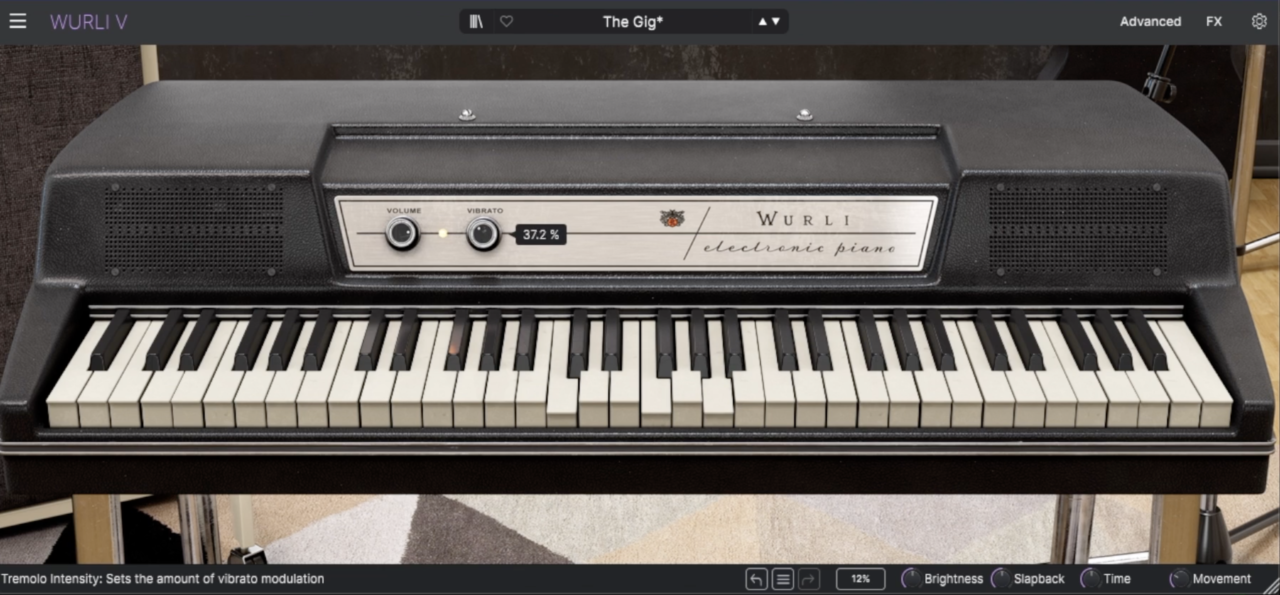
A good Wurlitzer should make you play differently. I noticed that almost immediately with Arturia Wurli V.
Instead of approaching it like a Rhodes with a different EQ curve, I naturally started playing shorter chords, digging into the keys harder, and leaving more space between phrases. That’s probably the biggest compliment I can give it, it encouraged the kind of performance I associate with a real Wurli.
Arturia’s Phi physical modeling engine recreates the reeds, pickups, preamp, and other mechanical components in real time, but during testing I wasn’t thinking about the technology. What I noticed was how naturally the instrument changed character depending on my touch. Gentle playing stayed warm and rounded, while harder attacks brought out that familiar growl without suddenly jumping into a different velocity layer.
- Physical Modeling
This is where Wurli V stands out. Because the sound is generated in real time, I found the transitions between soft and aggressive playing to be exceptionally smooth. It never felt like I was triggering different recordings, it felt like I was changing how the instrument itself responded.
- Multiple Wurlitzer Flavors
I appreciated that Arturia didn’t limit the plugin to a single Wurlitzer personality. Switching between the available instrument variations made it easy to move from smoother soul tones to the sharper, more aggressive sounds that work well in rock or funk. They’re subtle differences, but useful ones when you’re working across different styles.
- Mechanical Controls
The realism controls go beyond cosmetic details. Adjusting hammer noise, note-off behaviour, and pedal mechanics changed how connected the instrument felt during performance. I rarely pushed these settings to extremes, but I liked having them available when I wanted a cleaner or more vintage response.
- Amp & Effects
Most Wurlitzer recordings don’t stay completely dry, and Arturia clearly understands that. The built-in amp modeling, drive, modulation, and ambience effects made it easy to arrive at familiar Wurli sounds without immediately reaching for external plugins.
I especially found myself using a touch of drive and tremolo, which brought out the instrument’s personality without overwhelming it.
- Expressive Playability
One thing I learned fairly quickly is that Wurli V rewards spending a little time matching the velocity curve to your keyboard. Once I did that, the instrument became much more expressive, delivering soft, intimate chord work just as convincingly as the aggressive stabs that made the original Wurlitzer famous. That responsiveness ended up being my favourite part of the plugin.
Available in VST, VST3, AU, AAX, and NKS formats.
AudioThing Wurly
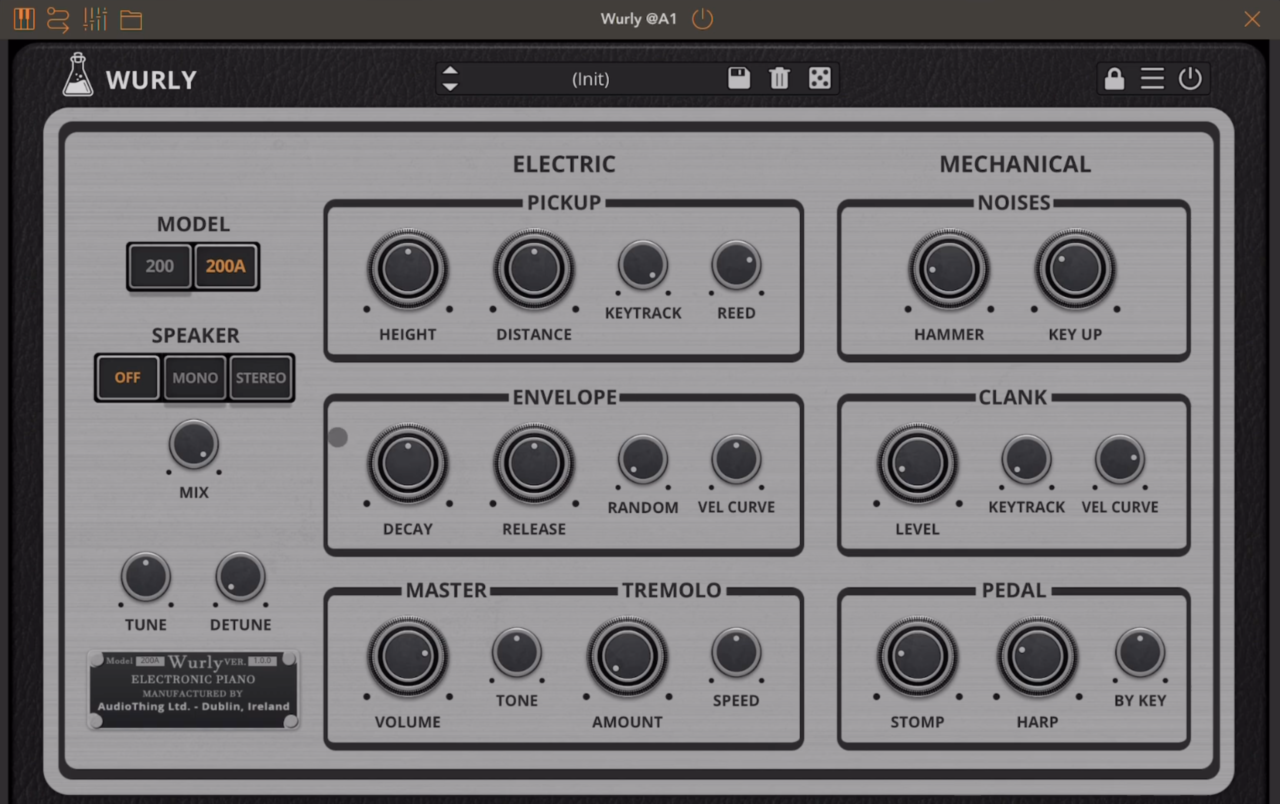
When I first loaded AudioThing Wurly, I expected another faithful Wurlitzer recreation. What I ended up appreciating most wasn’t just how convincing it sounded, but how much control it gave me over why it sounded that way. Instead of hiding everything behind presets, AudioThing exposes many of the physical characteristics that shape a real Wurlitzer, letting you tweak the instrument itself rather than simply adding effects afterward.
Its hybrid engine combines physical modeling with carefully sampled components, and I found that combination worked well. The notes respond smoothly under your fingers, while the sampled mechanical elements add just enough realism to keep the instrument from feeling overly clean or synthetic.
- Two Distinct Wurlitzer Models
Having both the Wurlitzer 200 and 200A available isn’t just a nice bonus, it genuinely changes how I approached different tracks. The 200 has a rougher, slightly grittier personality that worked beautifully for funk and vintage rock, while the 200A felt a little smoother and easier to tuck underneath vocals. Rather than relying on EQ to reshape the instrument, I often started by choosing the model that best suited the arrangement.
- Pickup & Reed Modeling
This became one of my favorite parts of the plugin. Parameters like pickup height, pickup distance, and reed response don’t behave like ordinary tone controls, they actually influence the instrument’s character. I found myself making surprisingly small adjustments that noticeably changed the attack, harmonics, and overall response. It’s the sort of editing that feels rewarding because you’re shaping the instrument instead of processing the output.
- Mechanical Character
The mechanical realism is handled thoughtfully. Hammer noise, key release sounds, and dedicated Clank controls can all be adjusted independently, so you’re never stuck with someone else’s idea of realism. I liked adding a little extra mechanical noise for sparse arrangements while keeping things cleaner for denser mixes where those details could easily become distracting.
- Speaker & Direct Blend
One feature I used more than expected was the ability to blend the direct signal with the modeled speakers. Sometimes the cleaner DI tone suited modern productions better, while other songs benefited from pushing more of the speaker sound into the mix. Having that balance inside the instrument made it easy to move between polished and vintage flavors without reaching for additional processing.
Available in VST2, VST3, AU, AAX, and CLAP formats.
Waves Electric 200 Piano
Get more info and price on:
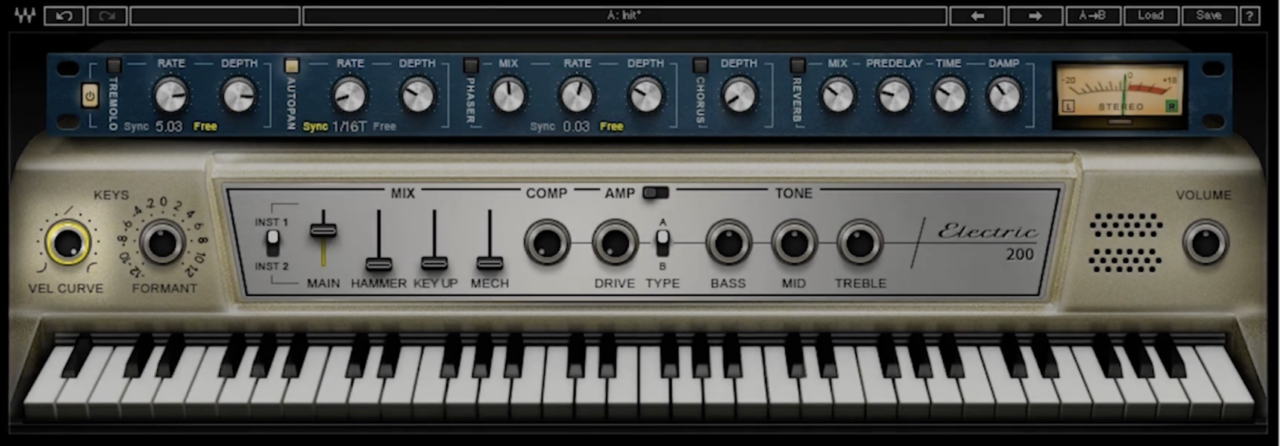
Some plugins win you over with endless editing options. Waves Electric 200 Piano takes almost the opposite approach. I found myself spending very little time tweaking because the core sound already captured what I wanted from a Wurlitzer: that punchy midrange, slightly gritty bark, and warm tone that naturally sits in a mix.
What stood out during testing wasn’t flashy features, it was how quickly I could dial in a usable sound. Whether I was playing short rhythmic chords or sustained parts, Electric 200 consistently felt like it was designed for production rather than experimentation.
- Two Sampled Wurlitzers
Instead of sampling a single instrument, Waves built Electric 200 around two different Wurlitzer 200s, each with its own personality. I appreciated having that choice right away. One leaned warmer and smoother, while the other had a brighter, more aggressive character that cut through dense arrangements with very little additional EQ.
- Mechanical Detail
I always pay attention to mechanical noises on electric piano plugins because they often determine whether an instrument feels alive or overly polished. Electric 200 lets you blend in hammer and key noises to taste, and I found those subtle details made solo passages and intimate arrangements feel much more believable without becoming distracting.
- Built-In Production Tools
The integrated compressor, amp simulation, and effects meant I could shape the sound without leaving the plugin. I particularly liked having everything in one place because it encouraged me to focus on the performance instead of immediately building another processing chain. For songwriting sessions, that kind of workflow is genuinely valuable.
- Classic Tremolo
A Wurlitzer rarely stays completely dry, and Waves clearly understands that. The built-in tremolo sounded musical right away, adding movement without overpowering the instrument. I found myself reaching for it on sustained chords almost automatically because it delivered that familiar vintage pulse with very little effort.
Available in VST3, AU, AAX, and Waves Shell formats.
Waves Electric 88 Piano
Get more info and price on:
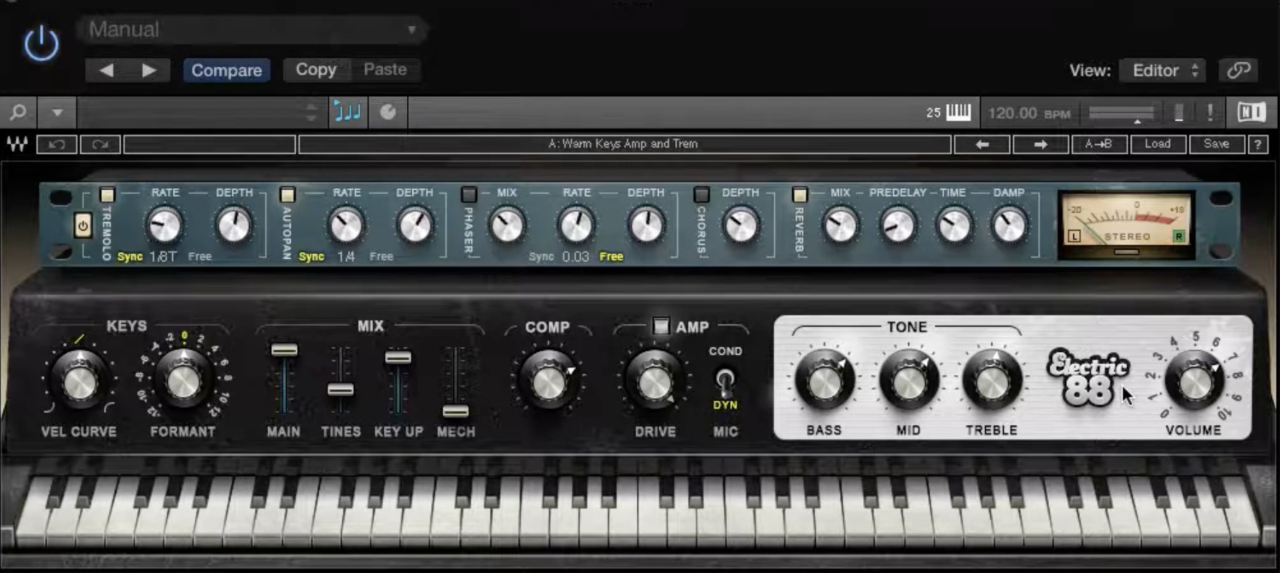
There are plenty of Rhodes plugins that chase technical perfection but Waves Electric 88 Piano goes in a different direction, and I honestly think that’s what makes it memorable. Instead of sounding like a pristine instrument that has barely left the showroom, it feels like a road-worn vintage Rhodes that has spent decades in studios and on stages, picking up the little imperfections that make classic electric pianos so inspiring to play.
When I loaded it for the first time, what stood out wasn’t extreme realism or endless tweakability. It was how naturally it fit into a mix. It already has that slightly worn midrange character that lets Rhodes parts sit comfortably alongside guitars, vocals, and drums without feeling disconnected or overly polished. Sometimes that’s exactly what I want because I spend less time trying to make it sound vintage and more time writing music.
- Road-Worn Character
The heart of Electric 88 is its carefully sampled vintage Rhodes, captured with all the inconsistencies that make real instruments feel alive. Rather than presenting a perfectly even response across every note, it embraces subtle tonal variation and a convincing velocity response that gives chords and melodies a more organic feel.
I found this especially effective for neo-soul, indie, and classic pop, where a little personality goes a long way. It doesn’t feel like it’s trying to impress you with technical specifications, it simply sounds musical.
- Mix-Ready Signal Chain
One thing I appreciate is that Waves didn’t stop at the instrument itself. Electric 88 includes tone controls, a vintage-style compressor, amp and cabinet simulation, plus built-in microphone options, so it behaves more like a complete recording chain than a raw Rhodes sample library.
I rarely felt the need to build an elaborate processing chain just to make it work in a session. A few adjustments inside the plugin were usually enough to get me surprisingly close.
- Classic Rhodes Effects
Electric 88 also includes the effects I naturally associate with classic Rhodes recordings, including tremolo, autopan, phaser, chorus, stereo widening, and reverb.
They’re straightforward rather than overwhelming, and that’s something I actually enjoyed. Instead of scrolling through dozens of modulation options, I could quickly dial in movement that complemented the instrument without distracting from it.
Available in VST3, AU, AAX, and Waves Shell formats.
UJAM Virtual Pianist GRIT
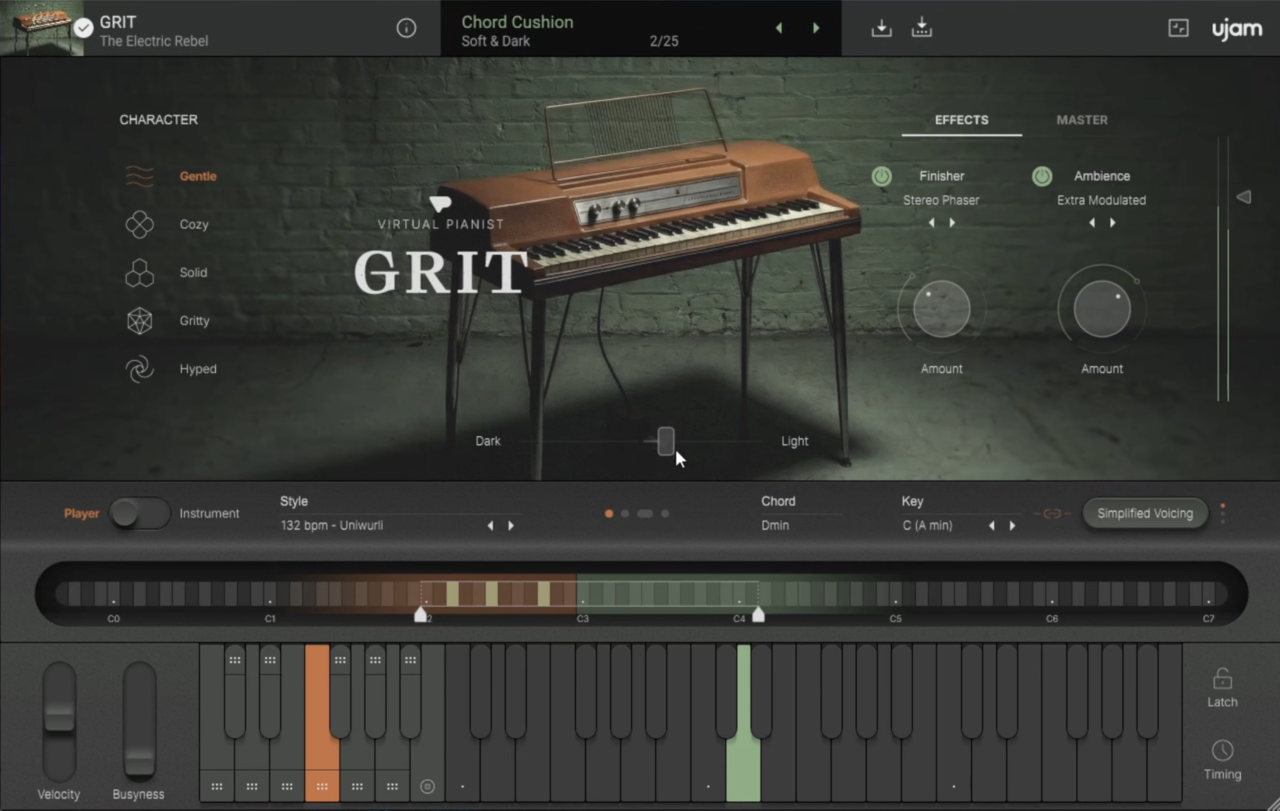
Most plugins on this list expect you to be the keyboard player. UJAM Virtual Pianist GRIT expects you to be the producer.
That’s a surprisingly refreshing change. Instead of giving me a beautifully sampled electric piano and leaving me staring at an empty MIDI track, GRIT immediately generates convincing performances from simple chord input. I don’t reach for it when I want complete control over every note, I reach for it when I want ideas to happen quickly.
It’s also the only plugin here that isn’t trying to compete with traditional Rhodes libraries. It solves a completely different problem.
- Performance-Based Workflow
GRIT revolves around UJAM’s performance engine. Rather than manually programming every rhythm, you trigger professionally played phrases and accompaniment patterns while controlling the harmony with simple chords.
I can sketch a convincing electric piano part in minutes, which makes it genuinely useful for songwriting sessions or quick client demos where speed matters more than microscopic editing.
- Distinctive Electric Piano Tone
The sound itself matches the plugin’s name. Instead of aiming for pristine Rhodes authenticity, GRIT delivers a rougher, slightly driven electric piano character that naturally cuts through modern mixes.
I liked that it already feels like an instrument that’s been recorded through an amp rather than a perfectly clean DI signal. For indie, pop-rock, and contemporary productions, that extra attitude often saves me from adding additional saturation later.
- Styles and Phrase Library
One of my favorite aspects is how easy it is to change the feel of a performance without rewriting the part. Switching between different Styles and phrase variations instantly changes the groove while preserving the underlying harmony.
That encourages experimentation. I’ve often stumbled onto ideas I probably wouldn’t have played myself simply by trying a different style.
- Built for Songwriters
GRIT probably isn’t the plugin I’d recommend if you want to perform expressive jazz solos or recreate classic Rhodes recordings note for note.
But if your goal is finishing songs rather than practicing keyboard technique, it makes a compelling case for itself. Sometimes having a convincing musical partner is more valuable than having another beautifully sampled instrument.
Available in VST2, VST3, AU2, and AAX formats.
Last Words
No matter what kind of electric piano you’re looking for, there’s never been a better selection of plugins available.
Whether you prioritize authentic vintage realism, deep sound design, quick songwriting workflows, or budget-friendly versatility, there’s an instrument here that fits the way you create music.
Ultimately, the best electric piano plugin is the one that inspires you to keep playing. Try a few demos if you can, trust your ears, and choose the instrument that feels the most musical under your fingers rather than simply the one with the longest feature list.
If you’re looking for more, check out this article on 9 Best Piano Kontakt Sample Libraries 2025

Berk is a multi-instrumentalist musician from Istanbul, Turkey. He has been playing guitar, handpan, and percussion for over ten years, developing a sound that blends melodic sensitivity with rhythmic depth.
He began his musical journey as a teenager, learning guitar and performing in several bands. In 2016, he discovered the handpan, an instrument that immediately resonated with him on a deeper level and gradually became central to his artistic identity.
Since then, he has performed in streets, festivals, bars, and concert venues across different countries, connecting with diverse audiences through both intimate and large-scale performances.
Alongside his live work, Berk is deeply involved in studio production. He works from his home studio, where he composes, records, and produces his own music. His studio serves as a creative space for layering handpan, guitar, and percussion with modern production techniques, allowing him to shape fully realized, atmospheric compositions from start to finish.
His music explores a wide range of genres and textures, combining organic acoustic instruments with detailed studio production to create immersive and expressive soundscapes.