
What Is Pop-Rap?
Pop-rap is a hybrid music genre that blends the catchy, melodic sensibilities of pop music with the rhythmic vocal style and lyrical delivery of hip-hop/rap.
Key characteristics include:
- Accessible hooks and choruses — borrowed from pop, making songs immediately memorable and radio-friendly
- Rap verses — the verses typically feature rhythmic, rhyming spoken-word delivery rather than traditional singing
- Polished production — smooth, commercially oriented beats designed for mainstream appeal
- Crossover appeal — intentionally crafted to attract both pop and hip-hop audiences
- Themes — often covers universal topics like relationships, success, and fun, rather than the grittier subject matter found in more hardcore rap subgenres
The genre emerged prominently in the late 1980s and early 1990s, with artists like MC Hammer, Vanilla Ice, and Young MC bringing it to mainstream audiences.
It evolved significantly through the 90s and 2000s with artists like Will Smith, Nelly, and Ja Rule, and continues today with artists like Post Malone, Juice WRLD, and Cardi B blurring the lines between pop and rap even further.
Today Pop-Rap is sort of a vague term. It can mean a lot of different things to different people, but to me, the viral internet Pop-Rap sound is defined by three main artists. These are:
These artists blend elements of Pop, Hip-Hop, Disco, Techno, and Latin American music to create a fun, bouncy sound that is so infectious.
Of course, like with most Hip-Hop, the vocals are really what drive the song. The vocals dictate what kind of instrumentation is used, what the entire vibe is, but there are key elements in the instrumentals that we can use to create this type of sound. I mention this as, even though we are not working with vocals here, it’s important to note how much they change the identity of the song.
Typically this genre is quite sparse with production, focusing on a few key layers and letting the vocals shine. While this may sound easier, I’ve actually come to realize that getting a full sound with less elements in the production is rather tricky. It requires a more selective sound design process to cover all of the frequencies to make it stand up in a club or on a playlist next to songs with more dense production.
The tempo of these songs can vary quite a bit, depending on the vocal performance, however I’ve found 110bpm to a great starting point, so that’s the tempo we will be working with.
I’ll be using Ableton Live 12, but you can use any digital audio workstation that you prefer.
Producing A Pop-Rap Song
Drums
The drums in this type of music differ quite a bit from what you’d expect a Hip-Hop drum beat to sound like. Instead it is more of a Techno and Disco style beat. This means we have a four-on-the-floor kick drum and a snare on beats two and four. That’s the backbone of the drums, and from there we can build it out. But let’s start with the basics. Here is what this looks like.
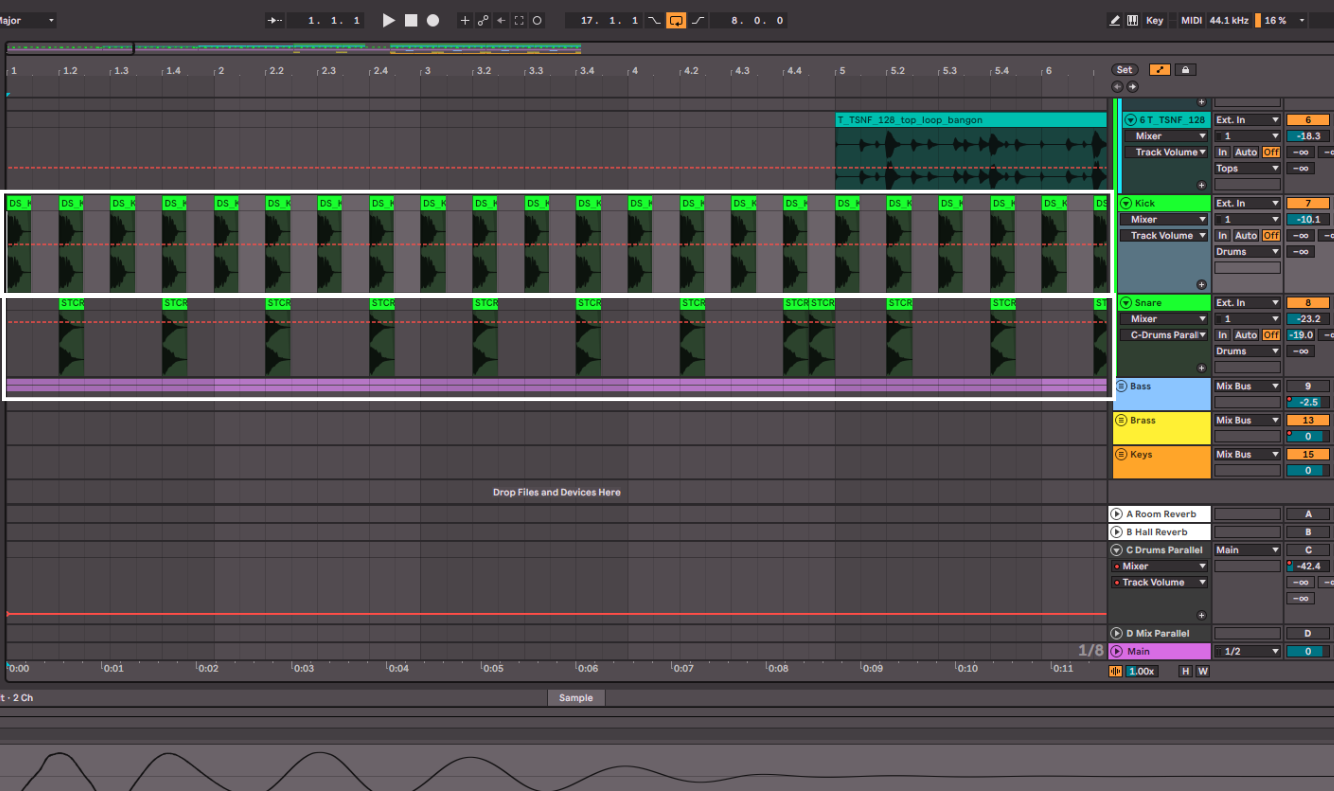
In terms of the samples I’ve chosen, as you’ll hear below, I have quite a short kick sound with a good thump to it and a decent amount of top-end. This is a typical Dance kick drum and can be found on many different sample libraries, including Loopcloud. For the snare I have a very basic clap sound. Here is what the pattern sounds like, and I’ve added an extra snare on the fourth off-beat at the end of the fourth bar just to add some interest to the groove and indicate that it’s the end of a phrase.
This is what we will start off with at the beginning of the song. If you listen to the production on a BBNO$ song, you’ll hear that throughout the verses, elements are added in to build up to the chorus. Because we have such a sparse production, it means that adding in elements you would usually start with, like cymbals, as the song builds.
The verse I’ve written here is sixteen bars long. Every four bars, I am introducing a new element into the production. So the next aspect of the drums will be a top loop sample, which is basically a drum beat without the kick drum. This adds more groove, and nicely builds up the song. Here it is with the kick and snare from before.
Then after another four bars I am adding in a second top loop. This top loop isn’t as tight as the first, and has a more spacious feel. So it adds a new characteristic to the beat that wasn’t there before. This is key, because with a less dense production, each sound really needs to serve a sonic purpose and not just be there for the sake of it. Here is the kick and snare pattern with both top loops.
Then the final element of the drums is introduced in the last four bars of the verse. This is a drum loop sample, and the reason I chose this one is that the rhythm and groove match the existing beat, but it also has a really nice off-beat open hi-hat. This is a staple of a Techno drum beat, which this style of music is heavily inspired by. So all together we have this.
For the chorus, we aren’t adding any more drum elements in. This is the full beat now. To show you the arrangement, below you can see how as the verse goes on, each element is added in.
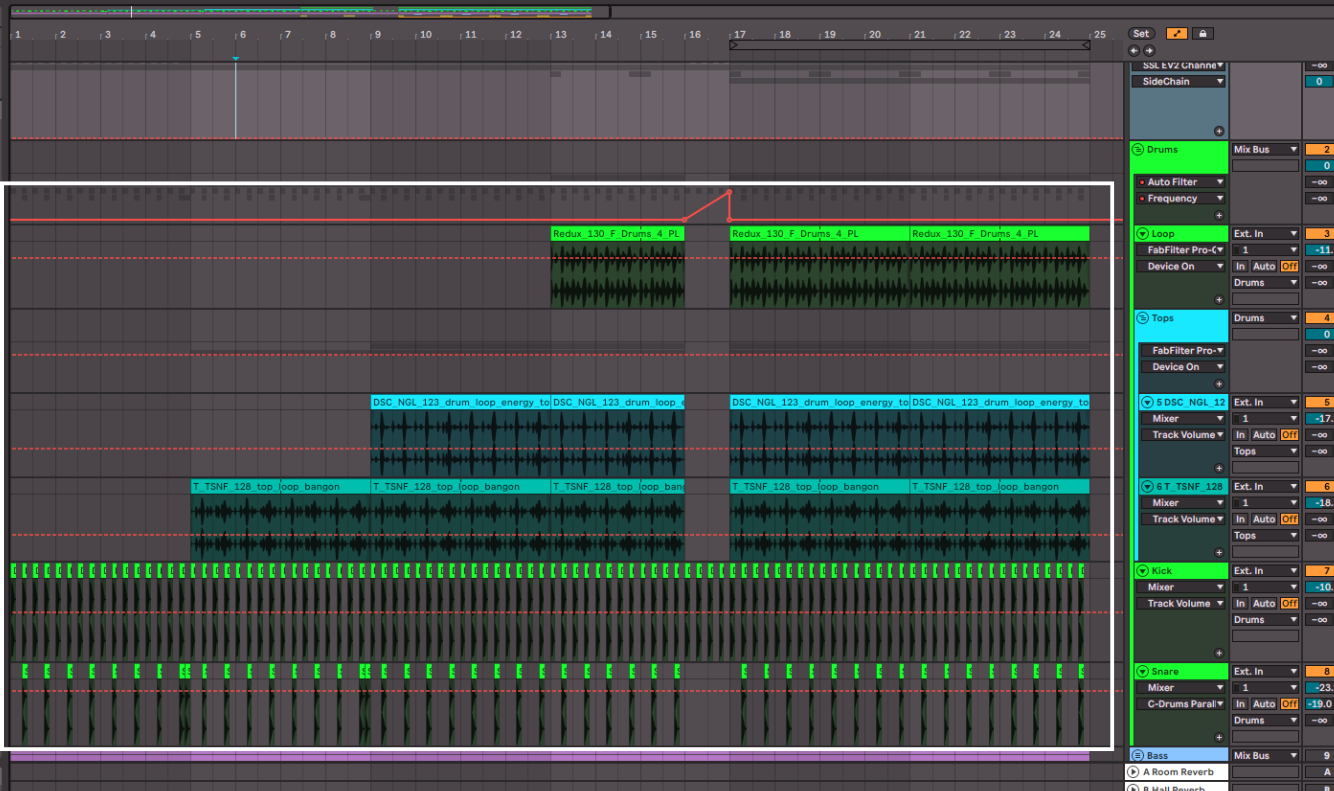
As you can see above, before the chorus there is a break where only the kick drum is playing. This is to give some space right before everything kicks in for the chorus. Because we aren’t going to have lots of elements in the chorus, a good trick to make it feel more full is to strip everything back for a bar before the chorus, let the space become more empty, and then when everything comes back in, it sounds bigger by comparison already. Here’s how it sounds.
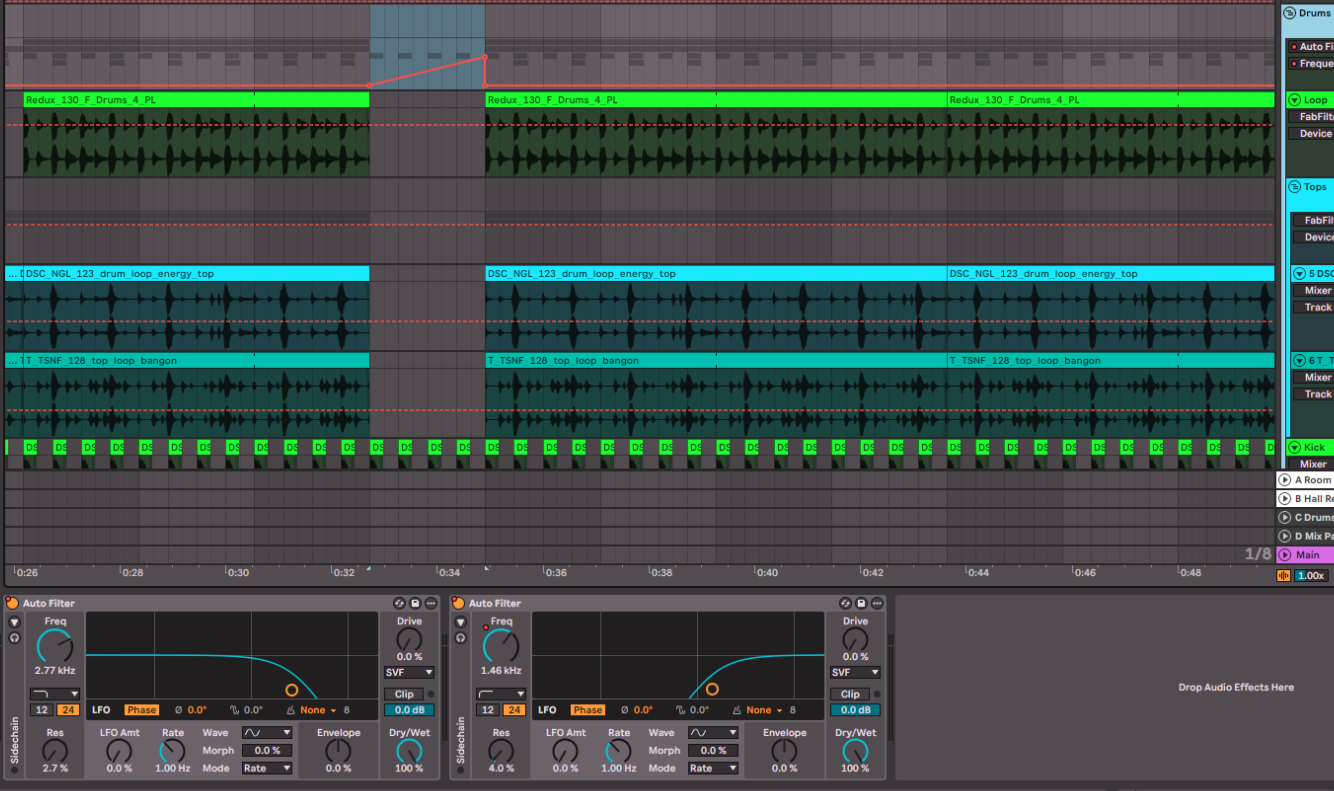
To get this sound, I am using two filters. Any filter you have will work for this. The first one is fixed, meaning that the frequency doesn’t change, and this is a low-pass filter. The frequency is set at 2.77kHz, so everything above this is cut out. The second filter is a high-pass, so it’s removing the low end. The frequency here is automated. It starts at around 30Hz and by the end of the bar it gets to around 1.6kHz.
Bass
When it comes to bass, you can go down two different routes. You have the traditional 808 option, with long, booming bass notes matching the kick, or you can do a more funky and groovy bassline with a shorter and punchier sound. For this we will be choosing the second option, as this to me is really what separates this style of music from other Hip-Hop.
Let’s first look at the actual bassline I’ve written. Rather than it just filling in the low-end, this bassline is a melody in itself. It’s an instrumental hook to latch onto. Here is what I wrote.
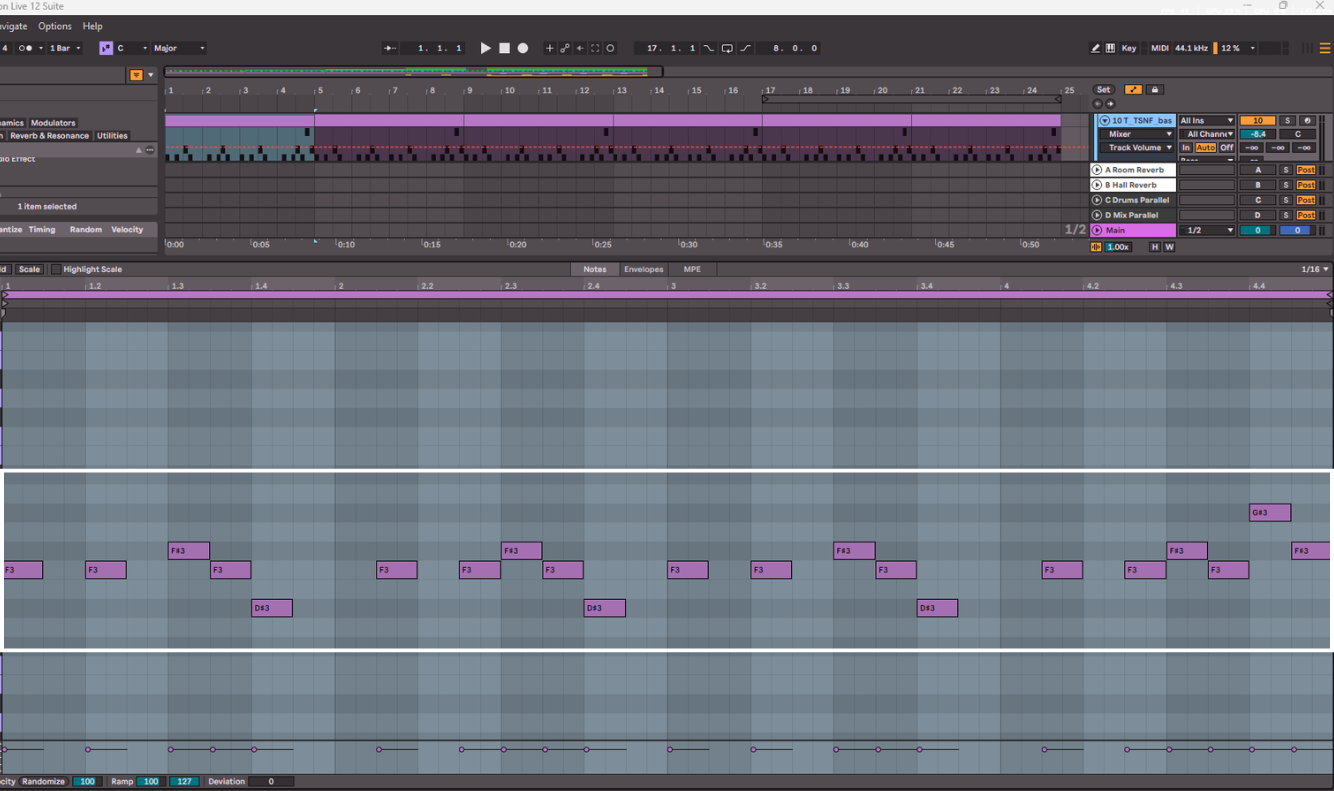
To get that thick, short, punchy bass sound, I’ve actually layered two bass sounds together. The first one is a one-shot sample that I found and put into Ableton’s Sampler device, basically a sampler that allows you to put in a sound and play it on the keyboard. This sample is where the shortness and body of the bass sound is emphasized. Here’s how it sounds.
Then I have layered it with a Serum preset I found on Splice, that has a lot of attack, a lot of low end, and some high end harmonics to really complete the bass sound. It’s a type of Brazillian Phonk synth bass pluck. Here’s how it sounds.
Then together with the full drums, we get this.
This bass line plays throughout the verse and the chorus. The difference in the bass for the chorus comes with another bass sound. This isn’t playing the same bassline, it’s only playing one note. But it’s more of an effect than a bass layer. It’s more rhythmic than melodic, and the sound itself is actually from a Dubstep preset on Serum. This further shows how this style of music really does incorporate so many different elements from different types of music. Here’s how it sounds on it’s own.
Then in the context of the chorus, with the bassline and drums in, you can hear the effect it has on the rhythm of the track. Adding more hype and energy to the chorus. It’s definitely more subtle, but due to the sparse production the effect it has is more than noticeable.
Like with the kick, before the chorus we also have a bar where the bass is being filtered. Here’s how it sounds with the kick.
The filter here is the exact same high-pass filter used on the kick above.
Brass
You’ll notice that a common theme across these types of songs are the Latin American influence. This can be a Flamenco guitar part, a percussive instrument, or in this case, a brass section.
This is just a sample I found that is in the Latin American genre, and it’s a very simple chord played by some horns. It almost acts as an impact. And then I reversed it and faded it in before each time it comes in. Here is how it sounds.
To show how the reverse is places and faded into the sample, take a look below.
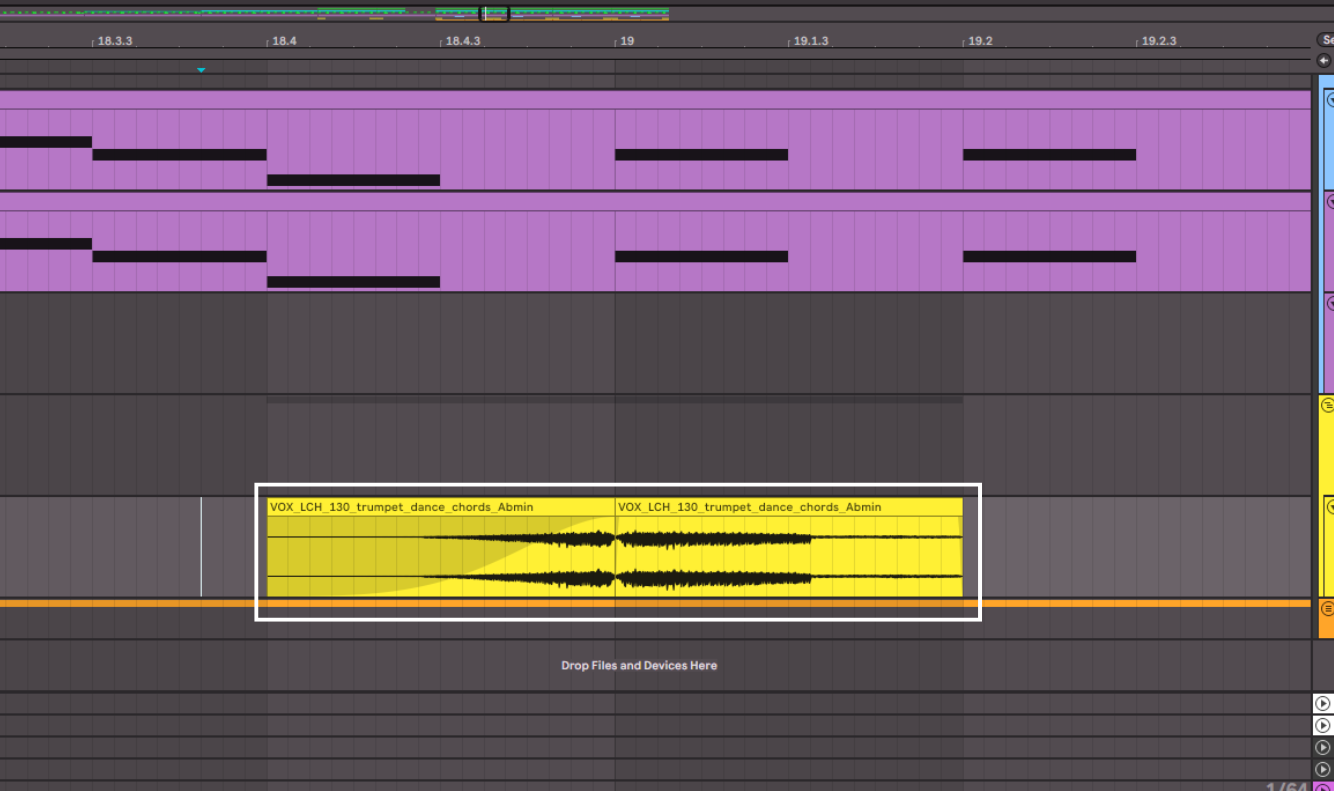
I am introducing this brass section in the last four bars of the verse, but with the top end filtered out, from 11.6kHz and above. This is so that it doesn’t over power the verse and give away too much of that chorus energy early. It’s just about introducing the sound in a more subtle way, before it really shines in the chorus. To filter out the high-end, you can use any filter or EQ in your DAW. I’m using the Auto Filter in Ableton, and I have automated the device to turn off once the chorus hits.
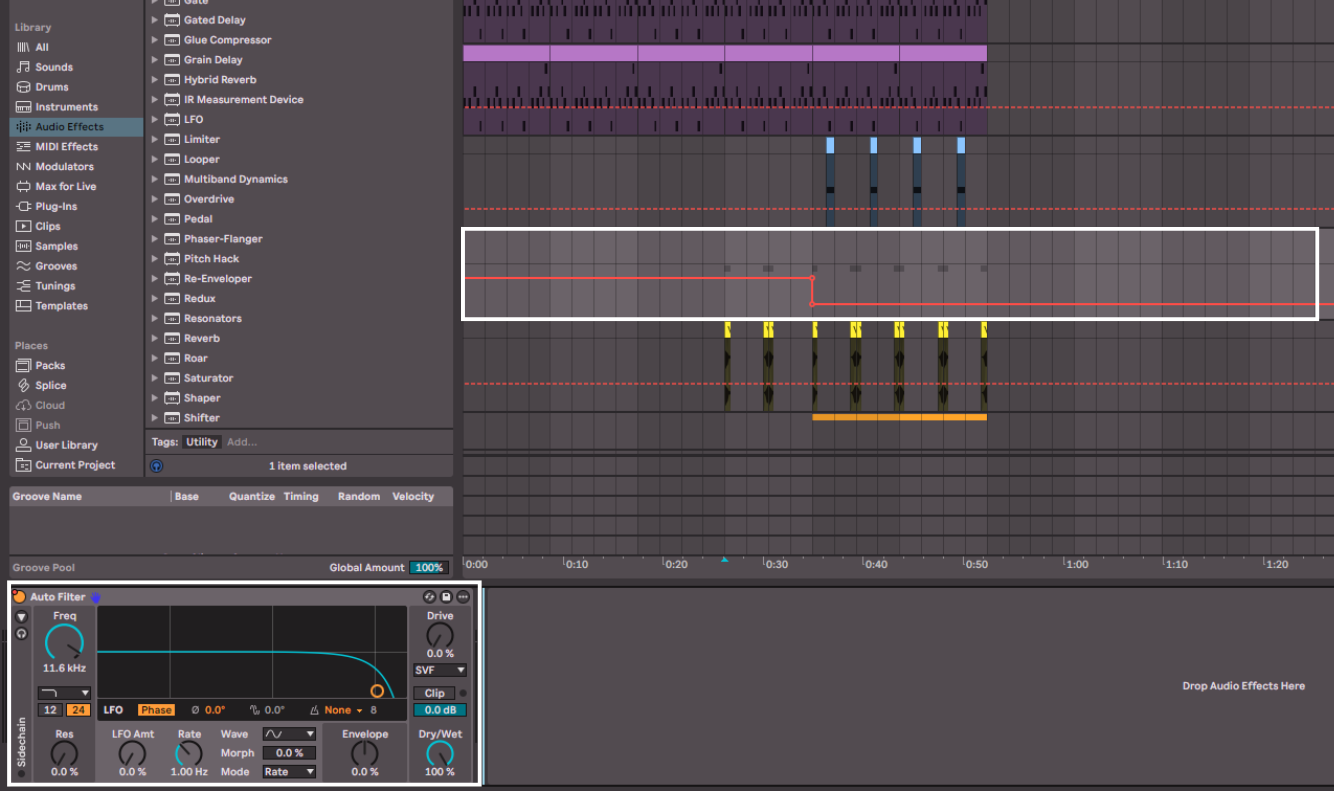
So by turning off the filter in the chorus, we have the full sound of it and it really gets to make a sonic statement in the song. Here is the brass, bass and drums from the last four bars of the verse to the first four bars of the chorus to really indicate how this filter affects the sound.
Keys
The last element I have added, and the only element to be exclusive to the chorus, is a keys sound that plays two notes on each beat of the bar.
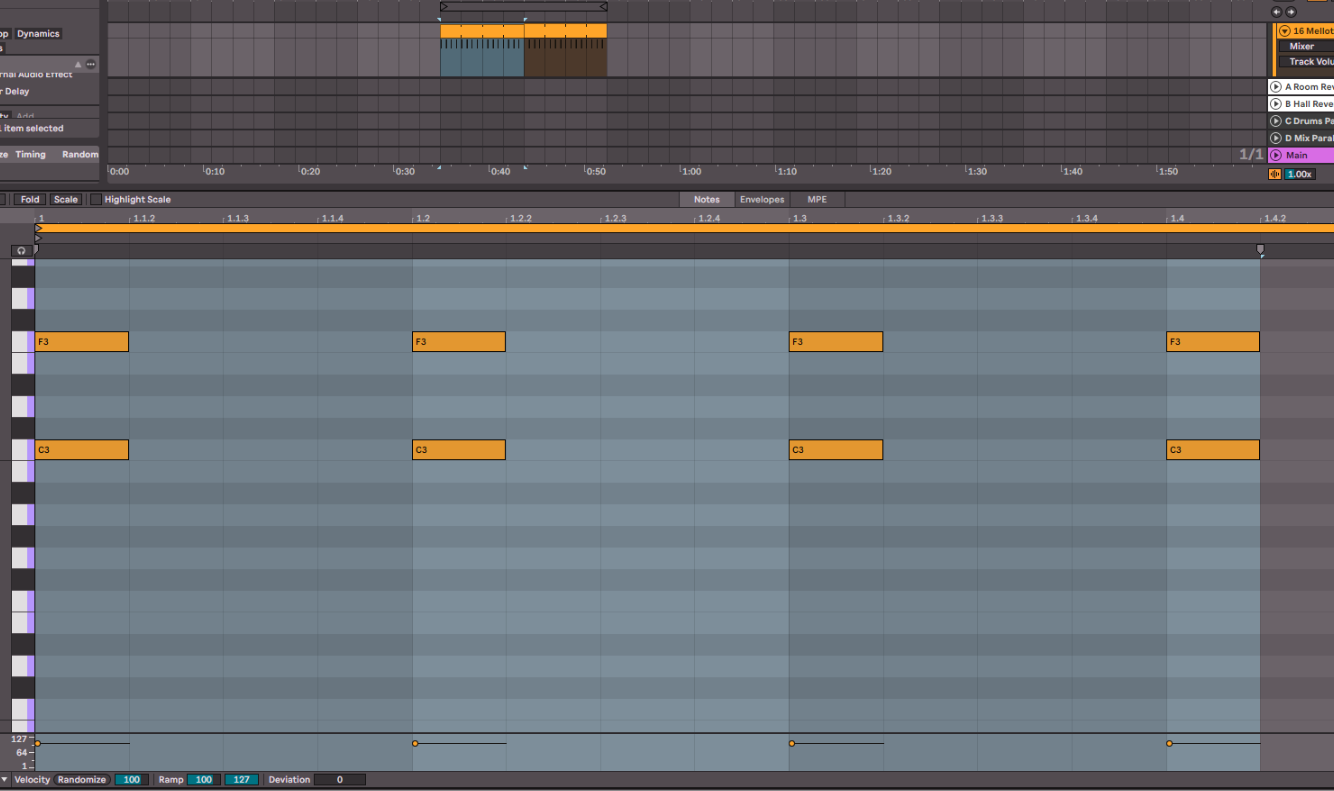
The idea here is to add a subtle, more atmospheric, sound that is more felt than heard. It adds just an extra layer of energy and fullness that really makes it known that this is the chorus.
The sound itself is actually a preset on the Mellotron V by Arturia called “Marimborgan”, which is clearly a mixture between a marimba and an organ.
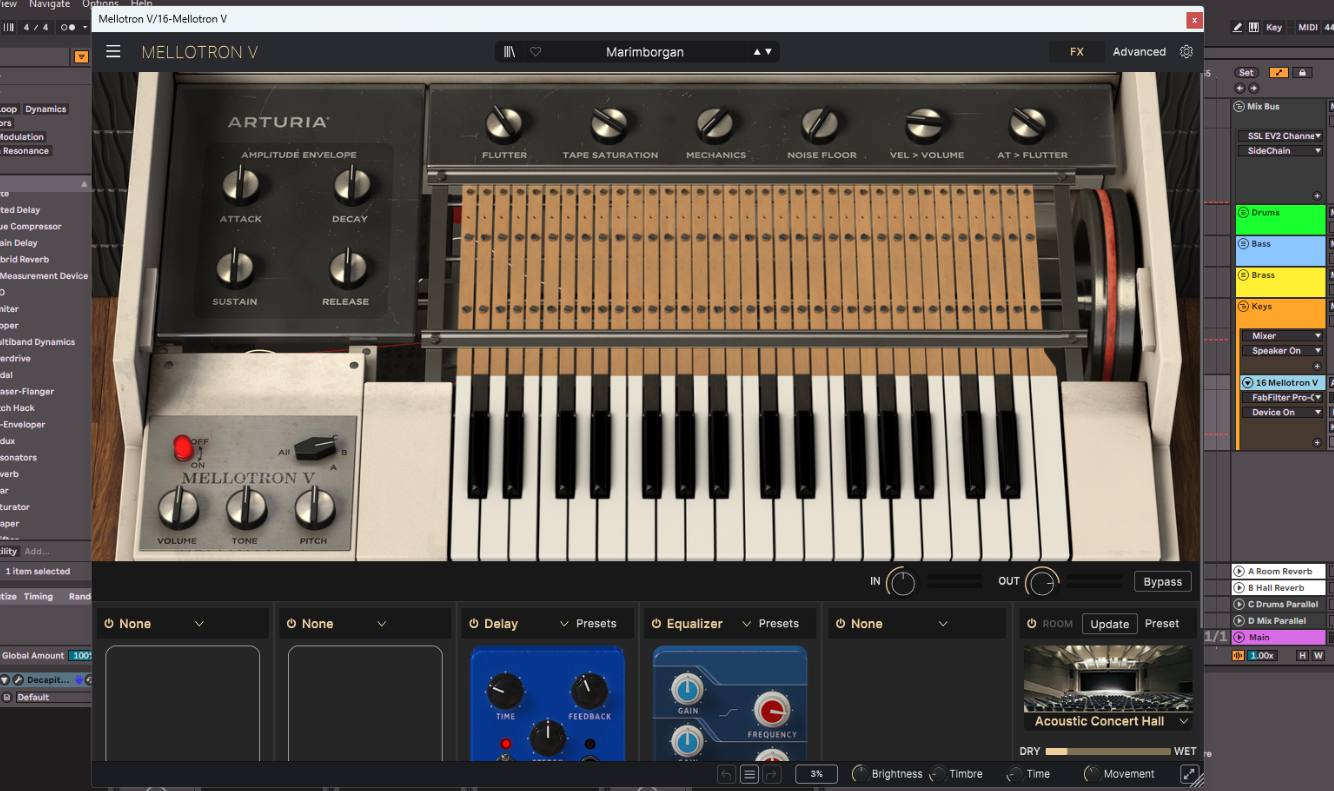
Before any processing, this is how it sounds.
Then, I processed it heavily to get it to sound much more ambient and like a layer rather than a part. I’ll show you below, then break it down.
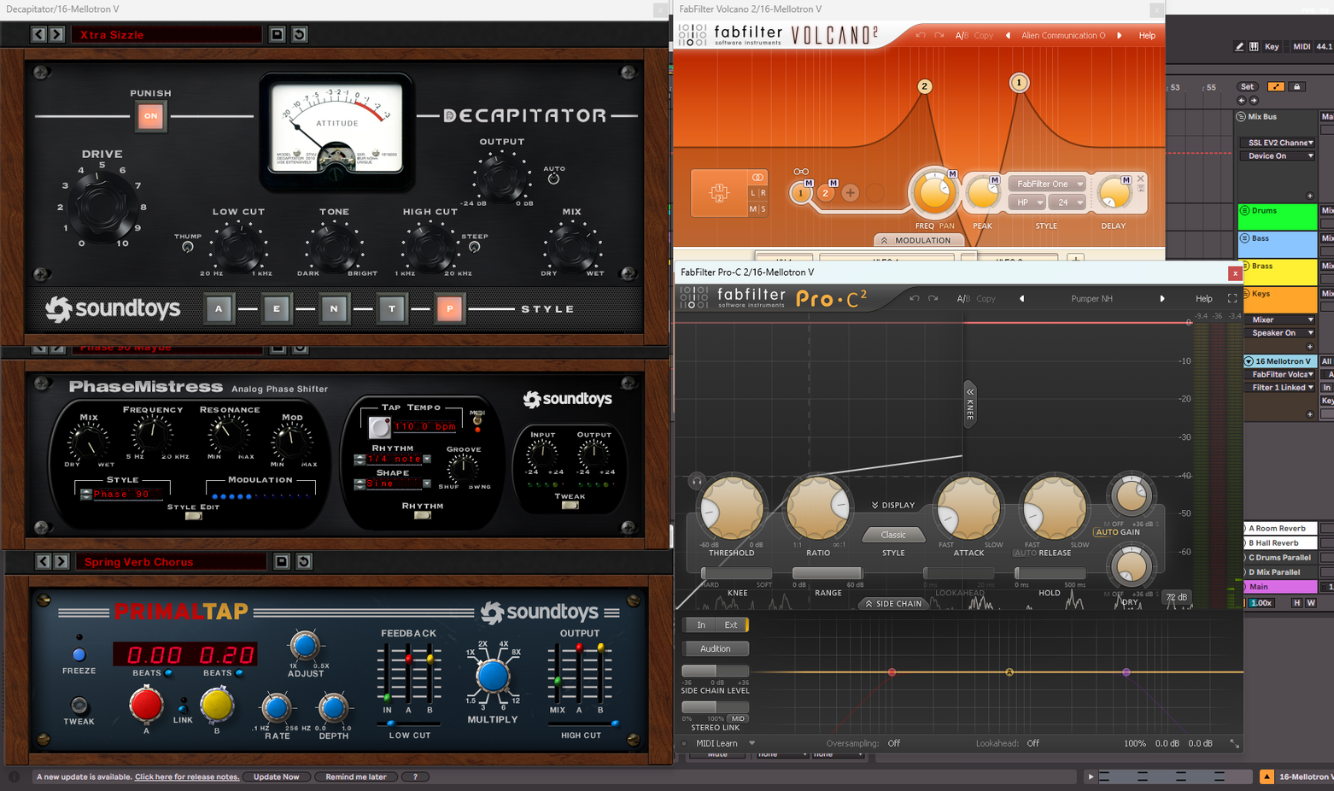
First up we have Decapitator by Soundtoys. This is absolutely my favourite distortion plugin. I’ve got it doing quite a bit of saturation, with the punish button activated for even more gain. The mix is at around 60% wet, the tone is on the darker side, and the low and high cuts are very much in use to tame both ends of the frequency section. I am going for warmth here, not sizzling or rumbling distortion.
That is followed by Volcano by FabFilter. This is an insane modulation plugin. It’s honestly so versatile. You can get the craziest sounds out of it, but you can also use it subtly to create more ambient movement. In this case, I am using a preset called Alien Communication. Kind of speaks for itself.
Next up is the PhaseMistress by Soundtoys. It’s a phaser (shocker) that is based off of a lot of different analog phase shifters, and the preset I am using is based specifically off of the MXR Phase 90 guitar pedal. This adds some more movement to the sound.
For our spacial effect that really adds to the ambience, I am using PrimalTap by Soundtoys. This is amazing at creating some classic 80s delay and spacial sounds. Plus there is built in modulation, so it is further adding to the movement.
Last, but not least, we have Pro-C2 by Fabfilter. This is a great compressor, but I am actually using it as a sidechain compressor so that it ducks the sound down every time the kick drum hits.
It’s important to note that the reason this subtle element is way more processed than the others is because they are the dominant, up front parts of the song. This is intended to be a background lift, so it needs more work. The important part of the other sounds is the sound selection. Here’s the keys sound with processing.
Conclusion
After a quick mix and master, we have this as the final full beat for the chorus.
The key thing to take away from this is to carefully consider each sound and their role in the song, and that less is definitely more. Once you have vocals in there, you can start to add little sound effects and breaks throughout the song to emphasize what’s being said. Enjoy creating!

I am a music producer, songwriter, mixing and mastering engineer, sound designer, composer, multi-instrumentalist, vocalist, and musical artist. Yeah, I know, it’s a mouthful. Basically, if it involves music, I am super into it. I recently became a full-time freelancer in the music space, having dabbled in it for around 10 years. I started playing guitar at 7 years old, and I am now almost 30 (almost!). Music has been a main part of my life since I formed memories. I literally cannot remember a time before music. I adore every aspect of creating and working on music, from starting a song to mastering and polishing the final piece. It’s all incredible.
I’ve worked on many projects over the years, including my own. I release pop/indie music where I do everything, from writing to recording to mixing to mastering, and I even create all the content around it. I do this under the name Mauve Shores. A big passion of mine is metal/alternative music, so I release music with my band Midnight Paradise. The band is literally me and my best mates, so it’s super fun. I do everything except for play drums and bass in that. The final project I release under is called Heavy Blink, and I put out LoFi Beats. I’ve even had tracks reach over 250k streams on Spotify.
Outside of my own projects, I have worked in a variety of genres. I’ve written, produced, mixed, and mastered pop songs for the artist No False Feelin’, one of which got in the UK Top 40 Spotify playlist and has almost 1 million streams. I currently create drum and bass remixes for a client, some of which have over 2 million streams. I’ve done mixes for events such as a dance recital and a business event. I’ve also done some audio cleanup and sound design for a live voice over group that do their anime in person. Right now I am working on a mixture of my own stuff, and with clients. For example, I am beginning to produce, mix, and master a death metal album, and also at the same time a teen pop style song. I love the variety that comes with this line of work.
I am also super nerdy about the gear and technology revolving around music. I could talk for days about my favorite plugins for specific things. Don’t even get me started on EQs. I began as just a guitar player, so my gear obsession has definitely been more towards pedals, but the more I got into production, the more this expanded to everything.
Outside of music, I am into a lot of different things. I love to connect with nature, whether this is through hikes or even making terrariums. I really enjoy skateboarding, playing rugby, and running. I’m also into creating things in general, I always have some DIY projects going, whether that is woodwork, or electronics. Before going full-time as a freelancer, I was a software developer for 6 years, so programming is something I still enjoy and do in my free time. Of course, we can’t forget about how much I enjoy spending time with my wife and my friends.