
Welcome to the New Integraudio Newsletter for 2026
SO far this year we’ve published a bunch of articles including:
- Best AI Plugins For Musicians 2026
- New FX Plugins in 2026
- New VST Instruments in 2026
- Kontakt: The Fundamental Guide 2026
- Waves Magma StressBox Plugin 2026
As you can see 2026 has already delivered a wave of new plugins, free releases, and major updates, and honestly, February’s one of the most exciting months I’ve seen in a while.
We’re getting everything from AI-powered tools and creative FX plugins to free instruments, saturation processors, and full plugin bundles from major developers.
What I love about this month’s lineup is the balance between serious studio tools and fun creative experiments. You’ve got heavyweight releases like Arturia FX Collection 6 and SSL’s new 4K Bundle, alongside genuinely useful freebies from developers like Sonible, Fracture Sounds, and Sunbunny.
I’ve had the chance to test a few of these in real sessions, and some of them punch way above their price point, especially the free ones.
In this article, I’ll walk through the most important plugins released in February 2026, what makes each one interesting, and which ones are actually worth adding to your setup!
Minimal Audio Poly Flanger
Buy here and support Integraudio
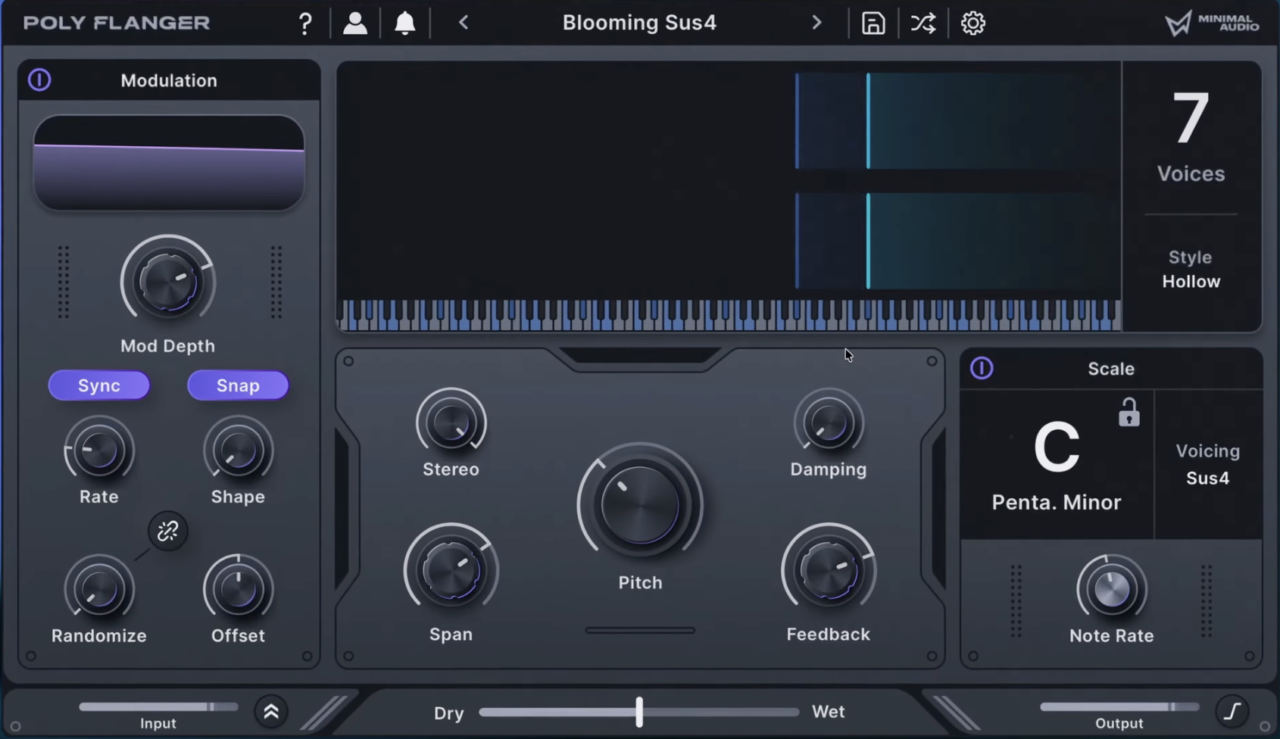
Minimal Audio Poly Flanger flips the traditional flanger concept on its head by turning it into a scale-aware harmonic modulation tool, and I love how it creates movement that actually feels musical instead of just sweeping blindly. The first time I tried it, I immediately noticed how it transforms static sounds into evolving textures that stay perfectly in key, which makes it way more usable in real productions.
- Scale-Locked Harmonic Modulation
This is easily the standout feature, and I’ve found it incredibly inspiring for turning simple pads into harmonically rich layers. Instead of generic flanger sweeps, I can set a scale and hear the modulation snap into tune, which means even extreme settings sound intentional rather than chaotic.
- Multi-Voice Chord & Arpeggio Generation
What I enjoy most here is how I can build full chord movement from a single source without touching MIDI. I’ve used it on basic synth leads and watched them turn into complex, evolving harmonies that instantly sound more alive and expensive.
- Tempo-Synced Rhythmic Modulation System
The tempo-locked LFO system makes it easy to create rhythmic modulation that actually grooves with the track. I’ve been using it to design risers, transitions, and subtle stereo motion that stays perfectly in sync, which saves a ton of automation work.
- Creative Sound Design & Stereo Expansion
This goes far beyond classic flanging, and I’ve found it especially useful for widening sounds and adding movement without muddying the mix. I also love using it on ambient textures, where it creates evolving motion that feels almost like a separate instrument.
Poly Flanger can be your new baby for harmonic motion, rhythmic modulation, or creative width to synths, pads, and cinematic textures.
Poly Flanger comes in VST2, VST3, AU, and AAX formats for macOS and Windows users.
ZigZagzAudio Sound Soup
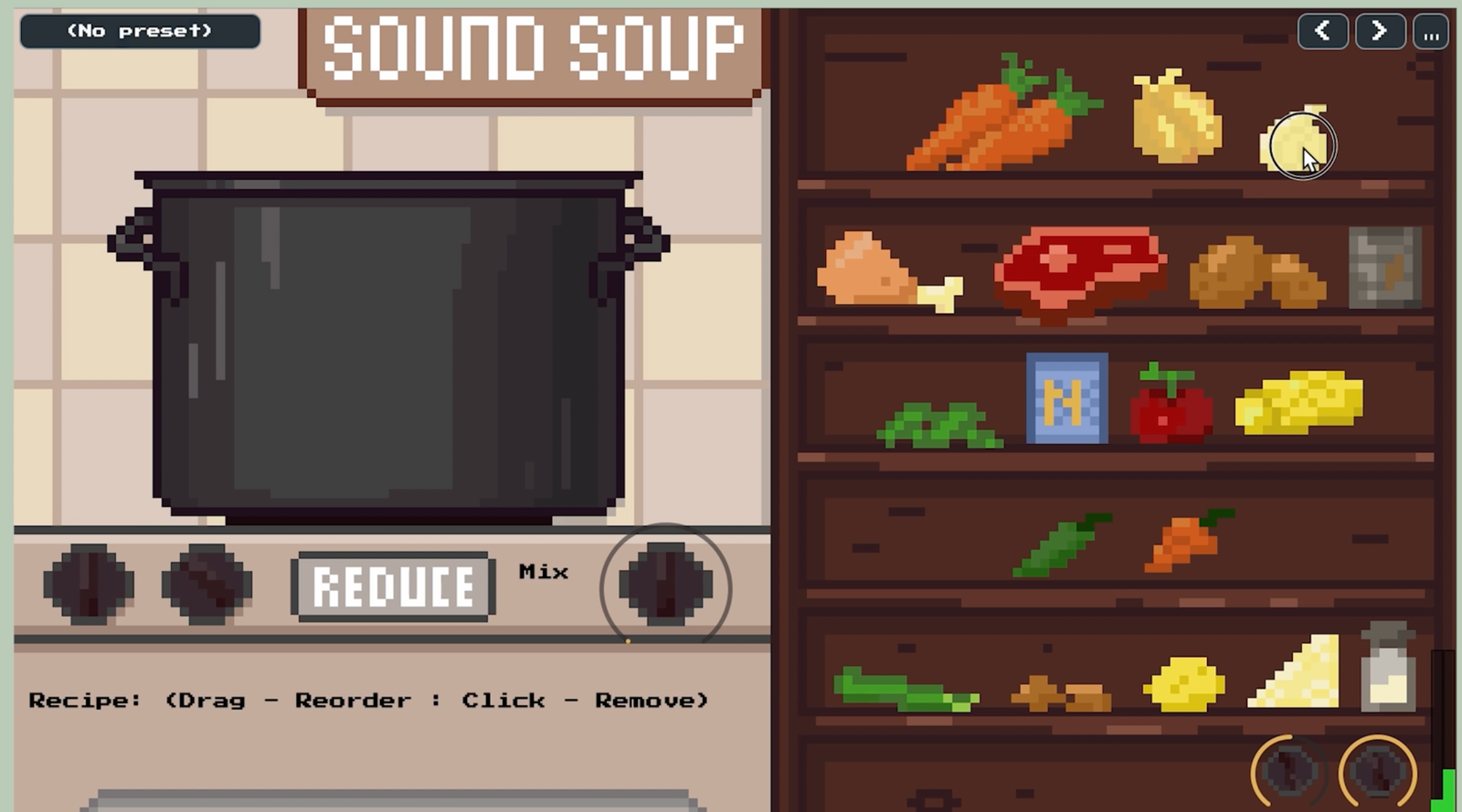
This is hands down one of the most fun plugins ever. Sound Soup feels more like a creative playground than a traditional multi-FX plugin, and I love how it turns sound design into something playful instead of technical. The moment I opened it, I was hooked by the ingredient-based effect system, which makes building effect chains feel more like experimenting than engineering.
- Ingredient-Based Multi-FX System
Instead of loading effects from a boring list, I can throw different “ingredients” into the pot, each representing a custom effect like reverb, delay, distortion, filtering, or modulation. I’ve found this approach surprisingly intuitive, and I often end up discovering sound combinations I wouldn’t normally try in a standard multi-FX plugin.
- Parallel Reductions
The Reduce system is one of the smartest features here, and I’ve been using it to stack multiple processing layers without cluttering the workflow. I can condense a complex chain into a single control and then build new layers on top, which makes it perfect for blending clean and heavily processed signals.
- Assignable LFO Modulation System
Sound Soup includes up to three assignable LFOs, and I really enjoy using them to create evolving motion and animated textures. I can sync them to the project tempo and modulate different parameters, which makes even simple sounds feel dynamic and alive.
I gotta say, the unconventional interface might take a few minutes to fully understand, but besides that, this plugin is worth giving a try.
Sound Soup comes in AU and VST3 formats for macOS users.
Ewan Bristow ANINA
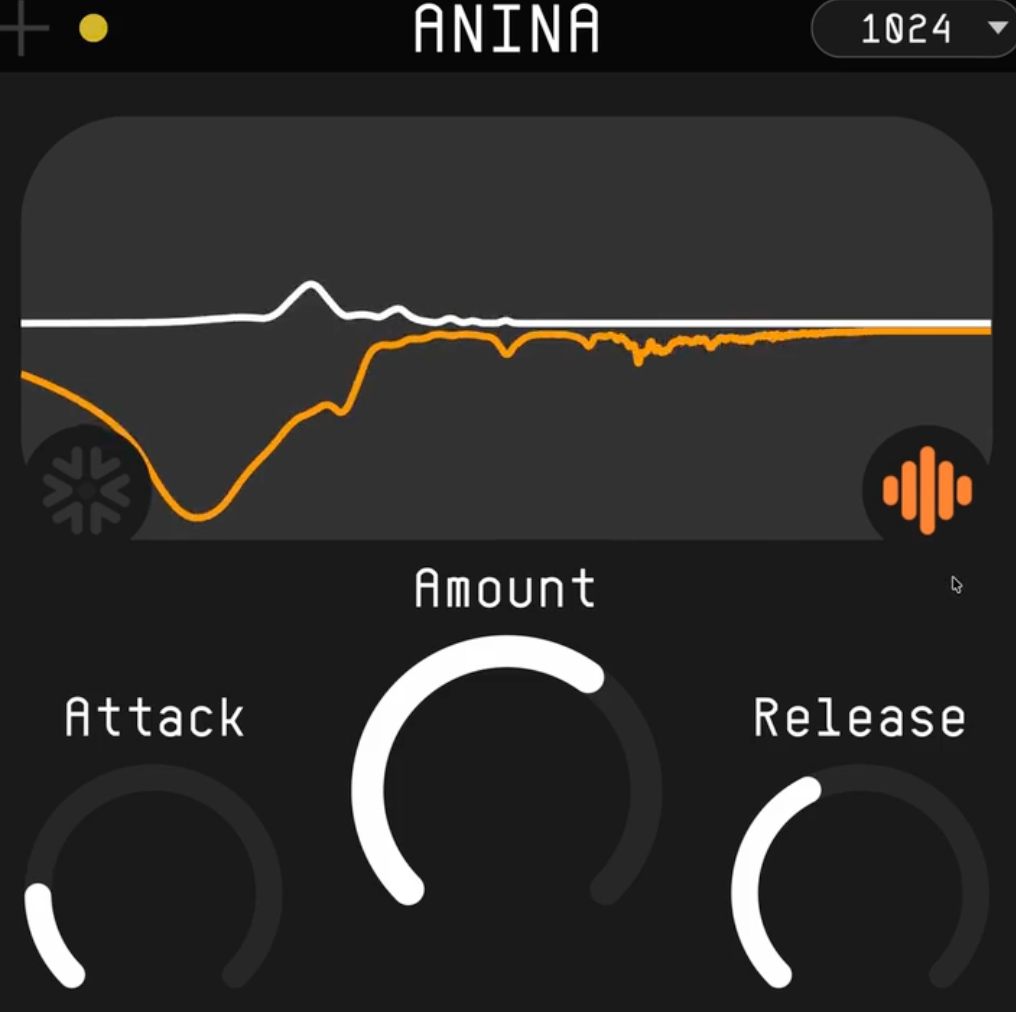
Spectral processing usually lives in expensive plugins, so I was genuinely surprised to see ANINA offering up to 1024 bands of spectral compression completely free. I’ve been using Trackspacer-style tools for years, and what I love here is how ANINA gives you that same mix-cleaning precision while also opening the door to weird and creative sound design.
- 1024-Band Spectral Compression Engine
This is the heart of ANINA, and I’ve found it incredibly effective for creating space between conflicting elements like kick and bass or vocals and dense synths. Instead of blunt EQ cuts, I can shape space dynamically across hundreds of frequency bands, which keeps the sound natural and intact.
- Sidechain-Based Spectral Shaping
With the sidechain input, I can make one sound intelligently move out of the way of another without obvious pumping or volume ducking. I’ve been using it to clean up muddy mixes fast, especially when layering multiple mid-heavy elements.
- Freeze and Delta Creative Controls
The Freeze function is where things get experimental, and I love using it to lock a spectral snapshot and reshape sounds in unexpected ways. The Delta mode lets me hear exactly what’s being removed, which is insanely useful for precision mixing and also great for creating strange textures and sound-design layers.
- Adjustable Block Size and Spectral Response Control
Being able to adjust the block size gives me control over whether the processing feels tighter and more reactive or smoother and more frequency-detailed. I’ve found this especially useful depending on whether I’m mixing rhythmic elements or atmospheric sounds.
There aren’t really downsides considering it’s free, but spectral processing can take a bit of experimentation to fully understand.
ANINA comes in AU, VST3, and CLAP formats for macOS, Windows, and Linux users.
Sunbunny Panoramatone
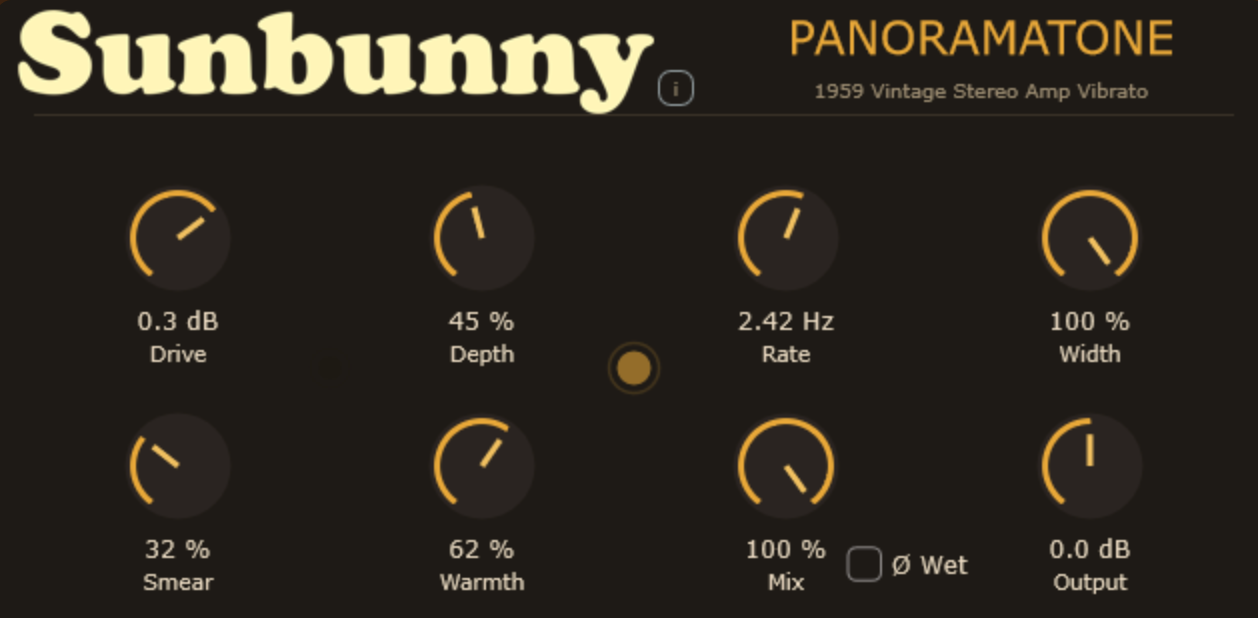
Some vibrato plugins just wobble the pitch, but Panoramatone recreates true vintage Magnatone-style stereo vibrato, and I immediately noticed how much more alive and dimensional it sounds. I love using vibrato creatively, and what I enjoy here is how it adds real analog-style movement instead of cheap chorus-style modulation.
- True Stereo Pitch Vibrato
This is the standout feature, and I’ve found it makes a huge difference compared to basic mono vibrato effects. Instead of flat modulation, I can create wide, immersive stereo movement, which works beautifully on guitars, synth pads, and electric pianos.
- Analog-Style Pitch Modulation
The analog-modeled pitch movement and built-in saturation give everything a warm, organic character that feels closer to hardware. I’ve been using it on clean guitar and keys, and it instantly adds that vintage shimmer without sounding artificial.
- Depth and Rate Controls
With simple Depth and Rate controls, I can dial in anything from gentle motion to dramatic psychedelic pitch modulation. I’ve found it especially useful for adding subtle motion to static pads or creating dreamy lo-fi textures.
I think Panoramatone can be a solid choice for authentic vintage vibrato, especially on guitars, synths, and retro-inspired productions.
Panoramatone comes in VST3 format for macOS, Windows, and Linux users.
Sonible puffer:fish

This one instantly stands out because puffer:fish turns saturation into a visual, character-driven experience, and I honestly didn’t expect something this playful to sound this good.
I’ve used tons of saturation plugins, but what I enjoy here is how it makes tone shaping feel intuitive and fun instead of technical and intimidating.
- 3 Distinct Saturation Characters
Each mode completely changes the behavior, and I’ve found myself switching between them depending on the track’s role.
Tinyfin adds smooth, subtle harmonics, which I love using on vocals and buses, while Spikeskin delivers aggressive, gritty distortion that works great on drums and bass.
- Puffiness Control
The single Puffiness control increases harmonic density, saturation, and perceived loudness, and I like how quickly I can dial in results without overthinking gain staging. I’ve been using it during writing sessions when I want instant warmth or edge without setting up complex processing chains.
- Twitchgill Mode
This mode reacts dynamically to the input, and I’ve noticed it adds movement and personality that feels less static than traditional saturation. I especially enjoy using it on synth loops and textures where subtle unpredictability makes the sound feel more alive.
The only note here is that it’s not designed for deep technical control, so advanced users might miss precise parameter tweaking.
puffer:fish comes in VST, VST3, AU, and AAX formats for macOS and Windows users.
Sonora Cinematic Dark Veil Essentials
More info and it’s free with conditions
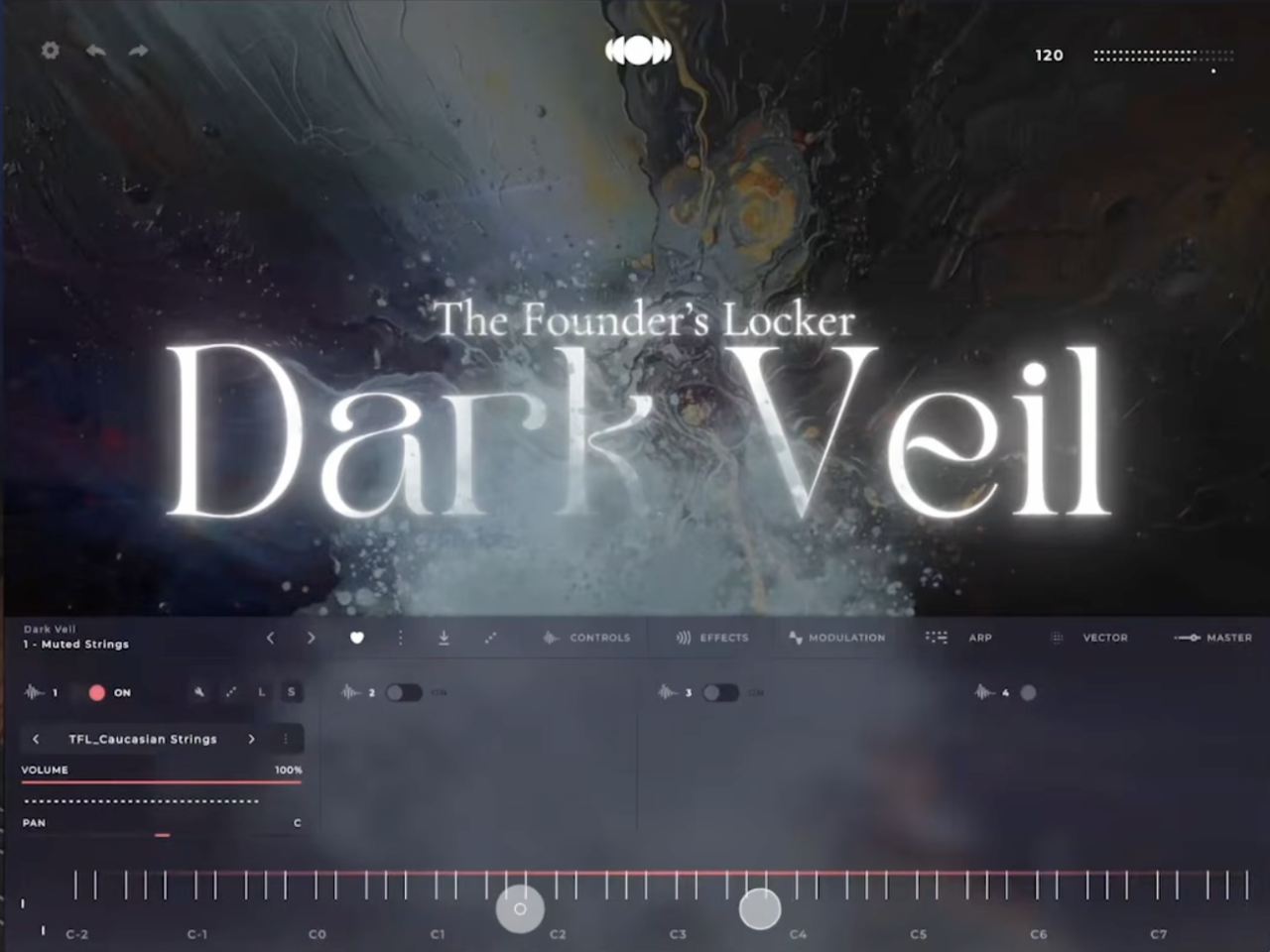
Dark Veil Essentials delivers cinematic, dark bowed textures designed for tension, atmosphere, and emotional depth, and I immediately loved how expressive it feels despite being a lightweight library.
- Dark Bowed Instrument Recordings with Heavy Processing
The source material comes from real bowed instrument recordings processed through FX, amps, and outboard gear, and I can hear that organic foundation in every note. I’ve noticed the low register works perfectly for deep drones, while the upper range adds haunting, almost vocal-like tension.
- Two Highly Expressive Playable Presets
Even though there are only two presets, I’ve found them incredibly versatile for cinematic scoring and ambient production. I like how easily I can build evolving textures without stacking multiple instruments or overcomplicating the arrangement.
- Built for Soundbox with MPE and Aftertouch Support
Because it runs inside Audiomodern Soundbox, you get MPE support, aftertouch responsiveness, and expressive articulation control, and I’ve really enjoyed using it with performance-based automation.
It’s lightweight, expressive, and surprisingly powerful for a free library, and I can easily see myself using it whenever I need dark cinematic atmosphere fast.
Dark Veil Essentials requires Audiomodern Soundbox and works on macOS, Windows, Linux, and iPad in AU, VST, VST3, AAX, and standalone formats.
Arturia FX Collection 6, Efx Ambient & Pitch Shifter-910
Buy here and support Integraudio
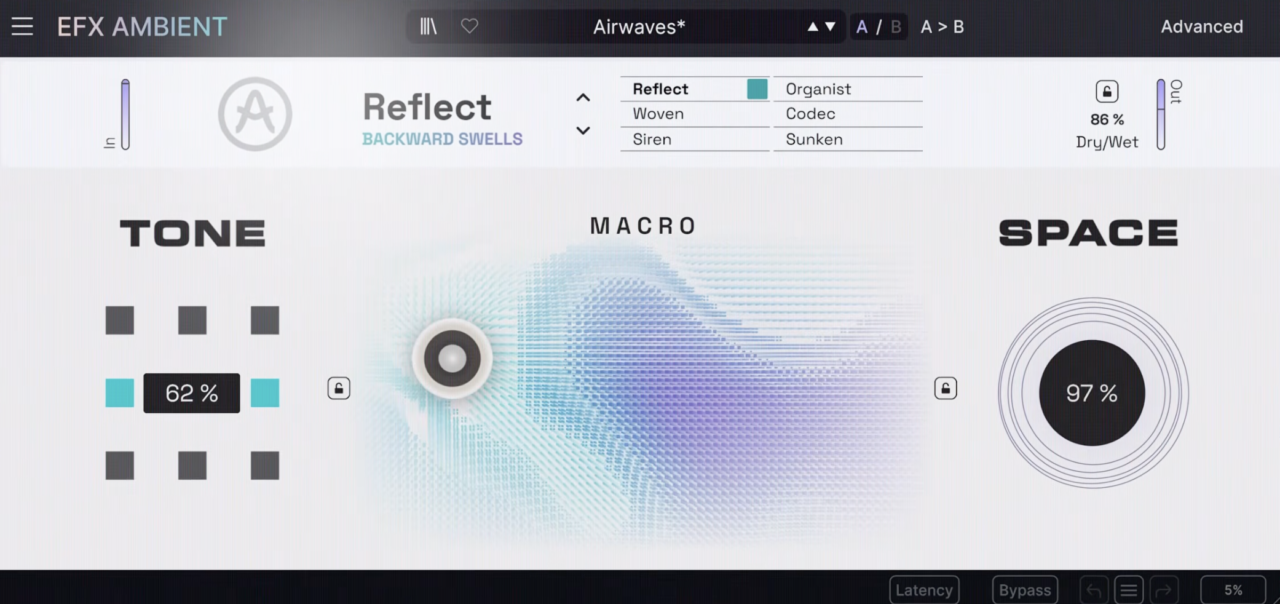
Arturia FX Collection 6 expands one of the most complete effects bundles out there, and I’ve always appreciated how it combines analog-modeled classics with modern creative processors in one unified suite.
- Efx Ambient
This new processor introduces six texture-focused modes designed for evolving soundscapes, and I love how quickly it transforms simple pads or vocals into immersive environments.
- Pitch Shifter-910
Inspired by classic hardware, this plugin delivers grainy pitch shifting, harmonization, and spatial widening, and I’ve always enjoyed this style of effect on guitars and vocals.
- Mix Drums
Designed with mixing engineer Emre Ramazanoglu, this tool focuses on enhancing punch, loudness, and clarity while preserving dynamics, and I’ve found similar processors incredibly useful for speeding up drum workflows.
- Bus Transient and Tape J-37
The suite also adds Bus Transient for attack and sustain shaping and Tape J-37 for analog-style saturation and warmth, and I’ve always relied on these types of processors to add punch and cohesion.
With 39 total effects covering mixing, mastering, and creative processing, this collection easily becomes a central toolbox, and I’d reach for it constantly when working across multiple genres and production styles.
Arturia FX Collection 6 is available for macOS and Windows in VST, VST3, AU, and AAX formats.
Solid State Logic SSL 4K Bundle
Buy here and support Integraudio
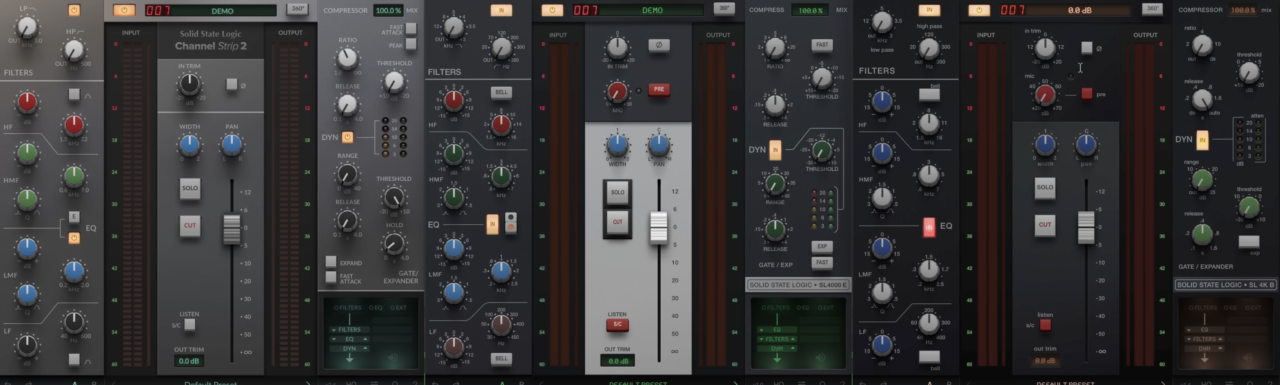
Solid State Logic has brought together three of its most iconic console emulations into one package: 4K B, 4K E, and 4K G, covering the full evolution of the legendary SL 4000 series.
I’ve always loved how each 4K variant has its own personality, and having all three in one bundle makes it much easier to choose the right flavor for the job instead of forcing one console sound across an entire mix.
- 4K B Raw
Modelled after the original SL 4000 B from 1976, this version delivers bold tone and rich analog saturation. I especially like its Bus Compressor-inspired dynamics and unique De-Esser mode, which add character fast. It feels gritty and musical, perfect when I want attitude rather than polish.
- 4K E
The 4000E shaped countless hit records, and this plug-in captures that big, forward SSL sound. With selectable Brown, Black, and rare Orange EQ flavors, plus Revision 4 dynamics and transformer modeling, it’s incredibly versatile. I tend to reach for it when drums or vocals need that unmistakable SSL bite.
- 4K G
The 4000G introduced a more polished response, and I’ve always appreciated its Pink 292 EQ for musical shaping and tighter dynamics section. The variable mic impedance and refined compression make it great for dense, modern productions where control matters.
All three integrate seamlessly with SSL 360° and UC1/UF8 hardware, which is a big workflow win if you’re inside the SSL ecosystem.
At an introductory price of $199 (regularly $299) until the 2nd of March, this bundle gives you three distinct console flavors in one cohesive channel strip collection.
SSL 4K Bundle is available for macOS and Windows in VST, VST3, AU, and AAX formats.
Fracture Sounds Blueprint Wurli
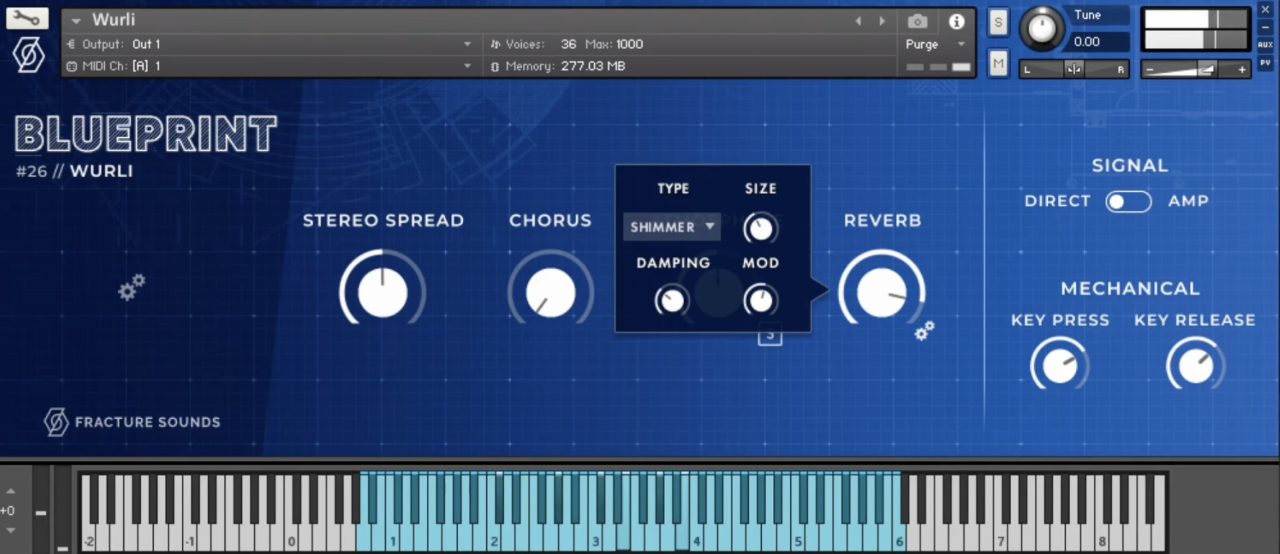
Few sounds carry as much personality as a properly sampled Wurlitzer, but Blueprint: Wurli captures that gritty, expressive electric piano tone beautifully.
I immediately noticed how authentic it feels under the fingers, and I love how it keeps the raw character intact instead of over-polishing it.
- Authentic Wurlitzer Sampling with Direct and Amp Modes
The included Direct/Amp switch makes a huge difference in tone shaping. I personally prefer the Amp mode because it adds grit and attitude, which helps the sound cut through mixes naturally. When I want something softer or more intimate, the Direct mode delivers a cleaner and more delicate response.
- Atmosphere Layering for Creative Sound Design
The Atmosphere control goes far beyond standard electric piano processing. I’ve used it to transform the Wurli into ambient textures and cinematic layers, and some Atmosphere presets sound incredible even on their own. It turns a traditional instrument into something far more versatile than expected.
- Built-in Effects and Performance Controls
With Stereo Spread, Chorus, and Reverb, it’s easy to shape the space and width without needing extra plugins.
I especially like the subtle Room and Hall reverbs for realism, while Chorus can instantly push things into vintage territory. The Mechanical Noise and Velocity controls also help dial in realism, which makes performances feel more alive.
Blueprint: Wurli is available for Kontakt Player on macOS and Windows in VST, VST3, AU, and AAX formats.
Smiarx ÆLAPSE
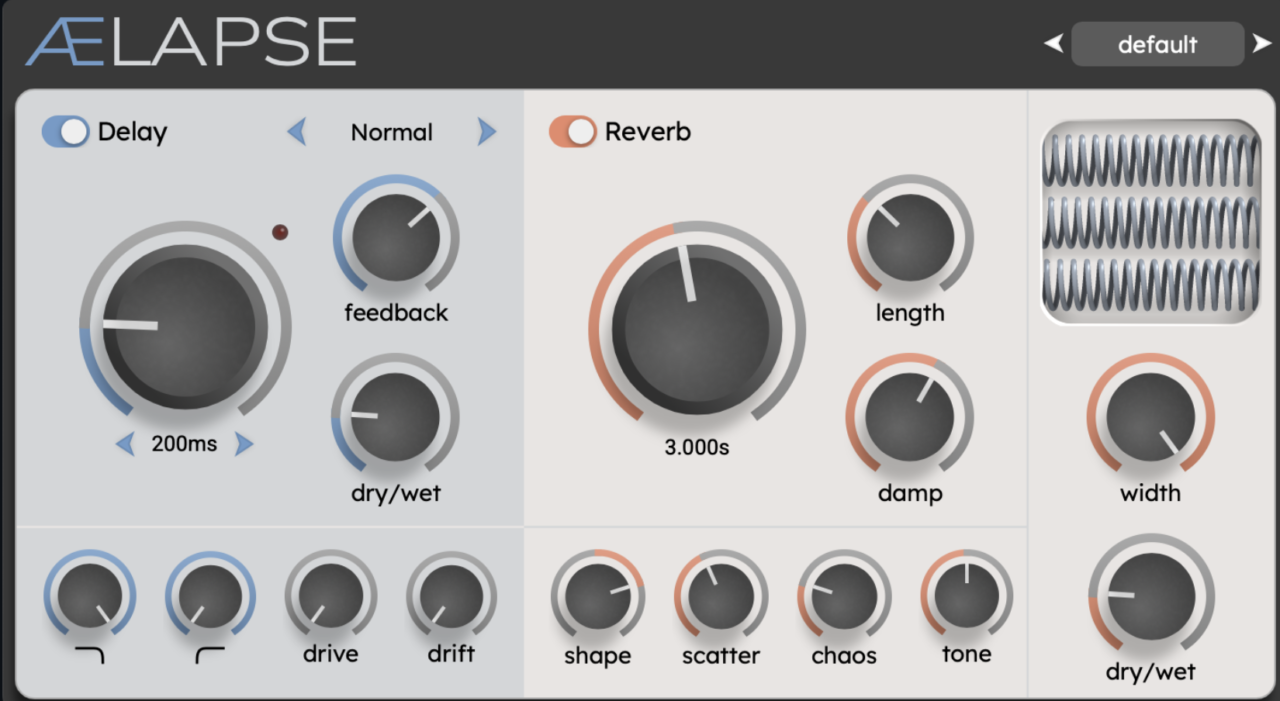
Some free plugins feel like “here’s the demo, good luck.” ÆLAPSE feels like someone accidentally uploaded the finished product.
I tried it for a quick “guitar space” fix and immediately got that dubby, wobbly magic I usually chase with a whole chain of stuff. I love that it’s a tape-style delay and a spring-inspired reverb in one place, because my brain can stay in vibe mode instead of “routing spaghetti” mode.
- Tape-Style Delay
I’ve used the Drive to add a little crust to repeats, and it gets tasty without turning into harsh mush. The real sauce is Drift, as I enjoy how it introduces that tiny instability that makes echoes feel alive, like the delay is slightly drunk (in a good way).
- Spring-Inspired Reverb
The Shape and Tone controls make it easy to go from lo-fi drip to surprisingly modern space, and I love that it doesn’t force you into only “boing boing” territory. Push Chaos and Scatter and it can get weird in the best way, especially on synth stabs and one-shots.
- Filters and Stereo Control
The High-Pass and Low-Pass filters help you tuck the repeats behind the mix, and I’ve used Width to go from tight, center-ish guitar verb to wide, floaty textures fast. Being able to disable Delay or Reverb is clutch when I just want one side of the plugin without extra fuss.
ÆLAPSE is available in VST, AU, and LV2 formats for Windows, macOS, and Linux.
Noizefield Audio Plugin Coder (APC)
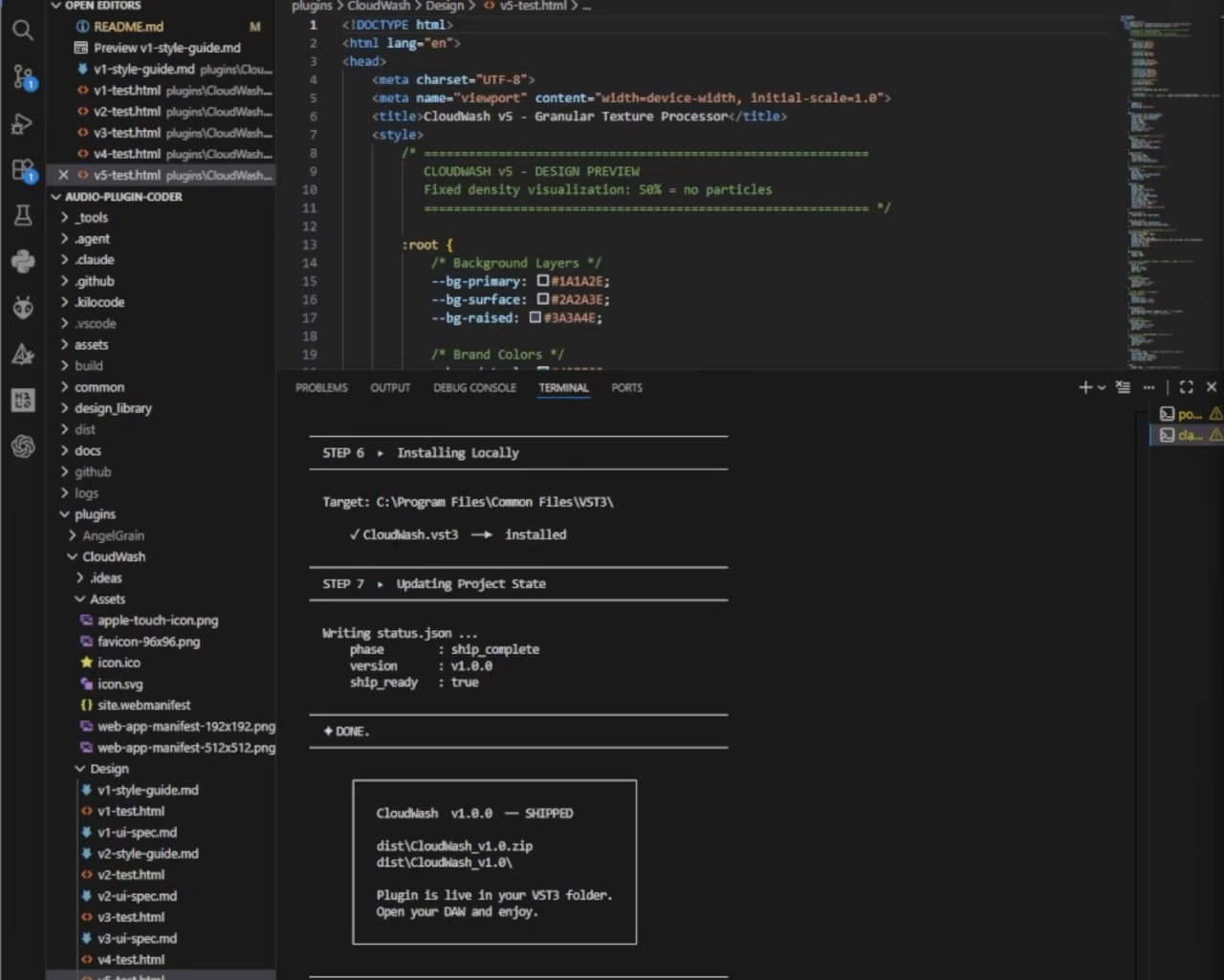
This one is more for developer musicians, so if you are not into creating your own special plugin, you can skip this one. Audio Plugin Coder is basically the “I have an idea at 3 AM” button for plugin nerds.
- Prompt-based plugin creation
I love that you can pitch a concept like you’re talking to a collaborator, not writing a spec doc for a robot. I’ve found it’s best for quickly sketching utilities and weird little creative tools, the kind of stuff you’d normally abandon because building the first prototype is a pain.
- Dream–Plan–Design–Implement–Ship workflow
What I enjoy here is the structure: it nudges you to define the idea, answer a few key questions, then move step-by-step into a buildable result.
- UI framework choices
I like that you can pick Visage for a C++-style UI or WebView for an HTML5 approach, because the interface is usually where prototypes go to die. I’ve used quick UI tweaks as a “does this feel playable?” test, and APC makes that part way less painful.
- JUCE 8 + CMake build output
The coolest part to me is that it’s not just a toy mockup, it’s aiming at a proper plugin project structure you can continue developing. I’ve seen too many “easy builders” that trap you in a dead-end format, so having a path toward a serious build is a big deal.
Well, the downside is that it’s still in active development, so bugs and sudden changes are part of the ride.
Still, if you’re the type who hoards plugin ideas like unfinished songs, APC is the rare tool that can turn that pile of “maybe someday” into something you can actually load up and test.
Audio Plugin Coder is available for macOS, Windows, and Linux in AU, VST3, LV2, and standalone formats.
Polarity Polarity-MD
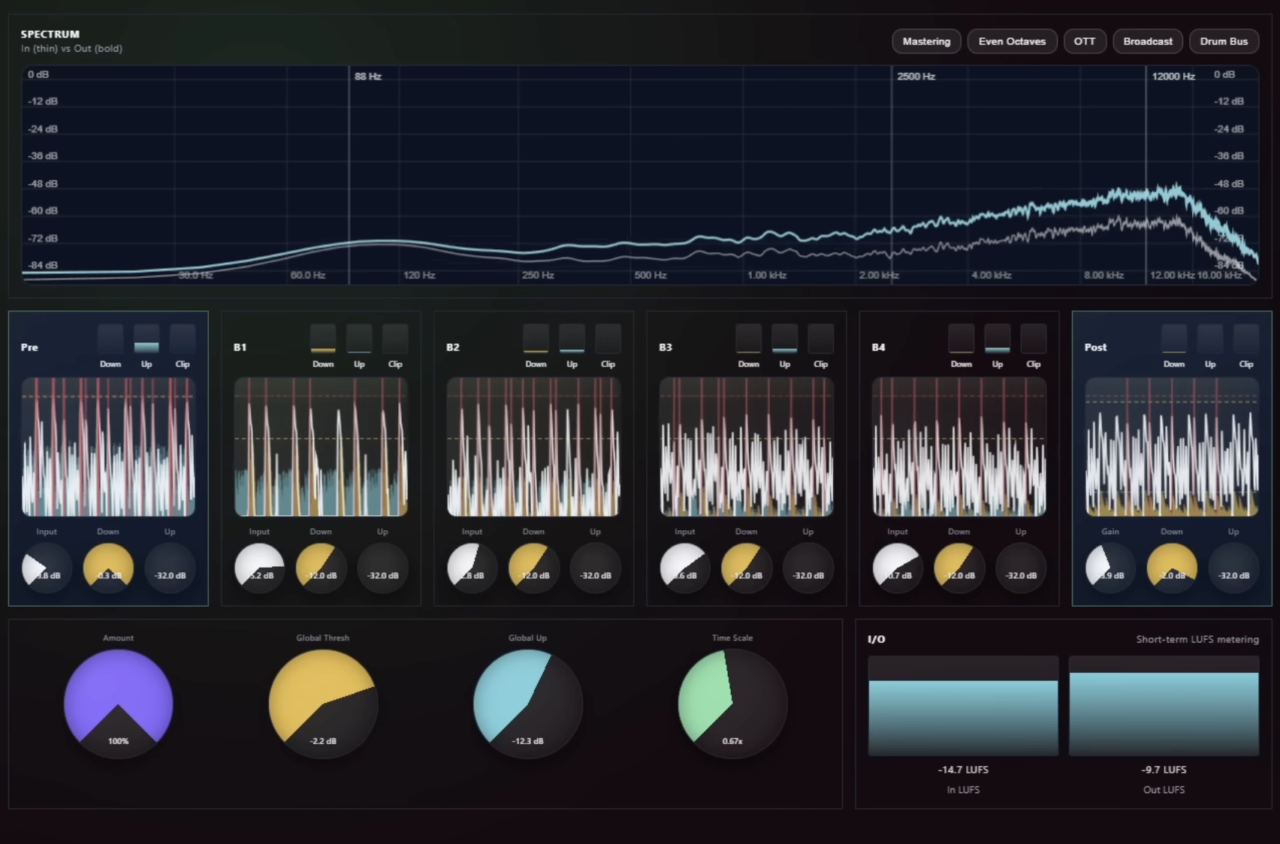
Polarity-MD is basically OTT with better manners and an extra band, and I’m into it. I’ve followed Polarity’s stuff for a while, and this feels like the same vibe: practical, fast, and a little dangerous if you get cocky with the knobs.
- Four-band OTT architecture
I love the four bands because it lets me hype the snap without turning the low end into a wobbling blob. I’ve used it to keep kicks solid while still getting that “bigger than life” top-end lift.
- Upward and downward compression
What I enjoy is stacking upward compression for density with downward compression to keep peaks from going feral. I’ve had it bring dead drums back to life in seconds.
- Per-band clipping
The per-band clipping is clutch when you want loud and tight, not loud and crunchy-in-a-bad-way. I’ve used it to shave harsh bands without flattening everything.
- Crossover control
The Linkwitz-Riley crossovers make the multiband split feel clean and predictable. I like being able to aim the intensity where the source actually needs it.
For those whowant that fast punch, extra density, and controlled chaos without building a whole chain, Polirty MD is a good option to check out.
Polarity-MD is available in AU, VST3, and CLAP formats for macOS, Windows, and Linux.
Niviem Phase One, OPT4, and DalEQ
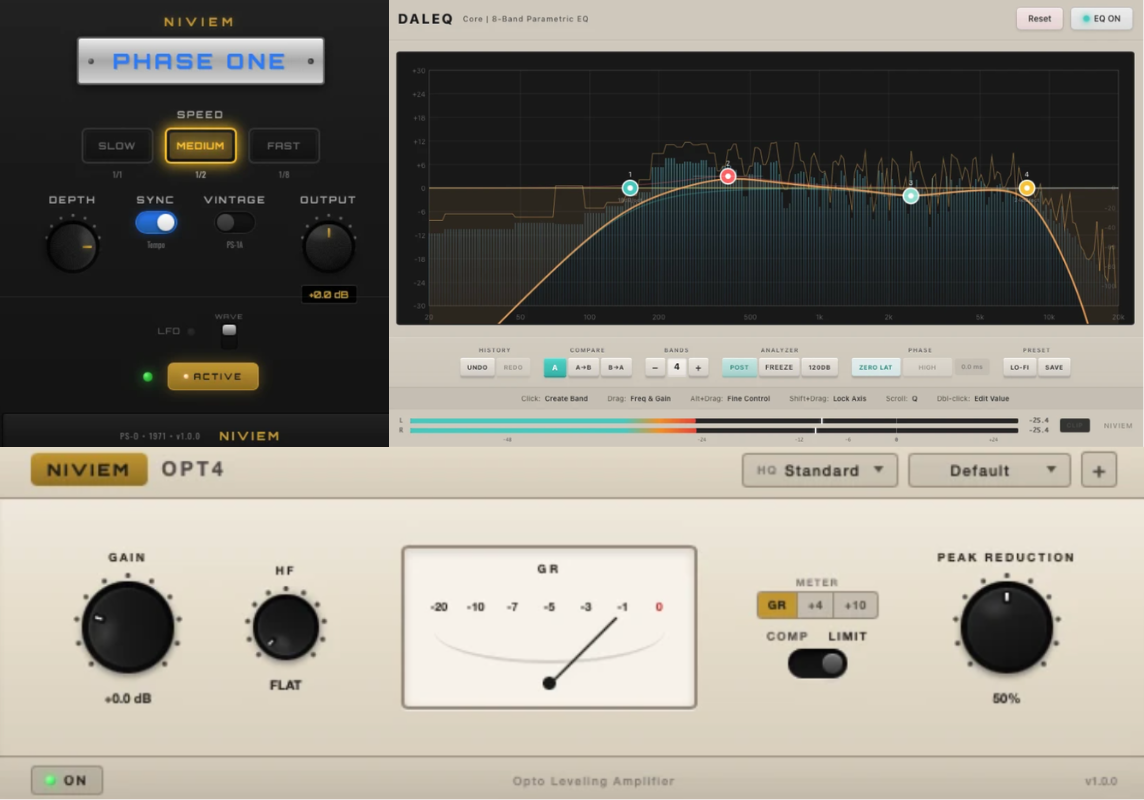
Niviem dropped a neat little “starter pack” of freebies that doesn’t feel like filler: a vibey phaser for movement, an opto comp for smooth leveling, and a surprisingly deep EQ for the serious stuff.
- Phase One (6-stage phaser with fixed speeds)
I love how Phase One goes straight for that early-’70s swirl instead of trying to be a do-everything modulation monster.
The Slow, Medium, Fast presets keep you in the “always musical” zone, and the Leslie-style speed ramping makes speed changes feel smooth and organic. Vintage mode adds a little wobble and grit, while Modern mode brings depth control and tempo sync when you want it tighter.
- OPT4 (LA-2A-style opto leveling)
OPT4 is the “make it sit” button in the most classic way: Peak Reduction + Gain and you’re basically there.
What I enjoy is the R37 emphasis control, because it works like a sidechain high-pass vibe that stops the low end from bullying the compression. Add in the tube and transformer modeling plus oversampling, and it can stay clean or add a touch of glow depending on how hard you lean on it.
- DalEQ Core (8-band parametric with advanced options)
This one surprised me with its 8bands, tons of filter types, slopes up to 96 dB/oct, plus stereo/mid/side per band is already generous, but you also get a spectrum analyzer, linear-phase mode, and even dynamic EQ features.
I’d use it as a “one EQ that can do most jobs” when I’m moving fast and don’t want to swap tools mid-mix.
Phase One, OPT4, and DalEQ Core are available in AU and VST3 formats for macOS and Windows.
The Crow Hill Company Glass Beaker
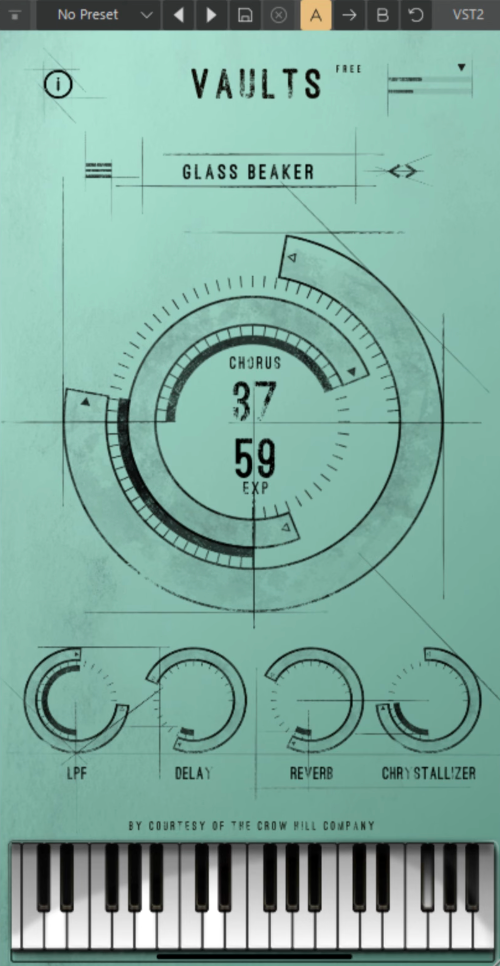
There’s something quietly rebellious about Glass Beaker. Instead of starting with scales, theory, or a “real” instrument, it starts with an object, a microphone, and curiosity, and somehow ends up sounding like a half-remembered keyboard from a dream.
To my ears it lives in that glockenspiel-celeste neighborhood, but it never fully settles, which is exactly the point: it’s familiar enough to play melodically, yet strange enough to keep pulling you off the beaten path.
- Mic Capture
What I love is that this isn’t a “lo-fi weird thing” at all. It was recorded at Gorbals Sound in Glasgow with an XY pair and spaced pair of Neumann KM184s, plus a close Neumann U87, so the instrument has real depth and air before you even touch the effects.
- Chorus
The big CHORUS knob is the instant mood switch. I’ve used it for subtle stereo bloom, but push it and it gets that shimmering, watery drift that makes simple lines feel like they’re moving under light.
- Expression
Expression is where the beakers stop behaving like a sampled “instrument” and start feeling responsive. Small moves change the emotional weight fast, from soft and delicate to more pointed and present.
- LPF
I use LPF when I want the glass to feel further away, like it’s coming from behind the track instead of sitting on top of it.
- Delay and Reverb
The DELAY is wide and enveloping, perfect for turning single hits into little rhythmic trails without needing extra routing. The REVERB is lush and believable, and it’s the quickest way to push the beakers into cinematic space.
- Crystalliser
Crystalliser is the wildcard. A little adds texture; more gives you that granular sparkle that turns the instrument into an ambient bed.
It’s one of those instruments to open when you want to start a track from texture first, then let melody happen naturally, and it’s especially addictive for cinematic beds, ambient intros, and eerie little hook lines.
Glass Beaker is available for macOS and Windows users.
Craft Labs Mayerism
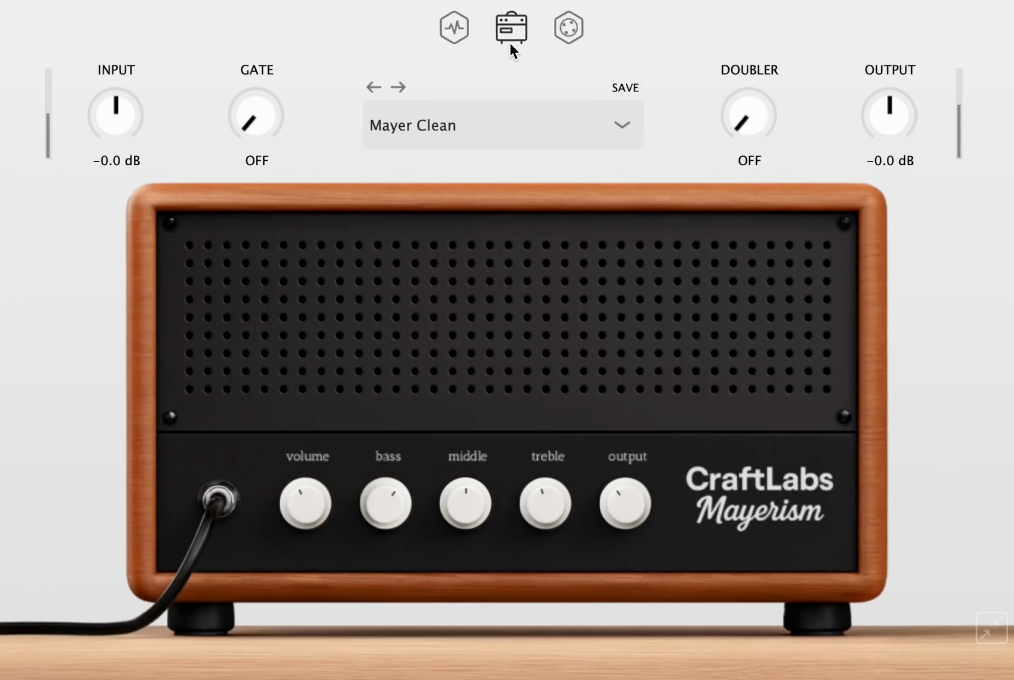
Dropping this on a guitar track feels less like “auditioning an amp sim” and more like plugging into a ready-made, touch-responsive clean tone that’s already sitting in the right place.
I’ve used a bunch of NAM-based stuff, and what I enjoy here in Mayerism, besides that it’s completely free, is how real and immediate it feels while keeping the interface simple enough that I’m not fiddling for 20 minutes before I hit record.
- NAM-based amp capture
Mayerism wraps the Neural Amp Modeler realism into a streamlined plugin, so I get that convincing feel and dynamics without dealing with a complicated environment.
- Amp controls
I like the straightforward Volume, Bass, Middle, Treble, and Output setup, because it keeps me in “play and react” mode instead of “engineer and tweak” mode.
- Pedalboard
The built-in stomp section is genuinely useful: I’ll hit the compressor for sustain, use the clean boost to lift a part, and the Tube Screamer-style drive when I want that mid push without wrecking the clarity.
- Post effects
The chorus, delay, and reverb are perfect for quick vibe-building, especially when I’m sketching parts and want the sound to feel finished right away.
- Utility tools
The noise gate and doubler are the kind of practical extras I actually appreciate; the doubler especially makes single takes feel wider without setting up extra tracks.
On the down part, there’s no cab or mic swapping, so you’re committing to the curated sound rather than building a totally custom rig.
For me, it’s an easy first pick on clean rhythm layers, expressive lead lines, and any track where I want that polished, touch-sensitive “amp in the room” response fast.
Mayerism comes in standard plugin formats for macOS and Windows users.
Last Words
February 2026 was packed: creative toys like Minimal Audio Poly Flanger (key-locked harmonic modulation), ZigZagzAudio Sound Soup (playful multi-FX), and Smiarx ÆLAPSE (tape-ish delay plus spring-leaning reverb) landed alongside more “get work done” tools like Ewan Bristow ANINA, Polarity-MD, and the SSL 4K Bundle.
What really stood out, though, is how little the freebies feel like compromises now: puffer:fish, Panoramatone, Dark Veil Essentials, Glass Beaker, and Blueprint: Wurli all bring legit character without the usual “free plugin” caveats, while bigger drops like Arturia FX Collection 6 cover the all-in-one suite crowd and Audio Plugin Coder hints at where workflows are heading.
If you only try a few, I’d pick one for color, one for space/movement, one for mix control, and one instrument you’ll actually play, and this month gives you strong options in every lane.

Berk is a multi-instrumentalist musician from Istanbul, Turkey. He has been playing guitar, handpan, and percussion for over ten years, developing a sound that blends melodic sensitivity with rhythmic depth.
He began his musical journey as a teenager, learning guitar and performing in several bands. In 2016, he discovered the handpan, an instrument that immediately resonated with him on a deeper level and gradually became central to his artistic identity.
Since then, he has performed in streets, festivals, bars, and concert venues across different countries, connecting with diverse audiences through both intimate and large-scale performances.
Alongside his live work, Berk is deeply involved in studio production. He works from his home studio, where he composes, records, and produces his own music. His studio serves as a creative space for layering handpan, guitar, and percussion with modern production techniques, allowing him to shape fully realized, atmospheric compositions from start to finish.
His music explores a wide range of genres and textures, combining organic acoustic instruments with detailed studio production to create immersive and expressive soundscapes.