
As we step into 2026, the release window between Christmas and the first week of January has quietly turned into one of the most interesting plugins drop periods of the year.
While most people are still in holiday mode, developers have been shipping everything from experimental synths and cinematic VST instruments to AI-powered studios and deeply sampled classics. It’s that short, in-between moment where releases feel bold, slightly unconventional, and often refreshingly focused.
This article rounds up the new plugins released right as we crossed into 2026, highlighting what actually stands out once you load them into a real session. These aren’t just announcement blurbs; they’re tools I’ve looked at through a practical lens, thinking about how they slot into modern workflows in FL Studio, REAPER, and other DAWs. Some are free, some are premium, some are niche, and others are surprisingly versatile, but all of them say something about where music production is heading this year.
Let’s dive into what’s new as 2026 gets underway.
PulseDial (by Kushview)

PulseDial turns classic telephone keypad tones into a surprisingly playable instrument, and it commits to the idea instead of treating DTMF as a novelty. What I like most is how authentic it sounds while still being fun to sequence and perform with. I loaded it out of curiosity and quickly found myself building rhythmic ideas around it.
The workflow is straightforward and concept-driven. The 4×4 telephone keypad sits at the center, and everything else supports it cleanly. In both FL Studio and Logic, MIDI behavior is predictable, automation is smooth, and the UI stays readable even when moving fast.
- Authentic DTMF Synthesis delivers precisely tuned dual tones (±1.5%) aligned with ITU-T Q.23 standards. The tones feel right, whether used for literal signaling or musical textures.
- Hold, OneShot & Spec Modes let you switch between strict technical timing and more flexible, musical behavior depending on the context.
- Arpeggiator & MIDI Mapping (8 patterns, up to 16 steps) turn PulseDial into an expressive rhythmic tool rather than a static sound source.
- Phone Line Filter & Creative FX push it beyond realism with noise, saturation, quantization, and stereo width.
The palette is intentionally narrow, so it works best as a character instrument. I reach for PulseDial on experimental tracks, retro-tech cues, and sound design where recognizability and control matter.
PulseDial is available standalone and in VST3, AU, AUv3, CLAP, and LV2 formats for macOS, Windows, and Linux.
Electric Neon Essentials (by Native Instruments)
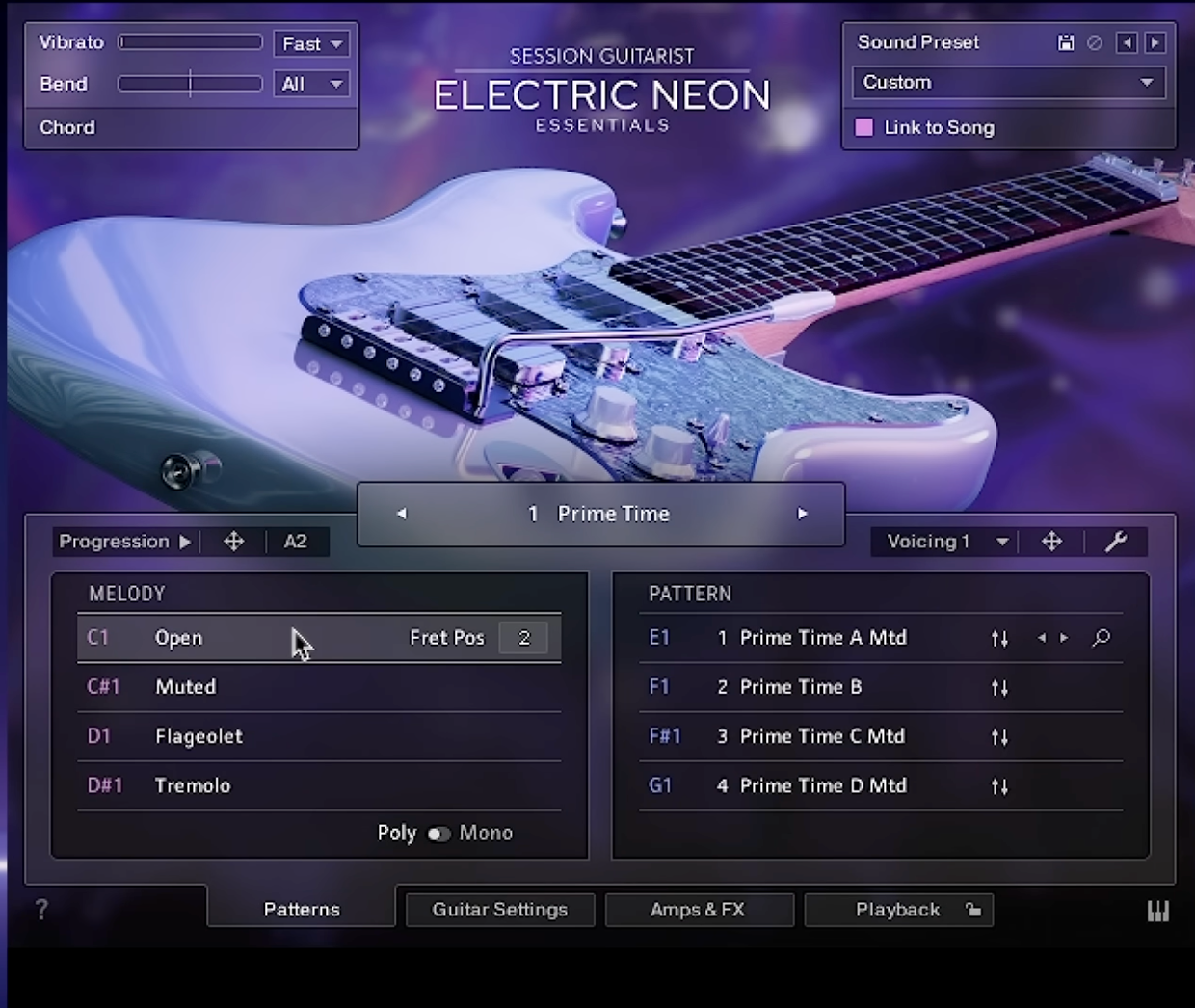
One of my favorite guitar VST plugins, Electric Neon Essentials treats guitar as a modern electronic texture, not a traditional performance instrument. The strength here is speed: I can play a simple MIDI idea and instantly get bright, polished guitar parts that sit comfortably in pop or EDM mixes without touching amps or tone theory.
The Kontakt-based workflow is clearly designed for momentum. Patterns, melody mode, and effects are exactly where you expect them, and it integrates smoothly in both FL Studio and REAPER for pattern-based writing or full arrangements.
- Pattern Engine (148 patterns) covers syncopated pulses, rolling 16ths, triplets, and swells, making it easy to establish groove quickly. These patterns often become the rhythmic backbone of a section.
- Melody Mode lets the instrument behave more like a synth lead, staying focused and controlled even in dense arrangements.
- Processed Guitar Tone & FX Chains are clearly voiced for electronic music, with tight mutes, tremolos, shimmer, and width already dialed in.
I gotta say that it’s intentionally style-specific and not meant for realistic guitar performances. If you need pop, EDM, and high-energy electronic tracks where mix-ready guitar parts are needed fast, this is your guy.
Electric Neon Essentials runs in Kontakt (v8.5.0 or later) for macOS and Windows. For more information on Kontakt and Kontakt libraries see Kontakt: The Fundamental Guide by Jack Cockrell
Chippo (by Emily Hopkins)
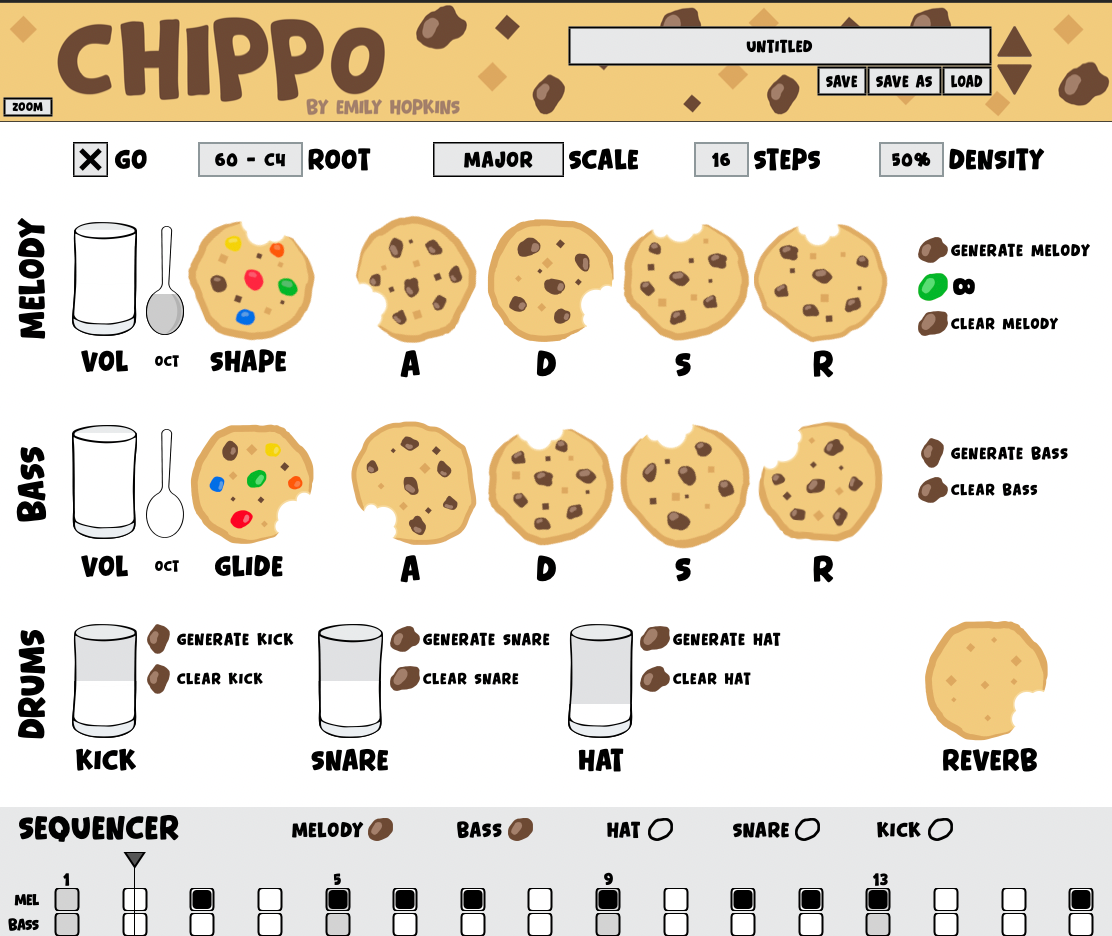
Well, if you like a fun style VST, here is the cookie! Chippo is a sequencer that leans into happy accidents. Instead of trying to sound polished or predictable, it generates melodies, basslines, and drum patterns that feel slightly off-center, in a way that constantly nudges me toward ideas I wouldn’t normally play. It’s great for breaking habits and getting unstuck.
The interface is playful but practical, with everything visible at once. The workflow is about generating, regenerating, and nudging ideas rather than programming from scratch. I’ve been using it as a fast idea generator that can either stay MIDI-based or be bounced to audio quickly.
- Musical Constraints let you define root, scale, density, and step length (up to 64 steps), keeping results intentional rather than random.
- Three Sequencer Sections (Melody, Bass, Drums) each have dedicated generators. Melody and Bass offer Shape/ADSR or Glide controls, while Drums stay focused with kick, snare, and hat generators.
- Regenerate & Randomize make iteration effortless, small tweaks or full resets both happen fast.
I think this is the most fun VST in the list, and it is pretty good for electronic, experimental, and game-inspired projects, especially when paired with external FX.
Chippo is available in AU and VST3 formats for macOS and Windows.
Heartbreaker Synth (by AngelicVibes)
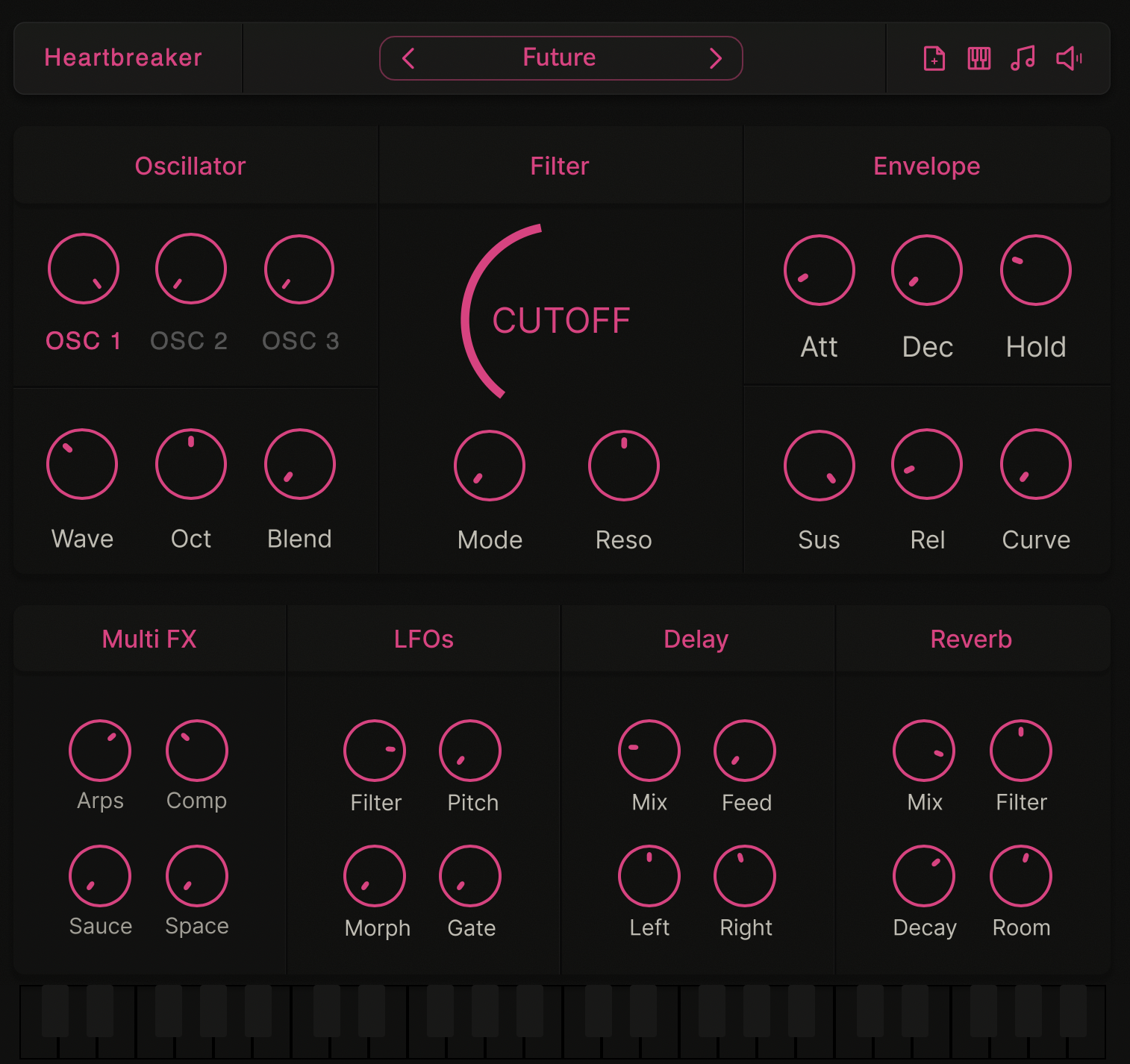
Heartbreaker Synth is unapologetically mood-first, and that focus comes through immediately. Instead of deep synthesis or modular complexity, it’s built around emotional, modern sound palettes that let you choose a feeling and move forward. I like how it commits to that idea without trying to cover every possible use case, especially impressive considering it’s completely free.
The interface is clean and intentionally minimal, which makes it easy to stay in a creative headspace. I tried it on FL Studio and it works smoothly as a fast sketch instrument: presets load quickly, controls respond predictably, and nothing pulls you into endless tweaking when inspiration is flowing.
- 128 Factory Presets form the core of the instrument, covering trap leads, ambient pads, dreamy keys, atmospheric textures, basses, and bells. They’re clearly voiced for dark pop, R&B, and modern electronic music.
- Integrated Effects, reverb, delay, saturation, distortion, compression, and filtering, are baked into the presets, so sounds tend to sit well in a mix right away.
- LFO Modulation & Morphing add just enough movement to keep pads and leads evolving without turning sound design into a technical task.
Heartbreaker Synth is a reliable free go-to for emotional pop and moody electronic tracks when vibe matters more than complexity.
Heartbreaker Synth comes in VST format for macOS and Windows users.
World Vocals 5 (by Rast Sound)
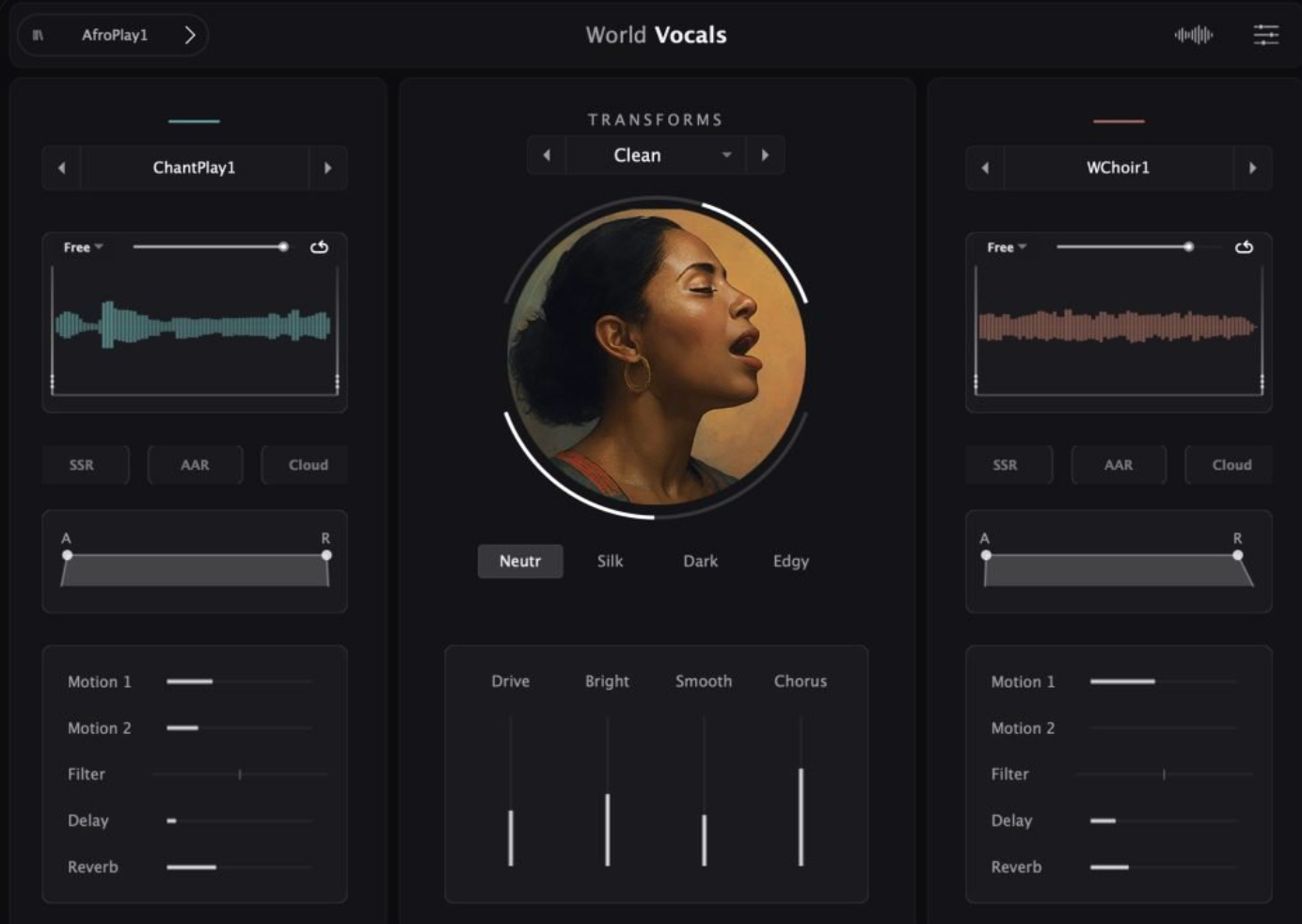
World Vocals 5 feels less like a sample library and more like a vocal instrument engine. Drawing from 21 performers across five continents, it captures authentic cultural voices while giving you modern tools to reshape, hybridize, and rhythmically control them. I like how it turns vocal phrases into compositional material rather than decorative layers.
- Dual-Layer Engine with Morphing lets you combine two vocal sources at once and spectrally blend them into entirely new hybrid voices. Mixing, for example, Balkan harmonies with Indian ragas creates textures that feel both ancient and futuristic.
- BPM Sync & Length Lock keep vocals rhythmically intentional, snapping phrases cleanly to tempo without pitch artifacts. In FL Studio and REAPER, this makes vocals groove naturally with drums and bass.
- 15 Transforms & Character Modes quickly re-voice the engine, from cathedral-like pads to darker, edgier textures, making tonal decisions fast during arrangement.
- Randomization, Granular Clouds & User Samples add organic variation and let you apply the same engine to your own audio.
It takes some experimentation to fully grasp the engine’s depth. I reach for World Vocals 5 in cinematic scoring, electronic music with global influences, and projects where vocals need to behave like evolving instruments.
World Vocals 5 comes in VST3, AU, and AAX formats for macOS and Windows users.
Low End Orchestra (by Orchestral Tools)
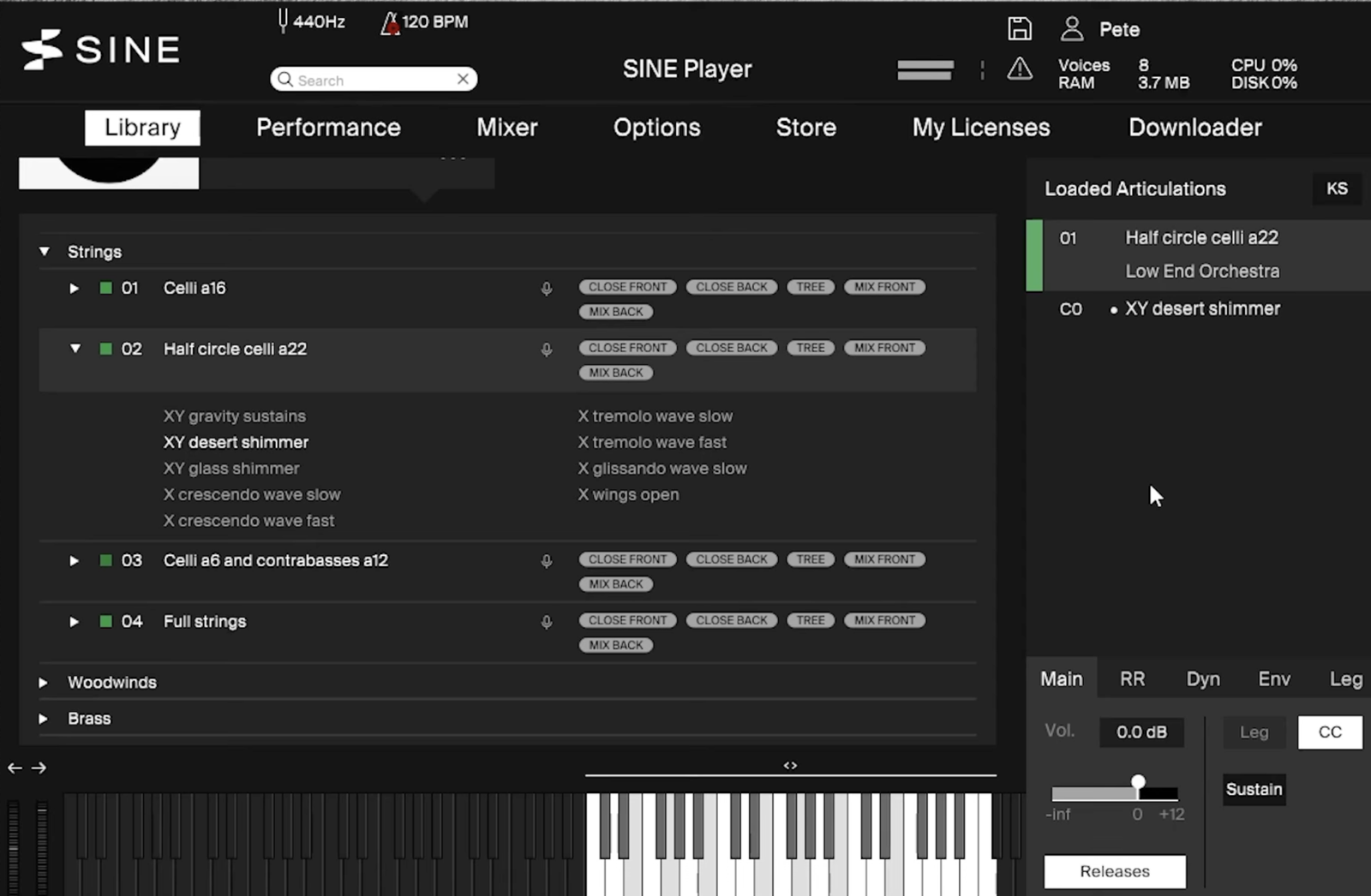
Low End Orchestra is built around power and gravity. Instead of covering the full orchestral spectrum, it commits entirely to the bass register and treats low frequencies as the emotional core of a cue. I really enjoy how it reframes orchestral writing, low instruments aren’t support here, they’re the main event.
- Bass-Focused Ensembles include massive string sections like 16 celli, 22 celli, and 6 celli + 12 basses, alongside deep woodwinds and brass such as contrabass clarinets, tubas, sousaphones, and cimbassi. These sections dominate the harmonic space.
- Spatial & Experimental Articulations introduce movement across stereo and surround fields, with directional control that works beautifully for tension and trailer-style writing.
- Sub-Bass & Processed Layers combine re-amped synth patches with 50+ processed sounds, reinforcing impact moments without relying on external sub generators.
- Extensive Mic Control (21 positions) makes it suitable for stereo, surround, and immersive formats.
The library is demanding in both system resources and learning time, but Low End Orchestra truly shines in cinematic scoring, trailers, and dark hybrid projects where the low end carries emotional weight.
Low End Orchestra runs in the free SINE Player (VST, VST3, AU, AAX) for macOS and Windows.
Bloom Bass Groove Lite (by Excite Audio)
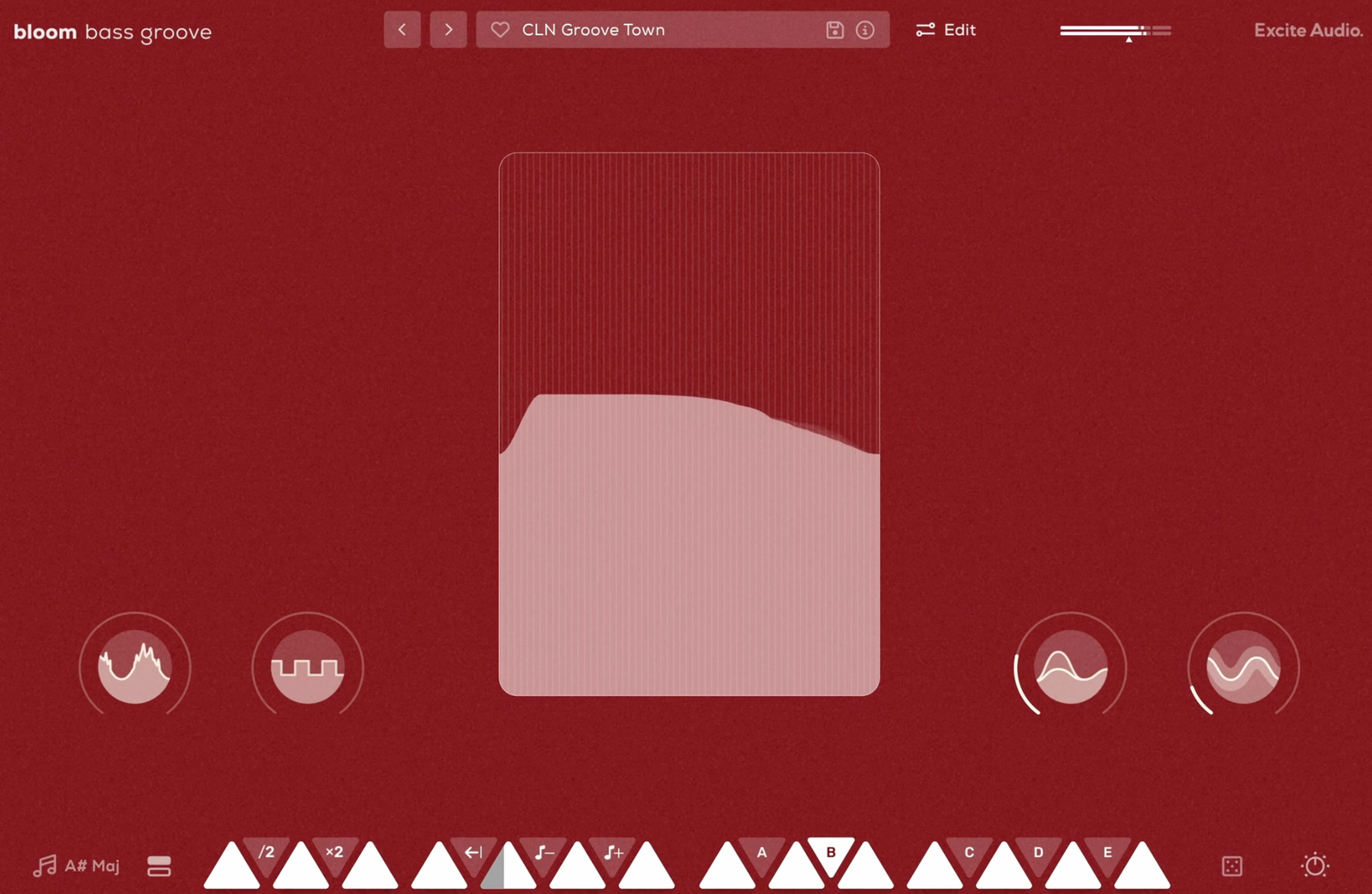
For those looking for a useful bass virtual instrument, here is the new star, Bloom Bass Groove, a rare virtual instrument that doesn’t feel compromised. Instead of programming basslines note by note, you trigger real performances that already groove, which makes it incredibly easy to keep the momentum going when ideas are fresh.
The workflow is built around playability. I tried it on Reaper and FL Studio, everything is tempo-synced and key-selectable, so bass parts drop into place without fighting the arrangement. It’s very much a “play first, tweak later” approach.
- Phrase Player is the standout feature: white keys trigger BPM-synced phrases and one-shots, while black keys introduce variations, pitch shifts, speed changes, and modulation.
- Real Bass Articulations include slap, fingerstyle, picked, and muted performances. With 75 presets and 56 samples across four banks, there’s plenty to work with for a Lite version.
- Macro Controls (Tube, Digital, Sub-EQ, Realism) keep sound shaping simple, while randomization helps generate new groove ideas quickly.
You miss deeper phrase editing and sample import as well as extra FX modules from the full version, but I doubt they would be necessary. In my experience, Bloom Bass Groove Lite is a go-to for groove-based tracks when I want basslines that sound finished almost instantly.
Bloom Bass Groove Lite comes in VST, VST3, AU, AAX, and standalone formats for macOS and Windows users.
1980 Rhode Studio 54 (by Soundpaint)
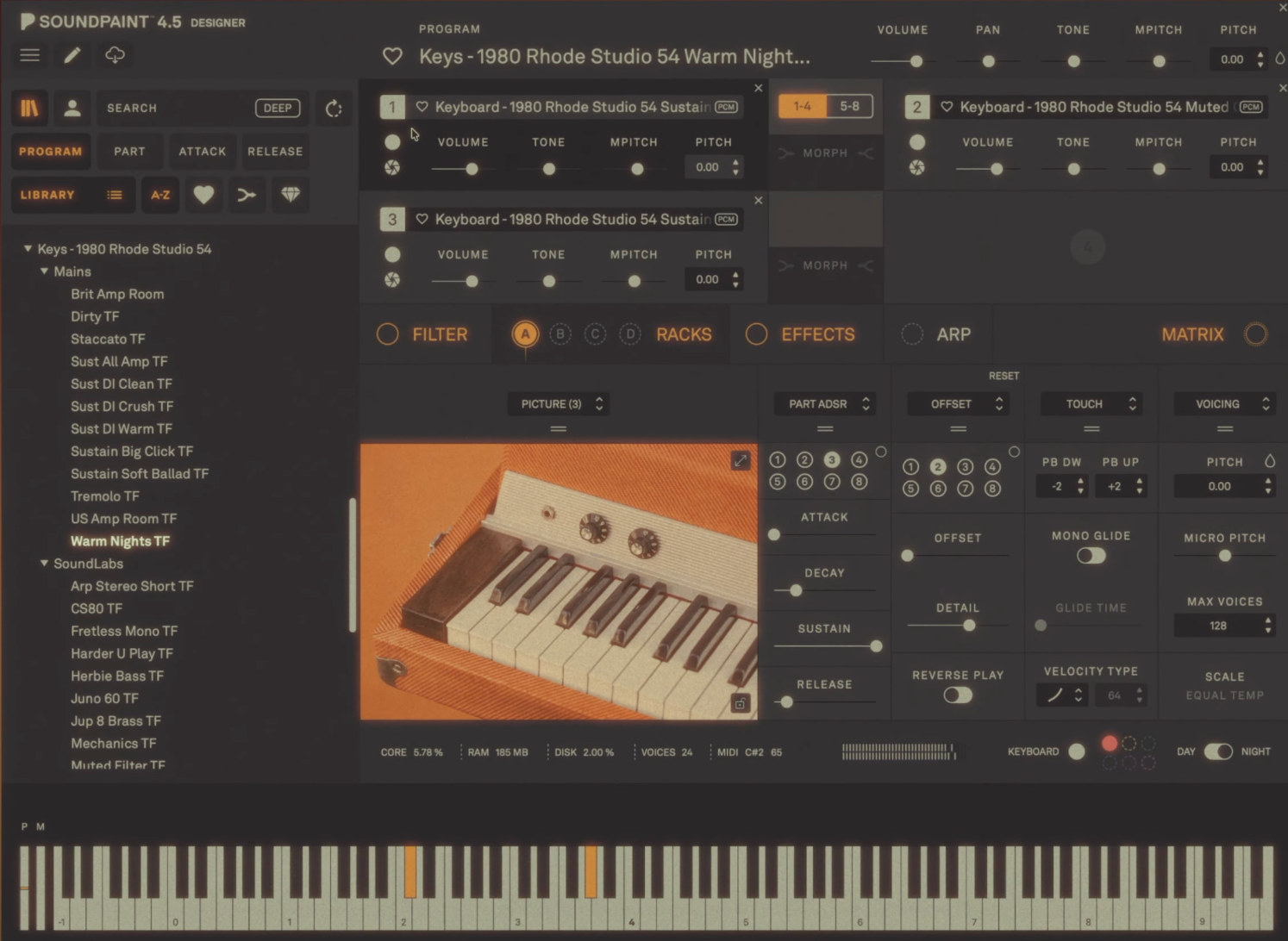
The first thing that stands out with 1980 Rhode Studio 54 is just how deep the sampling goes. This isn’t limited to sustains and staccatos, you get prepared articulations, plucked and muted tines, and even recordings from inside the opened suitcase itself. I really enjoy how this captures the personality of the instrument from every angle, from warm cinematic chords to intimate, tactile noises that feel almost physical.
- Deeply Sampled Suitcase Piano includes round-robin sustains and staccatos alongside prepared articulations that add texture and emotional nuance beyond a standard electric piano.
- Elite Microphones & Premium Reverbs, Neumann, AKG, Coles, and ribbon mics combined with Bricasti and TC Electronic System 6000 captures, deliver finished spatial depth straight out of the box.
- Fully Analog Signal Chain & Expressive Controls give you detailed control over velocity, tremolo, resonance, noise, pedals, and ADSR, making the instrument feel alive under the fingers.
At over 15 GB, it’s clearly aimed at users comfortable with large libraries. When I tried it, I saw that this shines in cinematic scoring, ambient music, and emotional pop where the electric piano needs to feel intimate and present.
1980 Rhode Studio 54 is available as standalone, VST, VST3, AU, and AAX for macOS and Windows.
Velvet Guitars (by e-instruments)
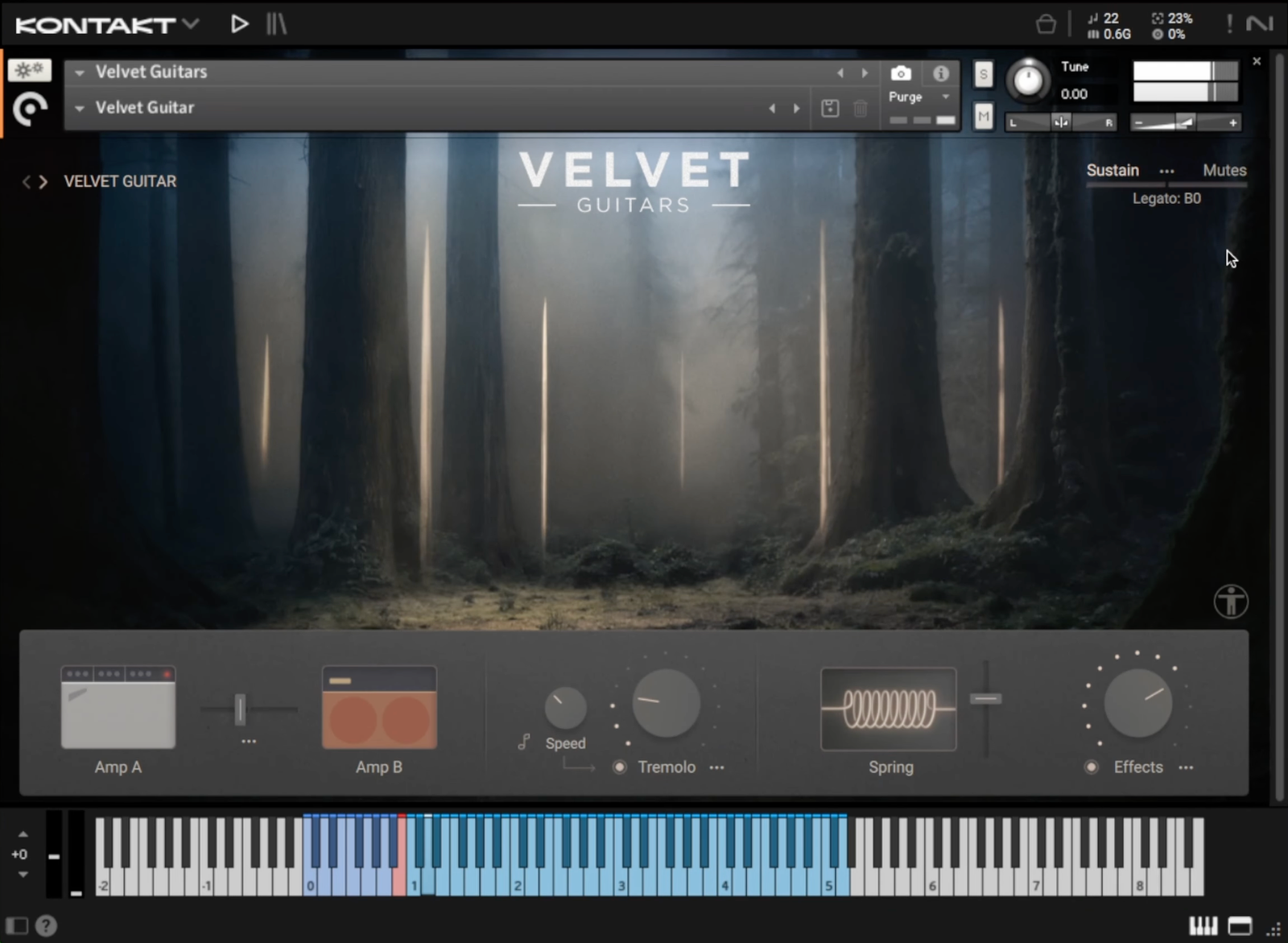
Velvet Guitars is built around emotion and texture, not traditional guitar realism. What I like most is how it treats the guitar as a sound-design source rather than a performance emulator. Bowed strings, harmonics, reversed swells, drifting feedback, and unconventional techniques create tones that feel cinematic, intimate, and slightly unpredictable.
- Five Distinct Guitar Instruments each bring a clear personality, from the gentle Velvet Guitar and thick Mellow Baritone to the shimmering offset-style guitar, expressive Semi Hollow, and amped acoustic textures.
- Expressive, Unconventional Articulations turn simple MIDI input into evolving soundscapes, making it ideal for atmosphere and movement rather than obvious guitar playing.
- Vintage Amps & Real Spring Reverbs were recorded multiple times through physical hardware, giving the sound natural movement and depth that never feels static. Amp-modeled tremolo with sync support balances analog character with modern workflow needs.
Velvet Guitars works best in cinematic scoring, ambient music, emotional pop, and experimental projects where the guitar is meant to feel rather than perform.
Velvet Guitars runs in Kontakt and the free Kontakt Player (v8.5.1+) for macOS and Windows. For more information on Kontakt and Kontakt libraries see Kontakt: The Fundamental Guide by Jack Cockrell
Squid-3 (by Acustica Audio)
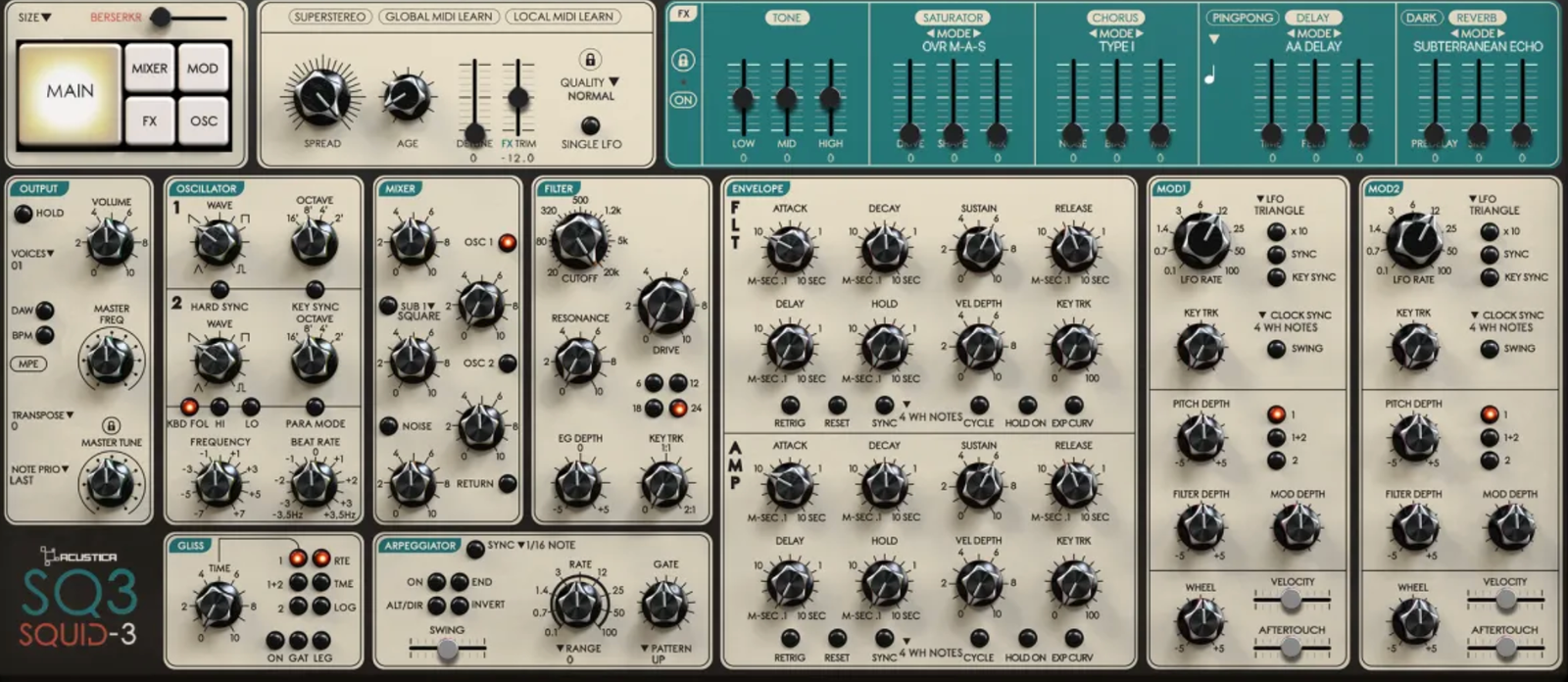
Squid-3 feels like a synth designed to sound finished from the first note. Instead of raw oscillator purity or modular extremes, it focuses on dense, polished tone that already feels shaped. I like how it behaves more like processed hardware than a blank digital canvas.
- Superstereo & Analog-Style Movement introduce natural width through analog drift, while Return (pre-filter feedback) and Drive (post-filter saturation) add thickness without external FX.
- UPRM & Oversampled Morphing keep audio-rate modulation smooth and stable, even with complex movement. Evolving pads and aggressive leads stay controlled rather than brittle.
- Berserkr & Saturation Controls let you tilt from vintage softness to modern clarity quickly, keeping patches musical and mix-ready.
- MPE & Studio-Grade FX add expressive control and high-quality processing that often feels final enough to leave engaged.
There’s a learning curve if you want to exploit every feature fully. In my workflow, Squid-3 excels in modern electronic music, cinematic textures, and expressive synth parts where density and polish matter.
Squid-3 is available in VST3, AU, and AAX formats for macOS and Windows.
ACE Studio 2.0 (by Timedomain)
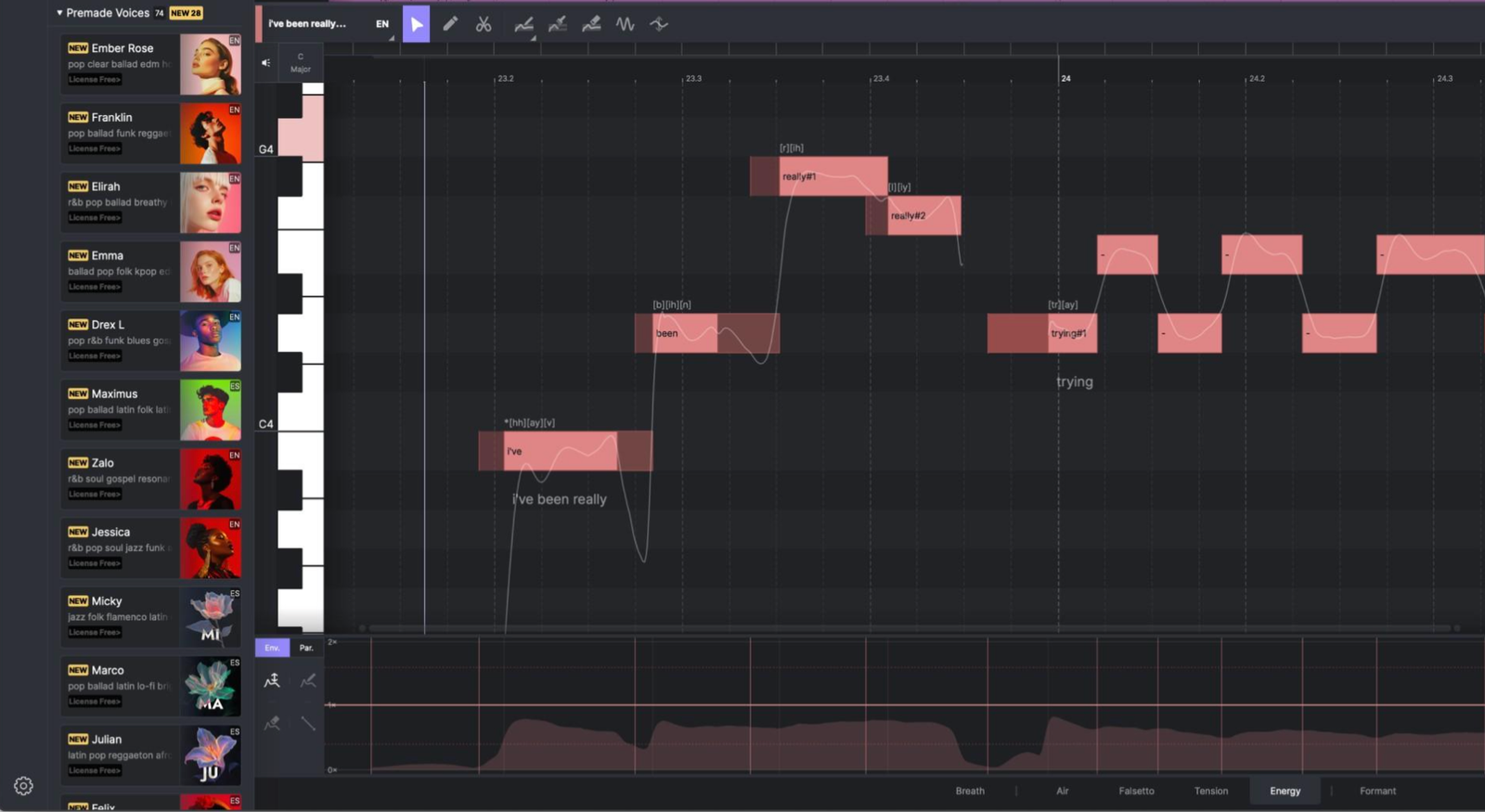
One of the most popular AI plugins, ACE Studio 2.0 stands out by treating AI as something you perform and shape, not a one-click song generator. Pitch, timing, articulation, and emotion all remain editable, which makes it feel closer to working with real musicians than automated tools. I like how it extends creative control rather than replacing it.
In practice, it integrates well into modern DAW workflows. The improved ACE Bridge plugin makes moving between standalone use and FL Studio or REAPER sessions straightforward, while MIDI-based control keeps everything familiar.
- Expanded AI Vocal Library now includes 140+ voices across multiple styles and 8 languages, making it easy to explore phrasing and tone without committing early.
- Artist-Created AI Instruments (strings, brass, winds) behave like expressive, playable instruments rather than generic layers, which works well for hybrid productions.
- Generative AI Kits support idea development by enhancing sketches with layers and textures instead of generating full tracks.
- Workflow Improvements to Stem Splitter and Vocal-to-MIDI reduce friction in real production scenarios.
For me, ACE Studio 2.0 fits best in pop, electronic, and hybrid projects where expressive control is essential.
ACE Studio 2.0 is available in VST3, AU, and AAX formats for macOS and Windows.
Electric Keys (by MeldaProduction)
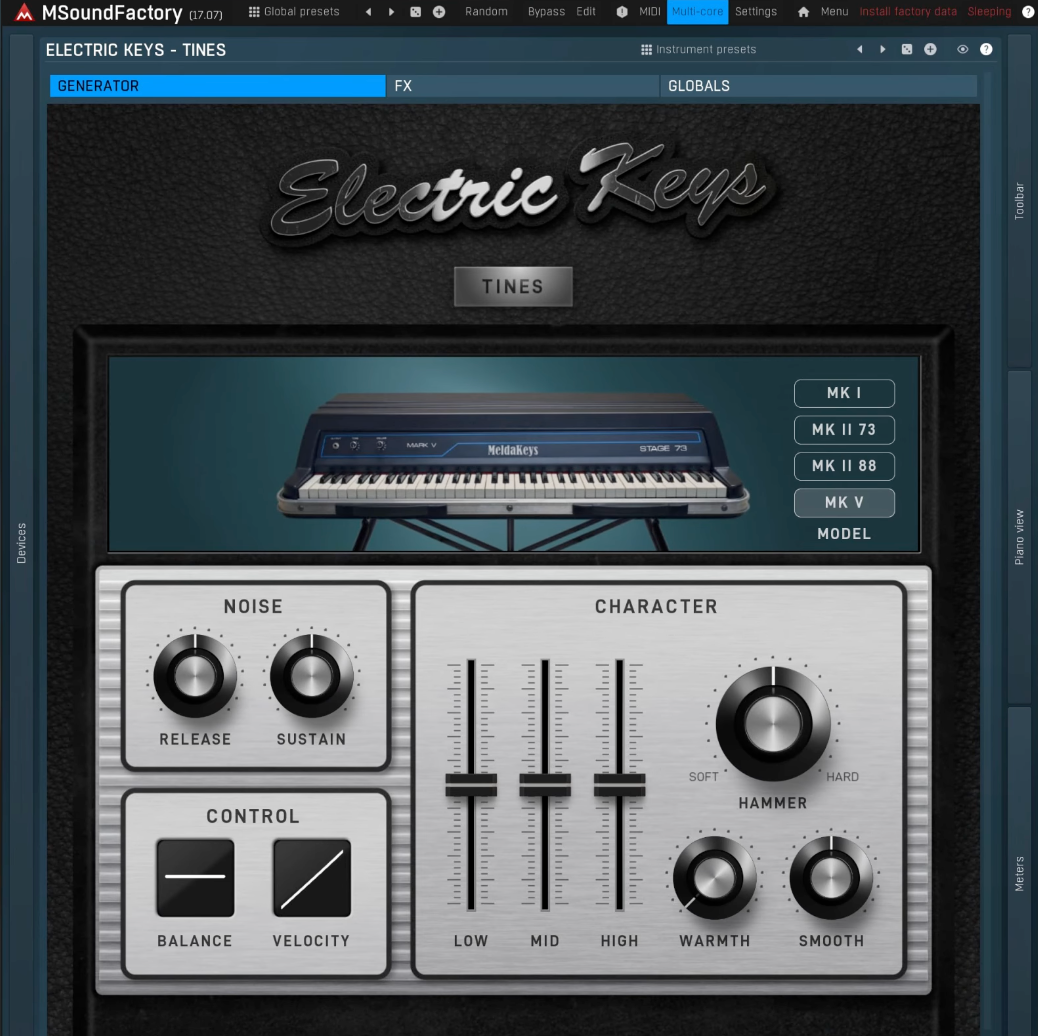
As a fan of Meldo Production plugins, I can say they once again don’t disappoint with Electric Keys Tines, as it goes straight for the classic tine electric piano sound, but treats it as a living instrument, not a static snapshot. I like how it captures that late ’70s and early ’80s character, the bell-like shimmer, the bark when you dig in, while still feeling responsive and modern under the fingers.
At the core are four deeply sampled historic models: MK I, MK II 73, MK II 88, and MK V. The differences between them are immediately noticeable, from weight and warmth to clarity and bite. I’ve found myself choosing models based on musical role rather than fixing things later with EQ.
- Character & Noise Controls let you push hammer hardness from soft to aggressive, while release and pedal noise add physical realism that makes parts feel performed.
- Modular FX Rack includes Vibrato, Tremolo, Wah-Wah, Rotary, and more, with drag-and-drop routing that feels integrated rather than decorative.
- Performance & CPU Tools like polyphony limits and velocity range control make it easy to tailor response while keeping sessions efficient.
It’s very focused on tine-based electric pianos, not a catch-all keys collection, making it a great VST for R&B, funk, pop, and retro-inspired tracks where expression and touch really matter.
Electric Keys – Tines runs in MSoundFactory / MSoundFactory Player and comes in VST, VST3, AU, and AAX formats for macOS and Windows users.
Psylead SX4 (by Eplex7 DSP)
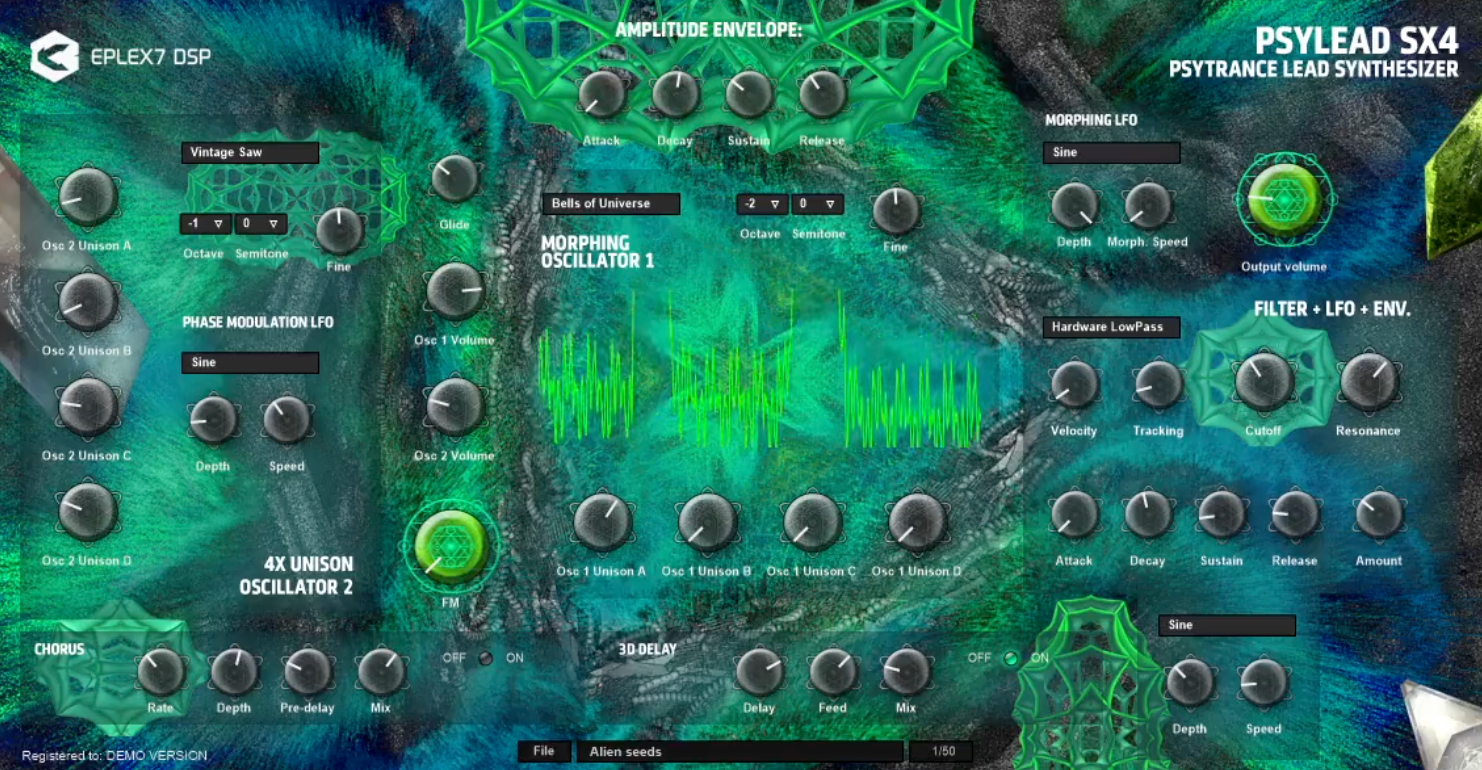
Psylead SX4 is built with one clear goal: cutting through the mix. It doesn’t aim to be neutral or endlessly versatile, it’s designed for presence. I like how unapologetically it leans into psytrance and psychedelic aesthetics, focusing on sharp transients, animated motion, and aggressive clarity.
The synthesis engine is based on custom algorithms rather than familiar wavetable or subtractive designs. The oscillators feel inherently energetic, making them ideal for leads that need to stay front and center in dense arrangements.
- Hardware-Inspired Filters modeled after DSP chip-based synths respond with snappy, musical behavior instead of smooth neutrality.
- Psychedelic FM Modulation adds chaotic-but-controlled movement that works well for evolving riffs and hypnotic patterns.
- 4× Unison & 3D Sound Algorithms create width and depth that feel spatial rather than just “bigger,” while remaining CPU-efficient.
It’s very style-specific and not meant for subtle pads or classic analog emulations.
Psylead SX4 is available in VST3 format for Windows users.
Dark ERA 2 (by Best Service)
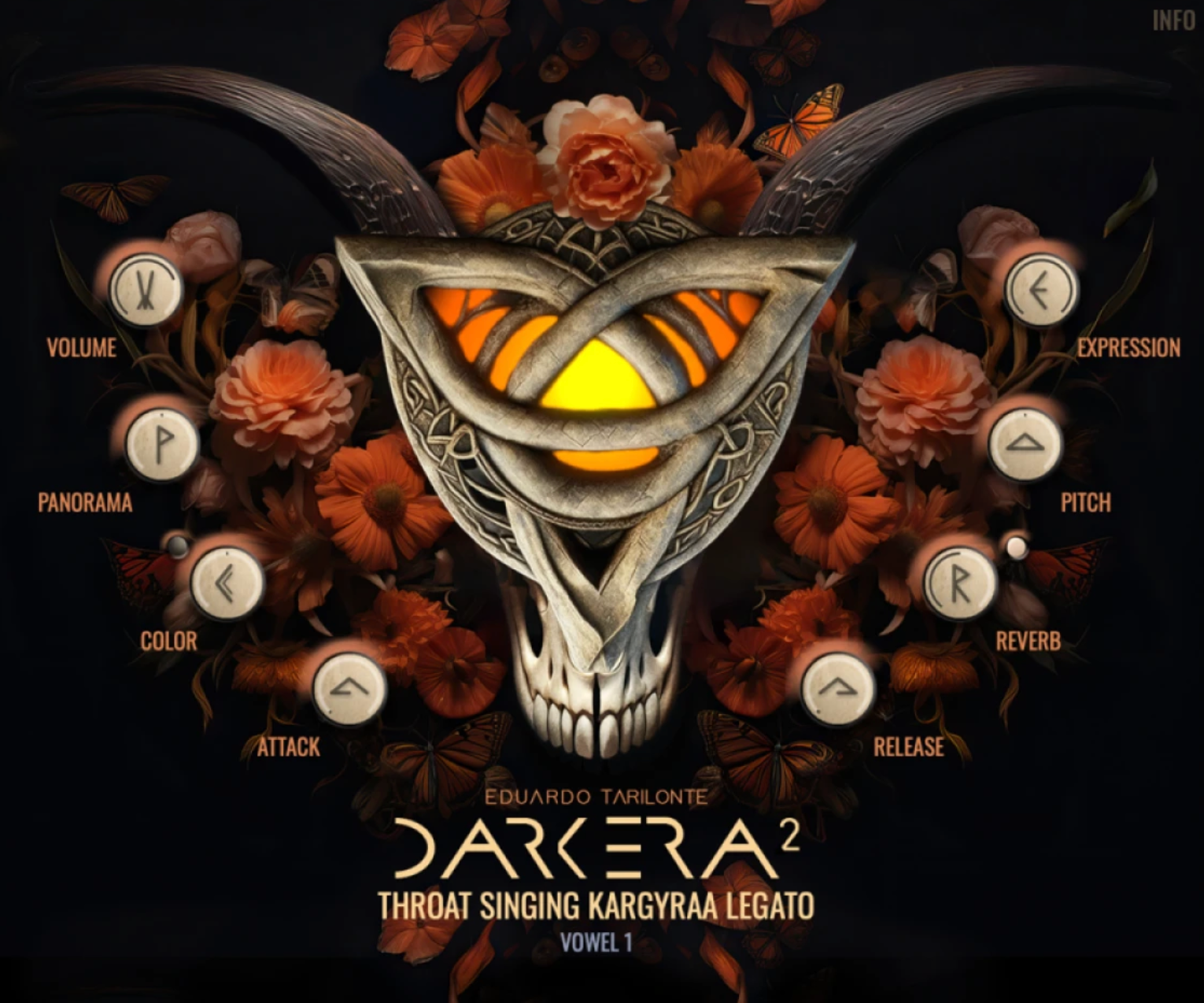
My last pick for young 2026 VSTs is Dark ERA 2, which feels rooted in ritual rather than refinement. Instead of polished orchestral gestures, it focuses on raw rhythm, repetition, and ancient timbres that feel physical and immediate. I like how it captures a pre-classical mindset and translates it into something playable and flexible in modern productions.
Running inside the Engine Player, the library stays performance-focused. Everything is tempo-synced, playable, and designed for layering rather than deep technical setup. I’ve used it as a foundation when building cues from rhythm outward.
- Driving Drums & Primal Rhythms form the backbone, earthy, physical, and ideal for establishing tension and momentum early.
- Archaic Instruments & Expressive Voices bring raw string, wind, and vocal performances that feel human rather than polished.
- Soundscapes, Drones & Epic Loops expand the palette into cinematic and sound-design territory, adding weight without stealing focus.
It’s not designed for conventional melodic scoring. I think, Dark ERA 2 shines in cinematic music, dark fantasy, historical themes, and hybrid scores where rhythm and texture lead the narrative.
Dark ERA 2 runs in the Engine Player and comes in VST, AU, and AAX formats for macOS and Windows users.
Last Words
That wraps up this first wave of releases as we head into 2026. If this short holiday window is any indication, it’s shaping up to be a year of focused tools, strong character, and faster creative workflows, and we’re only just getting started. Be it Fl Studio, Logic, Cubase, Fender Studio Pro or ProTools, these are the new babies you can put into your arsenal!

Berk is a multi-instrumentalist musician from Istanbul, Turkey. He has been playing guitar, handpan, and percussion for over ten years, developing a sound that blends melodic sensitivity with rhythmic depth.
He began his musical journey as a teenager, learning guitar and performing in several bands. In 2016, he discovered the handpan, an instrument that immediately resonated with him on a deeper level and gradually became central to his artistic identity.
Since then, he has performed in streets, festivals, bars, and concert venues across different countries, connecting with diverse audiences through both intimate and large-scale performances.
Alongside his live work, Berk is deeply involved in studio production. He works from his home studio, where he composes, records, and produces his own music. His studio serves as a creative space for layering handpan, guitar, and percussion with modern production techniques, allowing him to shape fully realized, atmospheric compositions from start to finish.
His music explores a wide range of genres and textures, combining organic acoustic instruments with detailed studio production to create immersive and expressive soundscapes.