

This article will help you decide which drum microphones to consider when recording drums.
There are plenty of options available for drum microphones. There are microphone kits and individual pieces should you want a more tailored recording setup. If you’re looking to buy something to record drums, the bare minimum should be to have a microphone for your kick, snare and two pairs to cover the overhead. For those looking to upgrade from this bare setup, consider getting one for the toms.
Considering the options available, which one should you get?
This roundup will cover what these microphones offer, including their sound quality and other features that may help decide based on usage.
Top 11 Dynamic Mics For Recording Drums
1. Shure Beta 52A
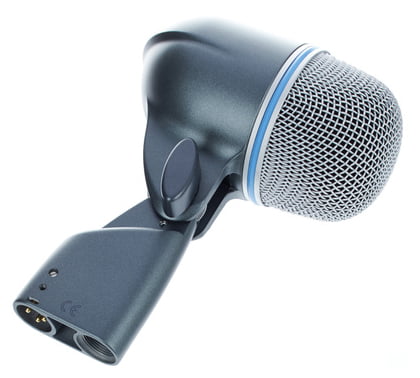
The Shure Beta 52A is a kick drum microphone designed to withstand abuse from low frequencies brought about by the bass drum. Since this microphone can handle low frequencies quite well, the Beta 52A is also the choice for many sound engineers in capturing bass amp tones.
Many sound engineers swear by this model, making the Beta 52A one of those must-have microphones in a mic locker.
Key Features:
The Beta 25A uses an upgraded super-cardioid pattern to ensure better sound pickup even when gain levels are set high. Other features supplement it to ensure optimal performance.
- Built-in shock mount
Microphones are bound to shake in place when kick drums are hit. The Beta 52A has a built-in shock mount that ensures stability when recording low frequencies. - Locking Stand Adapter
The Beta 52A has a built-in locking stand adapter with an XLR socket that makes setup easier. This design allows you to set up the Beta 52A inside your kick drum. - Steel Mesh Grille
Sometimes it’s unavoidable to knock down microphone stands due to the number of cables running in the studio. The Beta 52A ensures durability with its steel mesh grille so that you can prolong the life of your microphone. - Neodymium Magnets
You want a high signal-to-noise ratio, and the Beta 52A ensures that using neodymium magnets in this microphone.
Pros:
The nice thing about the Beta 52A is its versatility. It’s not just a drum microphone, but you may also use it to record anything rich in bass frequencies, including other percussion instruments and bass amp speakers.
Another thing to love about the Beta 52A is the simplicity when setting it up. Since it already has a built-in pneumatic shock mount, you have one item to worry about when setting up your drum microphones. The streamlined mount and XLR jack also makes the Beta 52A easier to position with respect to your kick drum.
And if you’re looking to buy a drum mic kit that uses the Beta 52A, consider getting the DM57-52 kit, as this microphone comes included in that set.
Cons:
The Beta 52A might be one of those must-have microphones for kick drums, but it isn’t that cheap compared to other kick drum microphones. If you love the Shure quality but want a more affordable alternative, you can check the PGA 52.
2. AKG D112 MKII
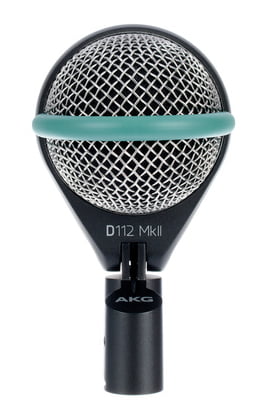
Next on the list is the AKG D112 MkII. The D112 MkII is a kick drum microphone with a high SPL rating and a large diaphragm to handle low-frequency rumbles. Even at high-gain settings of your mixer or interface, this microphone won’t easily distort.
The D112 MkII may be bought as an individual microphone or purchased as part of the AKG Drum Set Concert 1 kit.
Key Features:
The D112 MkII has a slew of features that make it one of the best kick drum microphones in the market today.
- High SPL Rating
- The D112 MkII has a high SPL rating of 160 dB, which ensures that it withstands loud playing. You won’t have any problems recording your drummer’s blast beats with this drum microphone.
- Specialized Diaphragm
The nice thing about this microphone is its diaphragm, which captures low and lowest frequencies. Not only can it work on kick drums, but you can also use the D112 with bass amps, trombones, and even guitar amps. - Flexible Mount
The D112 MkII has a flexible mount that makes it easy to position the microphone with your kick drum. If you need to set it inside the bass drum, this adjustable mount will take care of this task. - Hum-compensation coil
Noise is always an issue when it comes to professional audio. But the built-in hum-compensation coil reduces noise that may be picked up during recording or live mixing.
Pros:
Like the Beta 52A, one of the strong points of this microphone is its flexibility. You can easily position the D112 MkII any way you deem fit to get the best sound from your bass drum or speakers. Some have noted that the mount on this microphone significantly improved from its previous version.
The high SPL rating is another advantage of the D112 MkII. You can record metal bands using this microphone, and it will withstand the abuse from the kick drum or even a bass amp.
Cons:
This microphone comes with a steep price for some users. If you’re looking for a drum microphone kit for recording or live use, consider getting the Drum Set Concert 1 kit to save on costs, as the D112 MkII comes bundled with it.
3. Beyerdynamic M 88 TG
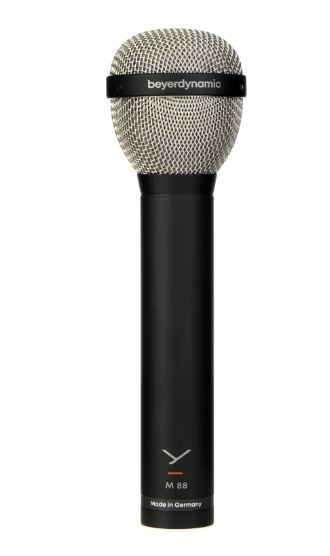
The Beyerdynamic M 88 TG can perform various tasks for those looking for a versatile drum microphone. This microphone isn’t just for recording kick drums; many sound engineers also use it for recording vocals, guitars, and other instruments.
Key Features:
The TG in the microphone model stands for Tour Group, which makes it a favored choice for touring musicians.
- Reinforced basket
To withstand the abuse of touring, the M 88 TG has a reinforced basket that makes it more durable. Accidental drops won’t be a problem with this microphone. - Flexible applications
You can use the M 88 TG in the studio to record kick drums, vocals, and even guitars. If you’re traveling and can’t take too many microphones, this microphone should be on your to-bring list. - Hypercardioid Pattern
The M 88 TG uses a hyper-cardioid pattern that allows a more focused sound pickup. It also improves sound rejection, equaling fewer bleeds in recording and mixing. - Windscreen swatches
You can swap out the windscreen with a different color, as Beyerdynamic has six colors available for this microphone. You can use this interchangeability to express your personality when using the M 88 TG for vocals in a live setting.
Pros:
The main selling point of this microphone is versatility. And true enough, it lives up to this reputation, as you can have this microphone for different instruments. If you could only bring a few microphones to a remote recording session, make this one of your top picks, as you can do much with it.
Another thing to like about this microphone is its weight. It doesn’t feel heavy, but neither does it feel cheap. And because it’s also meant for touring, the M 88 TG can withstand the abuses of regular use.
The sound quality isn’t bad at all, although you’d find yourself wanting a little more. The tones you get are pretty smooth. If there’s anything that sounds bad, it’s likely from the sound source.
Cons:
The M 88 TG mount is relatively standard and doesn’t provide as much flexibility for mounting options, particularly for a kick drum. Due to the flexibility in purpose, the design gets a little compromise.
While not related to drum recording, the M 88 TG doesn’t handle plosives well. You’ll need a pop filter to record vocals or beatboxing tracks. Beyerdynamic could also improve noise rejection in succeeding versions.
4. Audio Technica ATM230
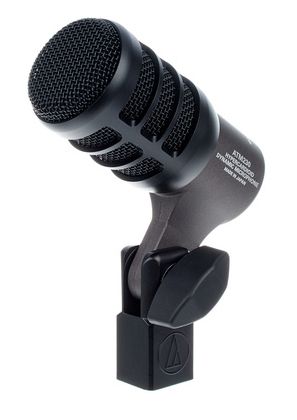
The Audio Technica ATM230 is another flexible drum microphone with a budget-friendly price tag. While designed to work with toms and snares, this microphone can handle other low-frequency rich percussion instruments.
You can buy the ATM230 as a single-piece or three-piece set, which gives more savings.
Key Features:
The ATM230 was designed for tom placement and record low-end frequencies.
- Hypercardioid design
The hypercardioid design of the ATM230 ensures that bleeding from other drum kit components is minimized. You can record your toms or snare without much interference from the cymbals. - Rare earth magnet
Using a rare earth magnet allows the ATM230 to pick up low frequencies accurately without sacrificing the punchiness of your drums. Those rolls will sound more accurate. - Metal construction
Since the ATM230 is a drum microphone, durability is essential. The ATM230 uses an all-metal shell and grille to ensure it withstands abuse on the road or even accidental hits. - Mount included
The ATM230 includes a microphone mount that allows you to clip it on your toms. That reduces the need for additional microphone stands, although you can use one if you need one.
Pros:
The first reason why you should consider the ATM230 is its price. It’s affordable and may also be used to record snare drums, aside from low-frequency instruments.
Another point to consider with the ATM230 is sound isolation. Sound bleeds on this microphone are minimized with its off-axis rejection.
And if you want more value for your money, consider getting the three-pack version.
Cons:
While this microphone does handle other instruments, your mileage may vary here. Some have noted that these microphones can only take toms best since the ATM230 was designed precisely for that purpose.
5. Sennheiser e 602-II
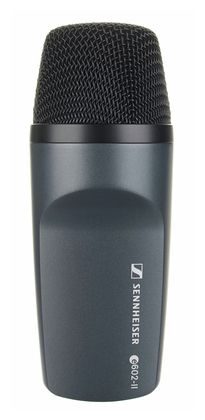
Another industry standard, the Sennheiser e 602-II was designed to record kick drums, bass amps, and other instruments that lean toward the bass frequencies. This microphone uses a cardioid design that allows for better miking and isolation.
The e 602-II is an updated version of the previous e 602 but now comes at a more affordable price.
Key Features:
Out of the box, the e 602-II would remind you of the Shure SM 7B microphone, but this one is for kick drums. It has a lightweight aluminum body, which makes it more durable.
- Aluminum Body
The e 602 II uses a light aluminum body that ensures durability, especially in accidental drops caused by vibrations from the drums. It also makes it easier to mount on boom arm microphone stands. - Designed for low-frequency instruments
The e 602 II isn’t just for kick drums; you can use it with any instrument rich with bass frequencies. That means being able to record bass amps, tubas, and other instruments with low frequencies. - Humbucking Coil
Like electric guitars, the e 602 II has its spin to the humbucking coil. The inclusion of this coil reduces any hums from electromagnetic interferences. - Built-in stand mount
The built-in stand mount makes the e 602 II position at different angles easier. It also means one less thing to bring for a recording session.
Pros:
Among the popular kick drum microphones in the market, the e 602 II is one of the cheapest kick drum microphones you can buy today. And if you’re looking to save more, you can also buy the Evolution Drum Set microphone kit, which includes the e 602 II in the package.
The built-in stand mount is another strong point of this microphone. You don’t have to worry about forgetting the holder on your microphone, and you can easily position the microphone as you deem fit.
Adding a humbucking coil also improves the microphone’s performance when it comes to noise reduction. You get to reduce, if not eliminate, any electromagnetic interference.
Cons:
Compared to other kick drum microphones, the e 602 II is bulkier. You might find it challenging to position it in hard-to-reach places, especially if you’re looking to get more low-end inside the kick drum.
If you’re recording different drum kits for various clients, removing the skin and installing the microphone would mean an extra step in case there’s no resonator hole on the kick.
Even with the durability that comes with the microphone, Sennheiser should have considered including a more durable case and not just a soft pouch. You can only get a decent case for this microphone when you buy a microphone set.
6. Telefunken M82
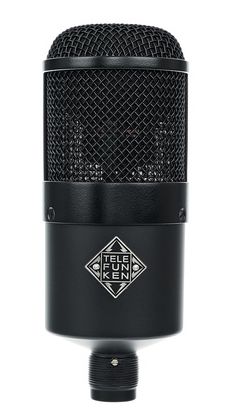
The Telefunken M82 is a large dynamic microphone designed for miking kick drums but may also be used for other purposes, including guitars and vocals. These microphones are assembled by hand, which gives them a heftier price tag.
At first glance, this microphone doesn’t seem like a kick drum microphone, as it looks more like a condenser microphone. But the features you get with the M82 tell you otherwise.
Key Features:
This microphone is primarily known for miking kick drums, but it also comes with two independently controlled EQ voicings that let you use the M82 for other recording applications.
- EQ Switches
The core feature of the M82 is the EQ switching. Because they are independently controlled, you can experiment with to get different voicings when you record kick drums, as well as guitars, pianos, organs, horn instruments, and even vocals. - Hand-assembled
All M82 microphones are assembled by hand, which ensures better quality control. Before they are shipped to customers or retailers, each microphone is tested to weed out any defective units. - Oversized Diaphragm
The M82 features a 1.37-inch moving coil diaphragm to help capture low frequencies. Coupled with the Kick EQ switch, you can get different voicings from the microphone. - Accessories included
You get everything you need to use the M82 out of the box. Each purchase gives you a compatible stand mount, an XLR cable, and a carrying pouch.
Pros:
The main feature of this microphone is its EQ switches. It gives you flexibility in capturing your kick drum, and you can also use these switches to record other instruments.
To give you an idea of these EQ switches, the Kick EQ is a passive filter switch that helps reduce lower mid-range, often used in a kick drum recording. Engaging the switch reduces any boxiness in the recording while maintaining the low frequency.
The High Boost switch moves the upper mids and treble frequencies by giving a slight boost. When used with a kick drum, you capture more of the beater attack when positioned inside. For mid to treble instruments, you get better clarity and openness.
Another strong point of this microphone is the hand-wired construction. Handwired assemblies ensure better quality control. For any boutique gear lover, this brings joy.
Cons:
While there are a lot of things to love about the M82, there are two things that Telefunken could improve.
First, an integrated stand mount would have been better, although the existing detachable mount should be fine and allow the microphone to be mounted on shock mounts.
Second, a microphone of this caliber deserves more than just a carrying pouch. While it might sound nitpicky, a dedicated hardshell case would do wonders, considering the microphone’s price.
7. sE Electronics V Kick
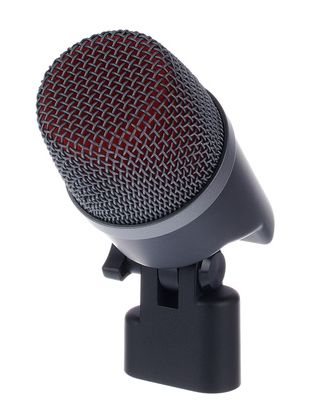
Like many kick drum microphones, the sE Electronics V Kick microphone was designed for various low-frequency miking applications, such as bass amp cabs and trombones. Considering the price of other kick drum microphones, the V Kick puts itself in the middle tier in pricing.
The V Kick is compact enough to fit inside your kick drum through the resonator hole, though this depends on the size of your kick drum and resonator.
Key Features:
One of the main features of this microphone is how you can get different tones when using the V Kick.
- Switchable Voicing
- The V-Kick gives you four modes that allow you to alter low and high-frequency behavior. Each switch lets you choose between modern and classic modes. You can play around with these switches and see which sounds right.
- Built-in shock mount
- Recording kick drums will surely make the microphone shake due to the vibrations. The V-Kick’s built-in shock mount will prevent unnecessary movements that can cause inconsistencies in your recordings.
- Supercardioid Pattern
- The supercardioid pattern of the V-Kick ensures an accurate pickup of sounds with minimal bleeds. This feature comes in handy when mixing, as you can easily mix the kick without much worry about other components of the drum kit.
- Internal Windscreen
- This microphone has a built-in windscreen if you need to use the V-Kick for other applications, such as a live setting. You can capture sounds accurately outdoors in case it gets windy during an event.
- Aluminum coil
- The V-Kick employs an aluminum coil which can take on more power. You don’t have to worry about breaking, as this coil has a higher heat tolerance.
- Neodymium Magnets
- Using neodymium magnets on the V Kick lets it capture hotter signals from kick drums. Double pedals won’t be an issue with the V Kick.
Pros:
The main reason you should consider the V Kick is its voicing switch serves as a filter for high and low frequencies. With four possible combinations of the classic and modern switch, you won’t have a problem bringing out the best tones from the kick drum and other bass-heavy instruments.
The size of the V Kick is also plus for this microphone. It should fit easily inside kick drums. If the resonator hole is large enough, you might not even have to remove the front skin to fit the V Kick in your drums. With a built-in stand mount, you can easily angle this microphone to the sound direction of your beater.
Lastly, the V Kick is also affordable, considering its features. Its price doesn’t differ much from the popular kick drum models, which makes it a good upgrade if your other options are just a few dollars lower than the V Kick. If you’re looking for an economical option, you can buy the V Arena drum mic kit, which includes the V Kick in the package.
Cons:
One common observation about the V Kick is that the classic settings on the microphone tend to sound too thick. That will depend on the sound you’re after, so your mileage may vary here. To reduce thickness, sound engineers tend to pull the microphone back to lessen the intensity and even set it off-axis.
8. Shure SM57
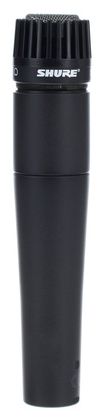
If you’re buying your first set of microphones for your studio, the Shure SM57 should be it. Many recording professionals and enthusiasts swear by this microphone. It’s affordable, and you can use it on different instruments and not just snare drums.
The SM57 is often used for miking snare drums but is also a preferred microphone for recording guitars.
Key Features:
You’d get an SM57 to capture accurate tones of your snare and other instruments.
- Wide Frequency Range
The SM57 has a frequency range of 40 – 15,000 Hz. It’s not as comprehensive as other microphones in this roundup, but the reason is that the SM57 was designed to work with less bassy instruments. - Cardioid Pattern
The cardioid pattern that the SM57 employs allows it to have a more focused pickup of sound, which equates to fewer bleeds. - Versatile Application
Because of its frequency range, you can use the SM57 for miking guitar cabs, acoustic guitars, and brass instruments rich in bass frequencies. Often the application here would be to use the microphone close in, as opposed to how overhead microphones capture drum tones.
Pros:
The first thing you would love about the SM57 is its versatility. Many audio enthusiasts recommend it as one of the first microphones you should invest in when building a microphone locker for your studio, especially for home recording setups. Not only is it suitable for snare, but it also does wonders for acoustic and electric guitars.
Another thing to like about the SM57 is its price. Considering this microphone’s versatility, you get actual value for money when using an SM57. Mainly for home studios, you may not have a big budget to have a complete set of microphones for recording. But for the price you pay, it will be one of the best purchases you’ll make.
Cons:
The frequency range on this microphone could be better for kick drums. If you’re looking for a more versatile option, the Telefunken M82 is more versatile, allowing you to alter voicings and match the instruments you’re recording.
As this microphone was designed to be a workhorse even for live situations, Shure should consider including a hardshell case to ensure it doesn’t break on the road. While it might increase the price a little, the few extra dollars will be worth it.
9. Lewitt DTP 640 REX
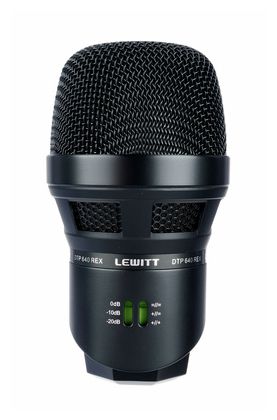
The Lewitt DTP 640 REX is one of the unique drum microphones in this list precisely because it works as a dynamic and condenser microphone. Designed for miking kick drums and other bass-heavy instruments, the DTP 640 REX can easily capture every detail for your recording.
If you’re looking to add something different to your drum recording setup, then this microphone might be the answer you’re looking for.
Key Features:
The DTP 640 REX has its share of stand-out features that make it worth considering to have in your microphone locker.
- Dual Capsule
Lewitt introduced the dual capsule design to put a condenser and dynamic microphone in one package. The condenser capsule captures the low-end frequencies, while the dynamic capsule captures the attack of the drum beater. - Pad Switching
If you think the signal is too hot, the DTP 640 REX has a pad switch that allows you to lower the signal. This switch gives you the option to choose between 0, -10, and -20 dB so that you can prevent clipping. - Switchable Sound Characteristics
The DTP 640 REX gives you three tonal options for the dynamic and condenser capsules. You have the option for flat, low-frequency, and high-frequency boosting. - Independent Outputs
Since condenser microphones need phantom power, you can run the condenser and dynamic side to separate XLR inputs on your recording interface or mixer. You can tweak each with their respective channel strips to get the ideal tones during mixing by having independent outputs. - Durable Build
This microphone can withstand abuse in the studio or on tour. It uses a galvanized steel mesh grille and a die-cast metal casing to house the microphone.
Pros:
The thing to love about the DTP 640 REX is the dual capsule setup. It’s like having two microphones in one setup. Because of this feature, you get to capture better the nuances of your instruments.
You can also run each capsule separately so the condenser can get phantom power. The independent outputs allow you to give each microphone inside the DTP 640 REX its effects in the mix.
The pad switch is also much welcome. As drummers have their hitting strengths with the kick drum, you can adjust how hot the signal enters your DAW or mixers. That is handy when you need to record a jazz drummer and then work on a metal drummer for the next session.
Lastly, the sound characteristic switch also helps you sculpt your sound. You can quickly put out the natural tones of the drums or bass or give it a much-needed treble boost when the song calls for it.
Cons:
The only thing that would be a turn-off will be the specialized plug that comes with it. You need a specialized 5-pin XLR Y-cable to run the microphone to your mixer or DAW. That means buying another set of cables for this one if you need a spare. While Lewitt includes a cable to go with it, you won’t be able to use your existing XLR cables with this microphone.
10. Audix D6
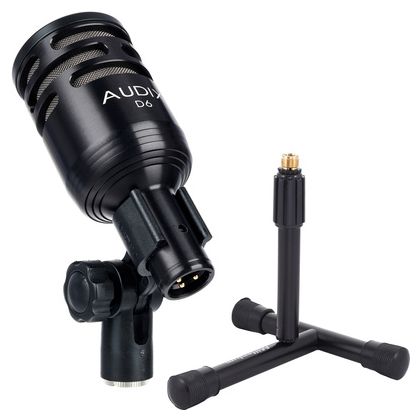
The Audix D6 is a compact drum microphone that fits easily through the resonator hole of a kick drum. With features primarily designed to bring out the best tones from your kick drum, the D6 is one of those microphones you would love to have for recording.
Designed primarily as a kick drum, the D6 works with other low-frequency-rich instruments.
Key Features:
The features of the D6 are all about helping you bring out the best tones from the low end.
- VLM Diaphragm
The D6 uses a Very Low Mass (VLM) Diaphragm that quickly picks up the signal from your kick drum beater. With a frequency range of 30-15000 Hz, you get powerful bass tones that don’t dilute your kick drum hit. - Cardioid Pattern
The D6 uses a cardioid pattern to minimize sound bleeds. You get crystal clear kick drum signals without worrying about other components of the kit getting into the same track. - Boosted Frequency Response
The D6 boosts specific frequencies, which is also ideal for other low-frequency instruments. You get a 14 dB boost at 60 Hz, 15 dB between 4-5KHz, and 17dB at 10-12KHz. Because of this, the D6 works perfectly with kick drums up to 22 inches. - Flexible Positioning
You can place the D6 anywhere you think the best tones from your kick drum come from. Because it is compact, you can fit it easily inside your kick drum to record the beater.
Pros:
First of all, the compact form makes the D6 ideal for recording your beater. You can sneak it inside your kick drum without interfering too much.
Another plus point is the boosted frequencies. You can capture the best tones from your instrument with these increased frequencies.
The VLM Diaphragm is also helpful in capturing a better response. It makes your drums sound more organic as if you were listening in front of the drum kit.
Lastly, the D6 is included in most of Audix’s drum mic sets if you’re to purchase a drum mic kit.
Cons:
Many users have observed that the D6 sounds too boomy and works best for modern music. Recording enthusiasts have advised that you may need another drum microphone if you plan to work on music that isn’t synonymous with modern metal.
11. Avantone Pro ATOM
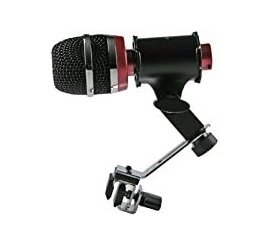
Last on the list is the Avantone Pro ATOM. The ATOM is a drum microphone explicitly designed for miking the toms on your drum kit and other percussion instruments. It’s also ideal for recording low-frequency instruments, such as bass and low brass.
This microphone is relatively easy to notice in a studio. With its red and polished nickel, the ATOM stands out when you see it.
Key Features:
For the price you pay for the ATOM, you’ll be surprised at what this microphone has to offer.
- Fat Tones
The ATOM sounds good out of the box with its fat tones that often need little to no tweaks to your equalizer. With a large capsule, you get rich, inherent low frequencies in your instruments. - Internal Shockmount
The ATOM employs an internal shock mount for the capsule to prevent vibrations from interfering with your recording. You can make those rolls without worrying about vibrations ruining your recording. - SSM Shockmount
If the internal shock mount isn’t enough, the ATOM comes with a durable die-cast zinc SSM that isolates the ATOM from vibrations while securely holding the microphone. - Pro-Klamp
To help you secure the ATOM to your toms, each microphone also comes with the Pro-Klamp that securely grips your toms and reduces clutter from having too many microphones stand around drums. - Molded Case
Here’s one detail that many drum microphone manufacturers miss. The ATOM comes with a durable custom-molded case with padding to help you transport your microphone to gigs or other recording sessions.
Pros:
One thing to like about ATOM is the price. For what you pay, you get a good number of accessories that help you get the best recording. These are often overlooked, from clamps to stands and cases, but they help improve the recording quality.
Another thing to like is the internal shock mount. You get different isolation layers for the best recording quality for your toms and other bass-heavy instruments.
Sound quality-wise, you don’t have to worry too much about it. You will need little to no tweaks on your EQ, so you can focus on getting the best recording possible.
Cons:
Unlike some tom microphones, this doesn’t work well with snare drums. That would make a formidable and versatile drum microphone if it had a good response on the snare.
Conclusion
As you can see in this roundup, there are many options for drum microphones. Many are for kicks, while some are flexible.
If you have a hard time choosing what to get, you can opt for a drum mic kit, which ensures that you get equal voicing, as they come from a single manufacturer. A drum microphone kit is also cheaper compared to buying individual pieces.
But if you want something tailored to your needs, you must audition for as many drum microphones as possible. Should you take this route, it may take time, but in the end, you get something that brings out your preferred tones. At the bare minimum, have at least one kick drum mic, a snare mic, and a pair of condenser microphones for overhead recording.
And remember, the drum microphone is just one side of the equation. Good drumming technique also ensures you get the best sound from your drums.

The Integraudio Editorial Team consists of experienced music producers, audio engineers, and plugin enthusiasts dedicated to providing in-depth reviews and guides for music production software.