
Relying on a worn cable in a critical situation can lead to unwanted disruptions, as this simple equipment if not correctly attended and cared, can jeopardize your flow and presentation.
This question has echoed through countless jam sessions, recording studios, and concert stages and warrants detailed exploration. A guitar cable is the lifeline of any electric guitarist’s setup, serving as the conduit through which musical magic flows, yet they seem prone to eventually break or malfunction.
Despite their seemingly straightforward purpose, many guitarists grapple with this persistent issue. However, the world of guitar cables is more complex than it may appear. Beneath the surface, many factors play a role in the longevity and reliability of these essential accessories.
As a guitarist, you’ve likely encountered the frustration of cables that crackle, hum, or abruptly fall silent mid-performance. This article seeks to unravel the mysteries behind this common predicament and equip you with the tools to troubleshoot cable issues effectively, helping you discern whether it’s your cable or another element in your setup causing the woes.
Why Do My Guitar Cables Keep Breaking?
Responsible for connecting your guitar to your amplifier, your effects pedals, and ultimately to your audience, the significance of maintaining your guitar cables cannot be overstated. When your cables are well-maintained, they ensure a consistent, reliable sound that faithfully reproduces the nuances of your playing.
From how you handle them during use to how they are often stored, has a great impact on their durability and reliability; here are some key factors to consider:
1. Physical Stress
Perhaps the most prevalent cause of cable breakage, guitar cables endure a considerable amount of physical strain during regular use, especially during live performances and practice sessions. Guitarists often move around, step on, and inadvertently yank their cables, leading to bending, twisting, and stretching. Over time, this stress weakens the internal conductors and insulation, eventually causing the cable to fail.
2. Pulling From The Cable
A common mistake made by many musicians is disconnecting their cables by pulling on the cable itself rather than gripping the connector plugs. Pulling on the cable places unnecessary strain on the internal connections and weakens the cable’s structure over time. To preserve your cables, always disconnect them by firmly holding the connector plugs.
3. Poor Soldering Or Connectors
Another hidden factor in cable breakage can be poor soldering or low-quality connectors. If the solder joints connecting the cable’s conductors to the connector pins are weak or poorly done, they can easily break or come loose with regular use. Similarly, low-quality connectors may not provide a secure connection, leading to signal loss or intermittent issues.
4. Cable Friction
The constant movement of cables, such as rubbing against the floor, stage, or other equipment, can lead to friction wear. Over time, this friction can cause the outer jacket to wear down, exposing the internal wires and making them susceptible to damage and interference .
5. Incorrect Storage
Improper cable storage can lead to kinks, bends, and tangles that weaken the internal wires over time. Coiling cables too tightly or haphazardly can create stress points, eventually leading to failure. Using cable management solutions like cable wraps or organizers is advisable to keep your cables neatly stored and prevent unnecessary wear and tear.
6. Twisting And Knotting
These actions create physical stress points within the cable, making it susceptible to breakage. Being mindful of how you handle and coil your cables can significantly extend their lifespan, when coiling your cables respect the cable’s natural twirl, in that way you guarantee it’ll rest nice and tidy without any strain being applied by twisting force.
7. Environmental Factors
Exposure to extreme temperatures, humidity, or moisture can cause cable jackets to deteriorate and internal wires to corrode. If you frequently play in outdoor settings or humid environments, it’s essential to invest in cables designed for durability under such conditions and to store them properly when not in use.
8. Long-Term Wear And Tear
Even with proper care, cables, like any other equipment, have a finite lifespan. Regularly inspect your cables for signs of aging, including frayed insulation, loose connectors, or reduced signal quality. When a cable shows signs of wear, it’s best to replace it to prevent unexpected failures during critical moments.
Being proactive in your cable care and maintenance can save you both time and frustration in the long run and ensure a consistent and reliable audio signal for your music endeavors.
Types Of Guitar Cables
Essential to understanding why your cables keep breaking, getting to know their types and how they operate can have a great impact on how you handle and store them.
This knowledge equips you to make informed choices when selecting the right cable for specific tasks and empowers you with a deeper understanding of how these seemingly simple wires influence the quality and reliability of your musical performance.
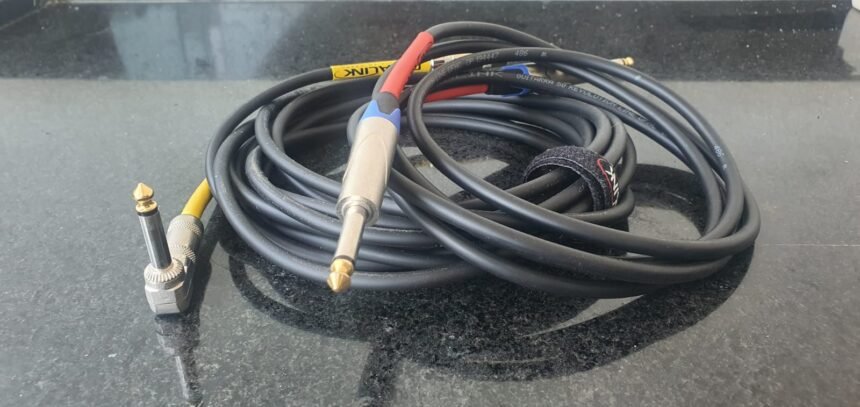
Guitar cables come in various types, including standard instrument cables, patch cables, and speaker cables, with each type serving a specific purpose within your setup.:
-
- Instrument Cable
The most common type of cable used by guitarists these are often simply referred to as guitar cables. Typically boasting a 1/4-inch jack plug on either end, their primary function is to transmit the audio signal from your guitar to an amplifier or other audio equipment. - Patch Cable
Commonly used on pedalboards to connect a chain of guitar effects pedals, these cables are typically very short, usually around 6 to 12 inches, and have 1/4-inch connectors on both ends. As they often need to be routed through tight spaces on a pedalboard, investing in high-quality patch cables is essential to avoid signal loss or damage to the connectors. - Speaker Cable
Serving a different purpose than instrument and patch cables, these are designed to carry high-power audio signals from an amplifier to a speaker cabinet. They have thicker conductors and connectors to handle the power load without significant signal loss, often using Speakon, 1/4-inch, or banana connectors, depending on the equipment used.
- Instrument Cable
The Cable’s Structure
At each end of a guitar cable, you’ll find 1/4-inch jack connector plugs designed to enable the connection between your guitar, amplifier, or other audio equipment. They come in various designs and quality levels, with some featuring gold-plated connectors for enhanced conductivity and corrosion resistance.
Serving as protection for the internal components and shielding them from physical damage and interference, there are outer coverings typically made of rubber or plastic materials that are flexible yet durable. Some premium cables boast reinforced or braided jackets for added strength.
Inside the cable jacket, you’ll find conductor wires responsible for carrying the audio signal. A standard guitar cable has two main conductors: a center conductor and an outer shield. Usually made of copper or a copper alloy, known for its excellent electrical conductivity, the core wire transmits the audio signal. The center conductor carries the positive signal.
Surrounding the center conductor is the outer shield, typically made of braided copper or conductive plastic, with its primary role being to protect the center conductor. The shield is connected to the ground (the sleeve) of the connector plugs, effectively grounding the cable from electromagnetic interference (EMI) and radio-frequency interference (RFI), which can introduce unwanted noise into the audio signal.
Identifying Cable Issues
Troubleshooting cable problems is essential to pinpoint the source of the issue and determine whether a cable is the culprit and when the problem might reside elsewhere in your signal chain. To do so, start by carefully running your fingers along the entire cable length, feeling for any cuts or abrasions.
Inspect the cable closely for any exposed wire or frayed areas. Even tiny nicks in the outer jacket can expose the internal conductors and lead to signal problems. Then, examine both ends of the cable, paying close attention to the connector plugs. Look for bent or damaged pins, as well as any loose components or signs of corrosion, as these can disrupt the electrical connection between your guitar and amplifier.
It is also important to check the cable ends for any signs of fraying or unraveling of the jacket. A frayed cable end can expose the internal wires, making them vulnerable to damage when plugging and unplugging.
If you haven’t found any indication of damage to the cable after the visual inspection, you may try folding the cable close to the edge around your finger, then put the cable to your ear and run your finger across the cable extension. You’ll notice that the cable conducts sound as you touch it, and you should hear a noise when you hit the spot.
If you notice any of the abovementioned problems, it strongly indicates that the cable may need further attention or replacement.
Preventive Measures
While troubleshooting cable issues is essential, it’s even more valuable to prevent those issues from arising in the first place. Proactive measures can significantly extend the lifespan of your guitar cables and reduce the likelihood of disruptions during performances and recording sessions.
Here are some preventive measures to consider:
- Proper Handling And Storage
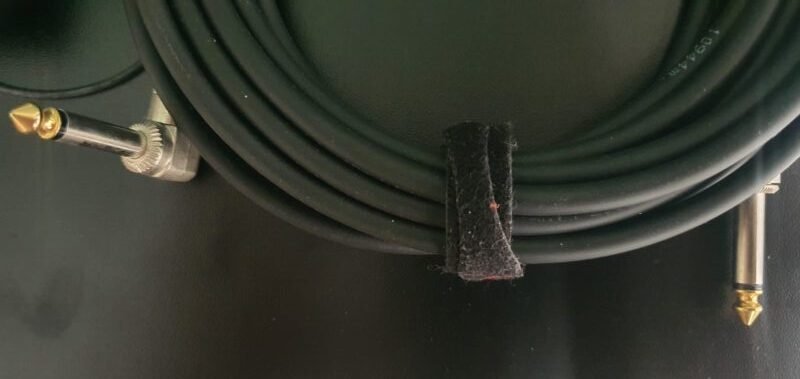
How you handle them during your jams and store them after play a crucial role in preventing cable issues. Treat your cables with care, always avoid tugging, twisting, or bending them excessively during setup, performance, or storage. When coiling your cables, use loose loops rather than tight coils, which can create stress points that weaken the cable over time.
Remember to elevate your cables off the ground when on stage to prevent accidental damage from foot traffic or equipment wheels. - Using Cable Wraps
Allowing you to secure your cables without applying excessive pressure, velcro ties can be reused and adjusted as needed. Another great option is the cable sleeves, which protect your cables from abrasion and provide an organized look. They are particularly useful for managing multiple cables on a stage or in a studio. - Strain Reliefs
A feature found on some cables and connectors, it helps distribute stress away from the internal connections, increasing the cable’s lifespan. Look for cables with built-in strain relief near the connector plugs. Additionally, consider adding external strain relief, such as rubber boots or protective sleeves, to protect your cables further. - Regular Maintenance
Performing regular maintenance on your cables can identify and address potential issues before they become major problems. Clean the connector plugs with a contact cleaner or a specialized connector cleaning solution. This helps maintain a solid electrical connection, reducing the risk of signal problems.
Test your cables periodically to ensure they are functioning correctly by connecting them to your gear and listening for any anomalies in the signal. Furthermore, consider retiring it from critical applications when a cable shows significant signs of wear or damage. You can repurpose it for less demanding tasks or keep it as a backup.
By implementing these preventive measures, you can significantly reduce the chances of cable issues and ensure the reliability of your gear. Preventive maintenance saves you time and money, knowing that your cables are in excellent condition and ready to deliver your sound faithfully.
Conclusion
In the ever-evolving world of music, knowledge is your greatest asset. By gaining a deeper understanding of guitar cables and adopting preventive measures, you not only enhance the reliability of your equipment but also free yourself to focus on what truly matters—creating and sharing your music.
Remember, a well-maintained cable is a conduit for your artistry, ensuring that your music flows seamlessly from your heart to the ears of your audience. As the old saying goes, “An ounce of prevention is worth a pound of cure.”

The Integraudio Editorial Team consists of experienced music producers, audio engineers, and plugin enthusiasts dedicated to providing in-depth reviews and guides for music production software.