
Formant shifter plugins can be almost invisible in a mix or completely transform a sound. Unlike ordinary pitch shifting, formant shifting lets you change the perceived size, character, and resonant shape of a voice or instrument without necessarily changing the musical note itself.
That makes it useful for far more than the familiar deep-vocal effect. I use formant processing as a way of thickening vocals, separating doubles, reshaping harmonies, changing the character of samples, and turning ordinary sounds into something much harder to identify.
For this list of the 10 best formant shifter plugins, I wanted plugins that approach the idea differently. Some are straightforward vocal tools, while others treat formants as a serious sound-design parameter that can be applied to drums, synths, loops, and even complete mixes.
zplane TIMBRE
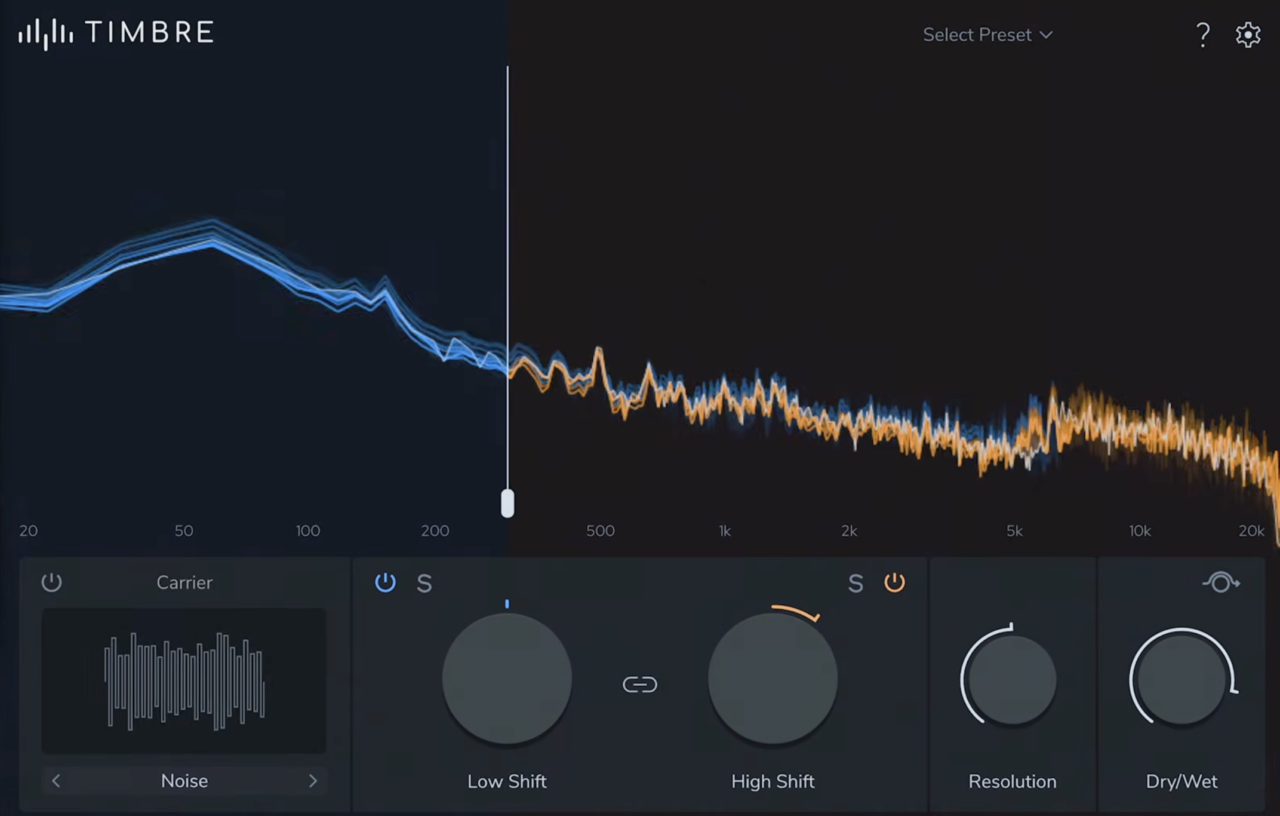
zplane TIMBRE immediately stands apart because formant shifting isn’t one feature hidden inside a larger vocal processor. It is the entire point of the plugin.
That focus allows it to go considerably deeper than most conventional formant controls. TIMBRE works polyphonically and can process vocals, drums, instruments, loops, and full mixes without changing their pitch, so I see it as much as a mixing and sound-design tool as a vocal effect.
±36 Semitone Formant Range
TIMBRE offers an unusually broad three-octave formant-shifting range.
The extreme settings are obviously useful for sound design, but the smaller movements are more interesting to me in a mix. A subtle downward shift can add perceived weight without simply boosting the low end, while moving the formants upward can make a source feel lighter or more exposed.
Dual-Band Processing
The signal can be divided into High and Low bands, with independent shifting, bypass, and solo controls. The two bands can also be linked when you want one global formant adjustment.
That is probably TIMBRE’s biggest advantage over a standard one-knob formant shifter. I can reshape one area aggressively while leaving another largely untouched.
Carrier Section
TIMBRE also includes a built-in noise carrier and external sidechain carrier mode for formant-vocoder-style processing.
This takes it well beyond simply making a vocal sound deeper or brighter. Feeding another source into the carrier opens up far more experimental textures while still preserving recognizable characteristics of the original signal.
Resolution & Dry/Wet
The Resolution control changes the detail of the processing, while Dry/Wet makes parallel blending easy.
Summary: For me, TIMBRE earns the first spot because it treats formant manipulation as a full creative discipline rather than a secondary vocal effect.
Compatibility: VST3, AU, and AAX on macOS 13 or later and Windows 10 or later (64-bit). Intel and Apple Silicon Macs are supported.
Soundtoys Little AlterBoy
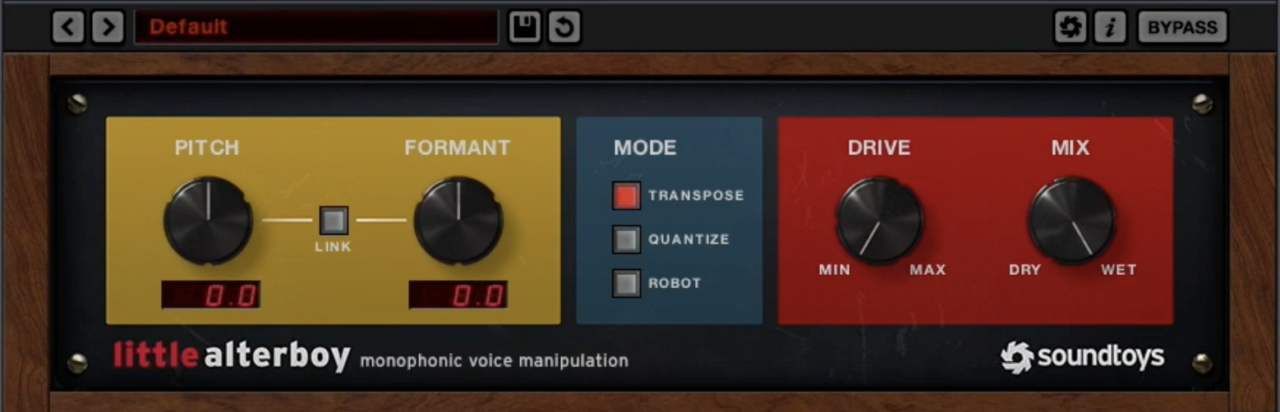
Little AlterBoy is almost the opposite of TIMBRE. There are no multiband controls, giant modulation systems, or pages of advanced parameters. Instead, Soundtoys gives you a few controls that can take a normal vocal from believable to completely unrecognizable in seconds.
That simplicity is a big part of why it has remained useful. Pitch and formant can be adjusted independently in real time, so I can deepen the character of a voice without lowering the melody or change the pitch while compensating with the formant control to keep the result more natural.
It is important to remember that Little AlterBoy is designed specifically for clean monophonic vocal material, rather than chords or polyphonic instruments.
Pitch & Formant Controls
The two central controls are deliberately uncomplicated. Pitch handles transposition, while Formant changes the apparent vocal character independently.
Small formant moves are often more useful to me than extreme ones. Dropping it slightly can give a thin backing vocal more weight, while more aggressive settings quickly move into obvious character transformation.
Transpose, Quantize & Robot Modes
Little AlterBoy includes Transpose, Quantize, and Robot operating modes. Quantize snaps the incoming voice toward chromatic notes for hard-tuned effects, while Robot locks the vocal to a single pitch.
These modes make it much more than a basic formant knob, especially for pop, hip-hop, and experimental vocal layers.
MIDI Control
The pitch can also be controlled from MIDI, allowing you to play new melodic lines or create vocoder-like vocal effects directly from a keyboard.
Tube Drive
Soundtoys adds a modeled tube saturation circuit derived from Decapitator, which can range from subtle warmth to intentionally dirty vocal processing.
Summary: Little AlterBoy isn’t the deepest formant processor here, but when I want to reshape a vocal quickly without interrupting the writing process, very few plugins make the job this immediate.
Compatibility: VST2, VST3, AU, AAX Native, and AAX AudioSuite on macOS 10.12 or later; VST2, VST3, AAX Native, and AAX AudioSuite on Windows 7 or later (64-bit only). Apple Silicon is supported.
Waves Vocal Bender

Waves Vocal Bender is probably the plugin here I’d reach for when the idea starts with a vocal rather than sound design. The interface looks almost ridiculously simple at first, with Pitch and Formant taking center stage, but opening the modulation section reveals a lot more depth than those two knobs suggest.
That balance works well for me. A quick octave-down vocal or slightly shifted double takes seconds, but the plugin can also create moving, rhythmic effects without routing everything through several additional processors. Waves designed Vocal Bender specifically for real-time monophonic voice manipulation, although other sources can certainly produce interesting results.
Pitch & Formant
Pitch and formant can be controlled independently, so changing the perceived size or character of a voice doesn’t require changing the melody itself.
Subtle formant adjustments are especially useful on doubles. Moving one layer slightly away from the lead can create separation without resorting to obvious EQ or stereo tricks.
Four Modulation Sources
Vocal Bender includes LFO, step sequencer, amplitude envelope, and pitch envelope modulation, with up to four sources operating simultaneously.
That turns a static shift into something much more animated. Formants can follow the dynamics of the performance, move rhythmically, or produce exaggerated pitch-drop effects.
Flatten Mode
The Flatten function removes the incoming melodic movement and creates a more robotic, fixed-pitch result.
It’s an easy way to build synthetic layers underneath a natural lead without reaching for a full vocoder.
Real-Time Processing
Vocal Bender is designed for live manipulation and reports zero or near-zero latency depending on the pitch setting, making it practical while tracking as well as during mixing.
Summary: Its strongest quality is immediacy: you can get a useful vocal transformation almost instantly, then dig deeper only when the production calls for it.
Compatibility: VST3, AU, and AAX on macOS 12 Monterey or later; VST3 and AAX on Windows 10 or later.
Polyverse Manipulator
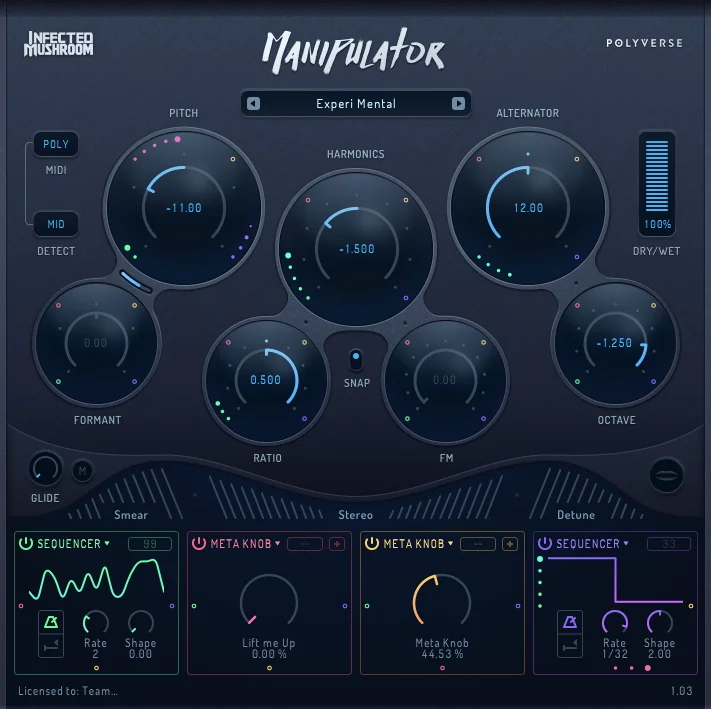
Polyverse Manipulator is where this list starts moving away from ordinary vocal processing and into proper sound design. Developed with Infected Mushroom, it combines formant shifting with granular pitch processing, harmonic manipulation, modulation, and MIDI control, so changing the apparent character of a voice is really just the beginning.
I wouldn’t choose it when all I need is a slightly deeper vocal double. Manipulator becomes much more interesting when the goal is to take a recognizable voice, bass, synth, or other monophonic source and push it somewhere unexpected.
Independent Pitch & Formant
The Pitch Shifter provides separate Pitch and Formant controls. Formants can be moved in semitones without changing the underlying pitch, while pitch can be shifted without automatically dragging the formants with it.
That independence makes everything from believable vocal reshaping to exaggerated monster-like transformations possible.
Smooth Grains
Manipulator works through granular processing, and Smooth Grains fills the gaps created when shifting downward.
At higher settings the result becomes smoother and more natural; reducing it deliberately introduces a more metallic, synthetic character.
Harmonics Shifter
The separate Harmonics Shifter changes harmonic relationships while preserving the fundamental pitch.
This is where Manipulator starts sounding genuinely different from simpler formant plugins. Voices can turn hollow, robotic, nasal, or aggressively synthetic without simply becoming higher or lower.
MIDI & Four-Voice Polyphony
Incoming MIDI can repitch the source to new notes and create up to four voices of harmony.
That makes Manipulator surprisingly playable, especially when vocal fragments need to become melodic instruments rather than remain conventional vocals.
Summary: For me, Manipulator belongs here because formant shifting is only the doorway; the real strength is how quickly it can turn familiar audio into something completely new.
Compatibility: VST2, VST3, AU, and AAX on macOS 10.9 or later; VST2, VST3, and AAX on Windows 7 SP1 or later (64-bit only). Apple Silicon is supported.
Devious Machines Pitch Monster
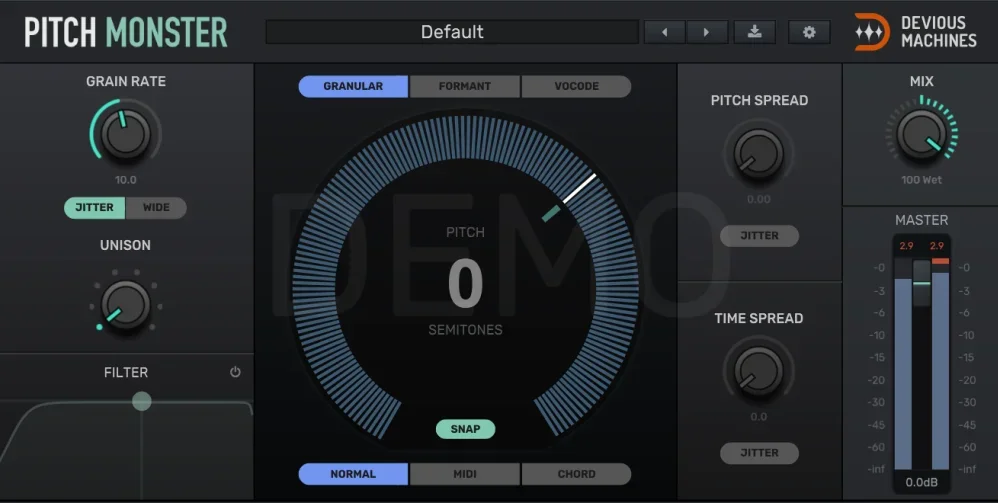
The name Pitch Monster sounds like subtle vocal correction probably wasn’t the design brief, and that becomes obvious within a few minutes. Devious Machines built this as a much broader pitch-processing instrument with Granular, Formant, and Vocoder engines, a six-octave range, MIDI control, chord memories, and enough polyphony to build enormous vocal stacks.
Despite all that, the dedicated Formant engine is surprisingly focused. It is designed primarily for clean monophonic vocals and solo instruments, where pitch and resonant character can be manipulated independently.
Formant Engine
In Formant mode, the musical pitch and the source’s resonant characteristics are separated.
That means a vocal can be pitched while retaining more of its original character, or the formants can be pushed independently for obvious changes in apparent vocal size and identity.
Granular, Formant & Vocoder Engines
Switching engines changes the entire personality of the processing. Granular works with a much wider variety of material, Formant specializes in tracked monophonic sources, while Vocoder remaps the input toward chosen musical pitches while retaining independent formant control.
Eight-Voice Polyphony
Pitch Monster can harmonize with up to eight voices, and those voices can each be expanded with eight-part unison for a maximum 64-voice stack.
That can move a single vocal surprisingly quickly from a straightforward shift into a huge synthetic choir.
MIDI & Chord Modes
Both MIDI and Chord modes let the incoming audio be played harmonically. Chord mode stores up to eight notes per chord and provides eight chord-memory slots, while MIDI mode follows notes directly from the DAW or keyboard.
Unison, Jitter & Spread
Time and pitch spreading can loosen those generated voices instead of leaving every layer perfectly stacked.
Summary: Pitch Monster makes the most sense when a basic formant shift isn’t enough and you want the voice to become an instrument in its own right.
Compatibility: VST2, VST3, AU, and AAX on macOS 10.9 or later; VST2, VST3, and AAX on Windows 10 or later (64-bit only). Apple Silicon is supported.
Baby Audio Humanoid

Baby Audio Humanoid is easily one of the more radical processors in this roundup. It can handle straightforward formant shifting, but that feels almost like the entry point. The real idea is to take a sung performance and push it somewhere between hard-tuned vocal, synthetic character, and full resynthesized instrument.
That makes it less suitable when I only want a tiny natural-sounding correction, but much more interesting when the vocal itself needs to become part of the production.
High-Fidelity Formant Shifting
Humanoid combines its FFT-based retuning engine with independent formant processing, so the apparent size and character of the voice can change without relying purely on pitch movement.
Subtle settings can reshape a double or harmony, while larger moves quickly push the performance into intentionally synthetic territory.
Resynthesis Engine
The Transform section can morph the incoming vocal toward an internal wavetable synth. At the extreme setting, the voice effectively becomes the source for a synthesizer rather than remaining a conventional vocal recording.
There are 64 factory wavetables, and you can import your own, which gives Humanoid considerably more range than a normal formant shifter.
Hard Tuning & Robotify
Humanoid also works as an aggressive tuner. Robotify, key/scale selection, and Quantize can pull the performance into the deliberately artificial pitch behavior heard in modern pop and electronic vocals.
MIDI Pitch Control
Pitch can be driven from MIDI or automation, making it possible to rewrite melodies, build harmonies, or turn a single vocal into playable synthetic layers.
Summary: Humanoid earns its place here because it goes far beyond changing vocal size; it can rebuild the identity of the performance entirely.
Compatibility: VST, VST3, AU, and AAX on macOS 10.11 or later (native on Apple Silicon) and Windows 10 or later.
Auburn Sounds Graillon 3
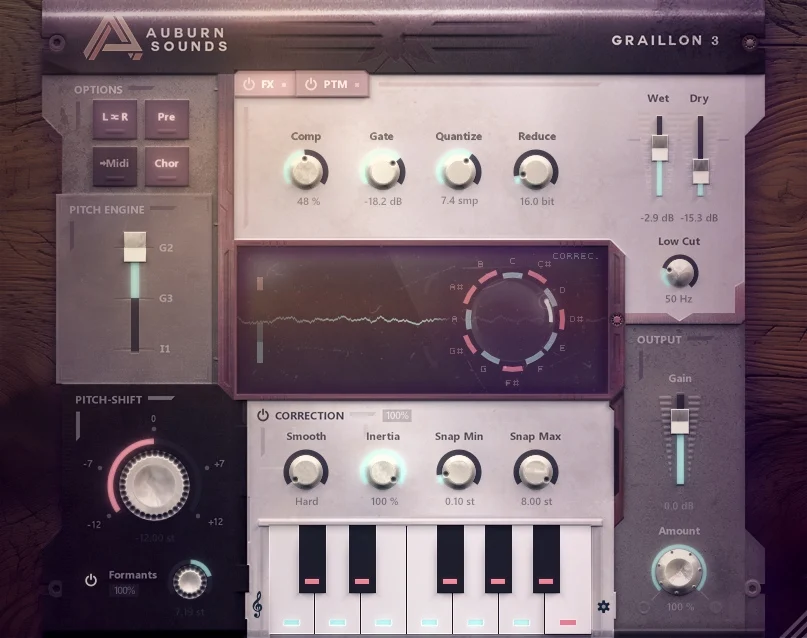
Graillon 3 is one of the easiest recommendations on this list if you want to experiment with formant shifting without immediately buying another plugin. Auburn Sounds offers a free edition, yet the core package still includes pitch shifting, formant processing, pitch correction, and several vocal-focused effects.
I also like that it doesn’t force one pitch-shifting character on every voice. The different processing engines can respond quite differently depending on the source, so there’s more flexibility here than the simple interface first suggests.
Formant Shift & Preservation
Graillon gives you separate controls for formant preservation, Formant Amount, and Formant Shift. The current manual specifies a ±12-semitone formant range.
That makes it useful both for compensating when pitch shifting and for deliberately changing the perceived character of a vocal while leaving the note itself alone.
Three Pitch Engines
The current version includes G2, G3, and I2 processing engines. G2 preserves the older Graillon character, G3 improves pitch detection and shifting, while I2 uses technology derived from Auburn Sounds’ Inner Pitch engine for more natural processing on more complex or bass-heavy material.
Having those choices matters because one algorithm rarely sounds best on every singer.
Pitch Correction
Graillon also handles both natural correction and harder tuning, with controls such as Correction Amount, Smooth, Inertia, Snap Min, and Snap Max.
That means the formant section can work alongside actual tuning rather than existing as a separate novelty effect.
Built-In Vocal Effects
The plugin adds a FET/Opto-style compressor, gate, chorus, preamp, and bitcrusher, while the Full edition also expands the creative side with PTM and a vocal doubler.
Summary: Graillon 3 stands out because it packs serious vocal manipulation into a tool that remains approachable and unusually affordable.
Compatibility: VST2, VST3, AU, AAX, CLAP, and LV2 on macOS 10.12 or later (native on Apple Silicon), Windows 7 or later, and Linux, with format availability varying by platform.
RysUpShift
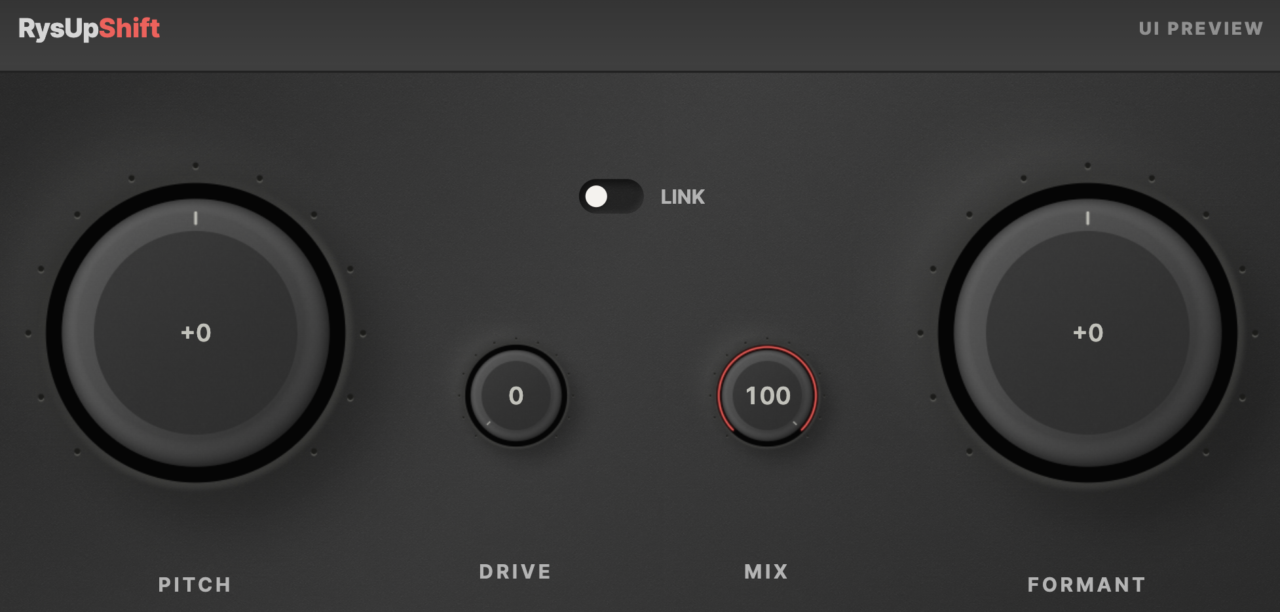
RysUpShift is probably the most straightforward plugin in this group. There’s no synthesis engine, giant modulation matrix, or pile of unrelated vocal effects. Its entire workflow revolves around giving pitch and formant their own independent controls, which is exactly what I want when the job is simple and I don’t feel like opening something more elaborate.
That focused design also makes it easy to hear what each parameter is actually doing instead of getting distracted by processing elsewhere in the chain.
Independent Pitch & Formant
Pitch and formant operate separately, so the musical note can move while retaining more of the original vocal character, or the formant can change while the pitch stays fixed.
This works nicely for subtle backing-vocal variation because one take can be made darker or brighter without changing the melody.
Continuous Pitch Control
The pitch control supports smooth continuous adjustment as well as semitone snapping. Rys Up’s current product page emphasizes clean movement without zippering, which is useful when the parameter is being automated rather than left at one static value.
MIDI Input
RysUpShift can follow incoming MIDI notes, allowing a vocal to be repitched melodically from a keyboard or MIDI track.
That makes it possible to build harmonies from a single performance without manually rendering every interval.
Subtle or Extreme Character Shifts
The formant control can move from small tonal changes to obvious character effects. A few restrained adjustments work well for differentiating doubles, while larger shifts move quickly into the familiar smaller, brighter or deeper, heavier vocal identities associated with formant processing.
Summary: RysUpShift is the one I’d choose when I want pitch and formant control to stay fast, obvious, and free of unnecessary extras.
Compatibility: VST3, AU, and AAX on 64-bit Windows and macOS, with a Universal build for Intel and Apple Silicon Macs. Rys Up doesn’t publish minimum OS versions.
MeldaProduction MAutoPitch
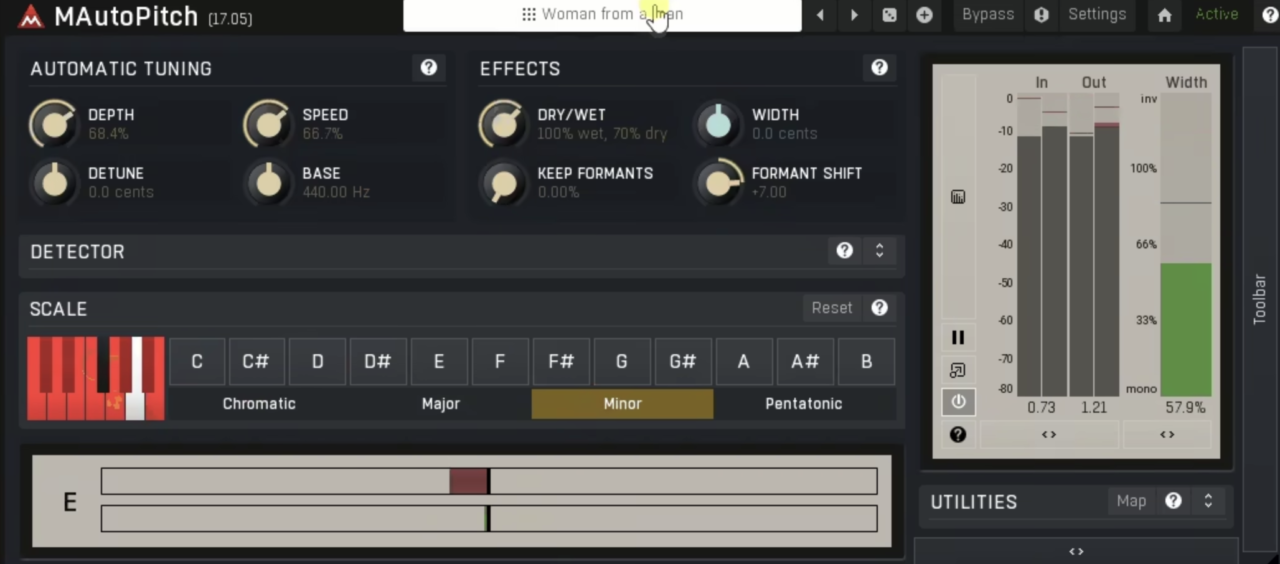
MAutoPitch is the free option I’d keep installed even if I already owned several dedicated formant processors. It starts as an automatic pitch-correction plugin, but Melda gives you enough control over formants, stereo width, and pitch preservation that it becomes surprisingly useful for creative vocal work too.
The interface is nowhere near as immediate as Little AlterBoy, but once the main controls make sense, there’s considerably more flexibility than the price suggests.
±12 Semitone Formant Shift
The dedicated Formant Shift parameter moves the formant structure from -12 to +12 semitones without normally changing the actual pitch.
Smaller movements work nicely for separating doubles and harmonies, while pushing toward the extremes quickly gives you the exaggerated small-voice or heavy-voice effects associated with formant processing.
Keep Formants
The Keep Formants control determines how much of the original spectral envelope should remain when the musical pitch changes.
That distinction is useful because sometimes the goal is natural transposition, while other times I specifically want the strange character created when pitch and formants move together.
Stereo Width
MAutoPitch can create a pitch difference between the left and right channels through its Width control, producing anything from subtle widening to a more obvious doubled effect.
Pitch Detection & Correction
Underneath the creative controls is a full automatic pitch-correction engine with adjustable detector range, stabilization, threshold, and correction behavior.
Summary: MAutoPitch isn’t the most specialized formant tool here, but for a free plugin that can tune, reshape, and widen a vocal in one place, it remains extremely useful.
Compatibility: VST, VST3, AU, and AAX on macOS 10.14 Mojave or later; VST, VST3, and AAX on Windows 10 or 11 (64-bit). Intel and Apple Silicon Macs are supported.
iZotope VocalSynth 2

VocalSynth 2 is the broadest plugin on this list. I wouldn’t buy it purely for one formant knob, but if formant manipulation is only part of a bigger plan to turn vocals into synthetic textures, harmonies, vocoder parts, and entirely new characters, it becomes much more interesting.
The centerpiece for this article is Biovox, which models characteristics of the human vocal tract rather than treating formants as a simple pitch-style shift. It lets you manipulate formants, vowel shapes, and nasality, so the vocal can change identity without necessarily losing its recognizable performance.
Biovox
Biovox is the module I’d start with for actual formant work. Its controls reshape the vocal tract characteristics behind the sound, allowing more nuanced changes than simply making the singer appear larger or smaller.
Used subtly, it can alter the personality of a backing vocal. Pushed harder, it gets into far stranger territory.
Five Vocal Engines
VocalSynth 2 combines Biovox, Vocoder, Compuvox, Polyvox, and Talkbox, and the modules can be blended together.
That’s where it separates itself from dedicated formant shifters. A formant-shaped vocal can immediately be layered with synthesized harmonies or vocoder textures without leaving the plugin.
Auto, MIDI & Sidechain Modes
The three processing modes change how VocalSynth responds. Auto follows the incoming vocal, MIDI lets you play harmonies and pitches from a controller, and Sidechain accepts an external carrier signal.
MIDI mode is particularly fun because the voice stops feeling like a recording and starts behaving more like an instrument.
Seven-Module Effects Chain
A built-in seven-module stompbox-style effects section provides additional processing after the synthesis engines.
Summary: VocalSynth 2 earns the final spot because it treats formants as one part of a much larger vocal sound-design system, making it the most expansive choice here rather than the most focused.
Compatibility: VST3, AU, and AAX on macOS 14.7 (Sonoma), 15.7 (Sequoia) and 26.1 (Tahoe), plus Windows 10 22H2 or Windows 11 24H2; VST3 and AAX on Windows 10 or 11 (64-bit). VST2 is no longer supported.
Last Words
Formant shifting can be as practical as making two vocal layers feel less alike or as extreme as turning a singer into something that barely resembles a human voice.
That range is why there isn’t one obvious winner here. Little AlterBoy, Vocal Bender, and RysUpShift make quick vocal changes effortless, while TIMBRE, Manipulator, Pitch Monster, Humanoid, and VocalSynth 2 open the door to much deeper sound design. If you’d rather start without spending anything, Graillon 3 and MAutoPitch both offer free versions. For the rest of the vocal chain around them, see our guide to the best vocal chain plugins.
The best approach is usually to start small. A few semitones of formant movement can completely change how a vocal sits in a mix, and the stranger settings will still be there when subtlety stops being fun.

Berk is a multi-instrumentalist musician from Istanbul, Turkey. He has been playing guitar, handpan, and percussion for over ten years, developing a sound that blends melodic sensitivity with rhythmic depth.
He began his musical journey as a teenager, learning guitar and performing in several bands. In 2016, he discovered the handpan, an instrument that immediately resonated with him on a deeper level and gradually became central to his artistic identity.
Since then, he has performed in streets, festivals, bars, and concert venues across different countries, connecting with diverse audiences through both intimate and large-scale performances.
Alongside his live work, Berk is deeply involved in studio production. He works from his home studio, where he composes, records, and produces his own music. His studio serves as a creative space for layering handpan, guitar, and percussion with modern production techniques, allowing him to shape fully realized, atmospheric compositions from start to finish.
His music explores a wide range of genres and textures, combining organic acoustic instruments with detailed studio production to create immersive and expressive soundscapes.