
It is very common that when using amps or audio devices, there are interference problems or external signal capture. Most amps have insulating materials responsible for preventing these; however, sometimes, these barriers can fail, and the signals leak and generate noise.
You must consider that we live in environments plagued with electronic devices, which emit and receive electrical signals that travel through the air continuously. The same happens with radio waves, which have a very long range and have the necessary intensity to be easily decoded.
While it can interfere with how your amp performs, it’s not something you should be concerned about. In this article, we will talk about some of the possible reasons that can cause your amp to pick up radio waves.
Why Is My Amp Picking Up Radio?
The main reason your amp may be picking up radio waves is due to poor insulation of the amp’s electronic circuits, damaged cables, a set of pickups that do not have the necessary insulation, or wrong orientation of the amp. Find where the signal is leaking requires checking one step at a time.
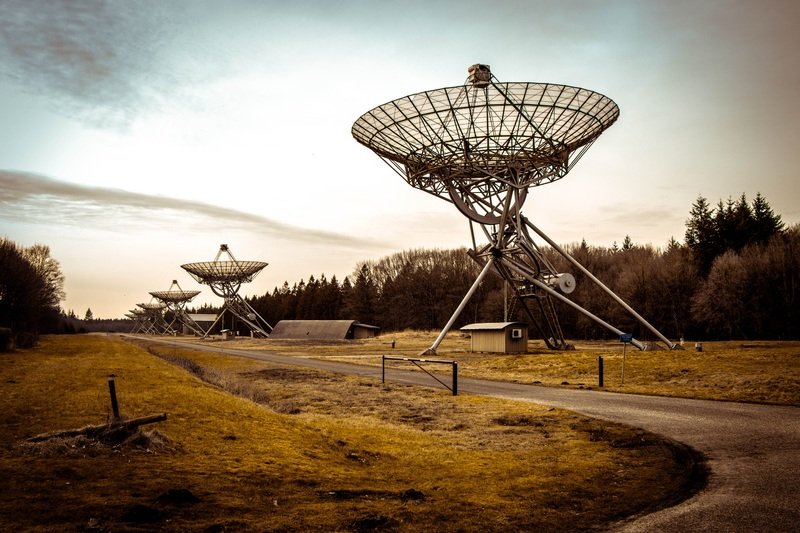
A radio frequency is an electromagnetic wave signal emitted by a transmitting antenna that has the ability to travel through the air for miles until picked up by a receiver. While amps that are designed to output the electrical signals that instruments produce are not meant to pick up those radio waves, their electrical circuitry can inadvertently transmit these waves by overlapping the amp’s own sounds, muddying the original signal.
To prevent this, amps and most audio devices have internal insulation treatments that can be different, but share the same purpose. However, despite being prepared for this situation, all amps can fail. Let’s go over some situations where this can happen and some possible solutions.
Location
Sometimes, problems of this type can be solved quickly by changing the amp location until you find the point where the radio waves do not filter into the signal. While this can work, it is not a complete solution to the problem, as once radio wavess can be heard through your amp, it is an indicator that one of the components is vulnerable to these leaks. Therefore, the same situation can be repeated in the future.
Amp Isolation
When an amp that has not been connected to any cable or instrument reproduces radio signals through its speaker, it means that its internal insulation is failing. The insulation consist of some paint or material with insulating properties placed around the cavity where the electrical materials of the amp are housed. Sometimes that insulation treatment can be altered when the amp has been opened during a repair, or even with the wear and tear generated by the use and accumulated heat, especially in old amps.
Some low-cost devices often include little or no insulation, which makes them much more prone to experiencing this type of failure. In this case, repairing or reinforcing the existing insulation is necessary to cancel the interference directly.
Wires
The cables are responsible for transmitting the signal that the instrument emits to the amp, and it is another element that can be leaking radio signals to the device. Its metallic composition makes it as perceptible to pick up the signals that travel through the air as any other electrical device, for which it must also have the necessary insulation so that this does not happen.
Instrument cables have a metal mesh that fulfills the function of isolating it from external waves; however, when the cable is of low quality or part of that metal mesh is damaged, the insulation begins to fail. This makes it necessary to check the cables to locate faults when dealing with this problem. In this case, if the cable is responsible, it must be replaced with a higher-quality one.
Once you have previously checked that the radio waves are not leaking through the amp or through the cables, this indicate that they are leaking through the instrument, which brings us to the next step.
Guitar or Bass Pickups
Another possible cause of your amp picking up radio signals is the pickups and potentiometers of the instruments you connect to the amp. The pickups are made with magnets and metal elements that are capable of picking up radio waves. To prevent this, the guitar’s internal circuitry includes shields that work as isolation for these waves; however, sometimes, waves can leak into the audio signal.
In some cases, if the insulation is insufficient, it is best to reinforce it. Other times this error can be corrected simply by moving the guitar’s position until you find a point where the sound does not leak and avoid places where the signal leaks easily.
Can Radio Picking Damage My Amp?
When your amp picks up the radio waves that travel through the air, it does not put any of its components at risk. However, this situation directly affects the musician’s performance and the sound quality emitted through the device, which needs to be solved.
Although often an amp can pick up radio waves in a subtle and almost imperceptible way, other times it can become quite a problem, especially when this phenomenon occurs with a high volume of sound and continuously, which causes solving the problem to be a necessity.
In some specific situations, such as a recording session, or a performance where the instruments must be heard clearly, this type of problem can cause serious headaches. However, in other situations, such as rehearsals or moments where the gain of the instruments is high, and there is not as much room to perceive details in the sound, the interference caused by radio waves may not worry us so much.
For the noise generated by the radio waves picked up by the amp to become dangerous within the device, it would be necessary for the gain level of the amp to be excessively high and for the radio signal to be captured directly, which could put the speaker at risk. However, this situation does not occur very often, and the greatest damage radio waves can generate will be for the listener who will hear their sound contaminated with noise and not so much for the amp or its integrity.
What Are The Problems That Can Most Affect My Amp?
The most frequent problems when using your amp are clipping, buzzing, overheating, distortion and losing power. Each of these problems has different origins, different risks, and ways of solving them, which makes a prior analysis of the failure necessary.
Regardless of where the signal to be amplified comes from, every amp acts in conjunction with external components, making everything necessary to be set up correctly to work. Sometimes problems can occur when setting up; other times, the fault can come from an external component, and other times, the fault comes directly from the amp.
We can identify clipping among the faults that mostly come from the amp. Clipping is expressed when the signal emitted by the amp begins to distort as it works saturated by not being able to cover the power that the speakers require, which leads the device to cut signal peaks.
This is reflected in a sound with intermittent cuts that can be very annoying and, at the same time, risky for the equipment. The cause can come from a simple excess of gain, an impedance mismatch between the amp and the speakers, or a drop in the supply voltage, which does not allow the amp to function normally.
Due to this, it is always advisable not to abuse the amp gain since knowing what are the power limits that each amp offers can save you a lot of trouble. To solve incompatibility, it is necessary to set the speakers correctly and ensure that the amp can support the impedance they offer. The impedance must always be right since working above or below its capacity will cause problems.
Buzzing is another common difficulty when troubleshooting an amp. It manifests as constant background noise, generally of high frequency, which can be annoying and invasive. Although it is not as annoying or potentially dangerous for the device as clipping, it is a fault that it is preferable not to get used to maintaining your amp’s sound quality.
Buzzing can originate when cables are in poor condition, faulty connections, or any component filtering external signals. Other times it can be generated when the amp is located too close to other devices that generate electrical waves that can be picked up by the amp or one of its external components.
To solve this type of problem, it is necessary to check all the cables and connections, ensure they are in good condition, and replace defective ones. It is also necessary to check that the ground connection is properly connected, and in the case of not existing one, add it to the system and move the amp away from any other external device that can generate interference or noise.
Overheating the amp’s internal circuitry is another common failure that must be addressed to avoid potential damage. Although in terms of sound, this type of failure does not have much incidence, in terms of operation, it must be resolved not to compromise the integrity of the device.
The origin of this failure can occur for multiple reasons, such as an incorrect setting, cables that do not have the proper gauge, or a short-circuited component. In addition, lack of ventilation and excess gain can also cause the amp to overheat.
Overheating can burn wires, damage contacts, and deteriorate amp components more quickly, so a device that runs hot over the long term will last less time than one that runs normally.
To prevent this, you must make sure that the ground connection is properly installed, which will save you some trouble. It is also necessary to check that the gauge of the cables that go from the amp to the speakers is the one indicated for the amount of voltage they must withstand. Otherwise, the device will work overloaded, generating heat.
When component fails due to being short-circuited, it can cause voltage spikes that cause overheating inside the device. In addition to heat, this type of problem can generate clipping since the amp system will seek to protect itself, so if this happens, it is time to take your amp to a repair service.
Another thing you must consider is the amount of gain the amp works with regularly. When you push the gain of the amp close to its limits, you make it work at maximum capacity; if this continues for long periods, the device will undoubtedly generate excess heat. Therefore, it is necessary to use an intermediate gain level and monitor that the amp is not working overloaded.
At the same time, check that the amp’s ventilation is adequate and that the spaces through which it dissipates heat are not blocked so as not to accumulate excessive heat. In addition, avoid placing the amp next to other devices or sources that can generate heat.
Conclusion
When it comes to experiencing problems related to the sound of your amp, many factors can come into play. Analyzing how it behaves will help you more easily solve any difficulty that arises. Radio waves travel through the air almost constantly, so you should not worry if at any time this problem occurs.
It is important to know that regardless of how annoying the noise that leaks into the signal from your amp, when you are playing an instrument or simply listening, there is no risk that these leaks affect it or compromise any of its components. Therefore, take the time to analyze the possibilities to find a practical solution without fear of making mistakes that could aggravate the problem.
It is good to see each problem related to your audio devices as an opportunity to learn more about its operation and what things you should avoid to prolong its durability as long as possible. I hope this article is very helpful for you. Thanks for your time!

The Integraudio Editorial Team consists of experienced music producers, audio engineers, and plugin enthusiasts dedicated to providing in-depth reviews and guides for music production software.