

Microphones can pick up sounds traveling through the air with a level of detail that can even exceed that of the human ear.
They are fundamental in almost all musical production processes, and different types of microphones are specially designed for each function. You can find them in different sizes, formats, and ways of capturing sound.
We can point out two types as the main microphones used in musical and sound productions. These are dynamic microphones and condenser microphones. Although both fulfill the same function, each has different characteristics that make them ideal for certain scenarios. Condenser microphones require a higher voltage than dynamic microphones due to the way they work.
This need for higher voltage makes it necessary for the console to which the condenser microphone is connected to have a function called “Phantom Power” included. Through Phantom Power, which is commonly activated with an operator button, the line starts working with +48V, which makes it possible for the microphone to work properly. However, in some cases, you can connect a dynamic microphone with the Phantom Power option turned on.
Is it Safe to Apply Phantom Power to Dynamic Mics?
Applying phantom power to a dynamic microphone will not imply any risk. However, it is advisable to deactivate it when it is not being used to avoid generating problems in the preamplification and prevent the circuit from working with more voltage than necessary.
Phantom power (+48 V) is an additional option that preamps and audio interfaces often include, which can be activated by a button or switch. It is designed so condenser microphones can operate their internal components, which require extra voltage, unlike dynamic microphones.
Using Phantom Power on a dynamic microphone will not produce any change in the signal, compromise the microphone, or add noise or interference. Still, if, for some reason, the cable is in poor condition, the excess voltage could leak into the amplification system producing device failures.
Phantom power must be used with balanced cables to fulfill its function correctly. Otherwise, you will be putting the integrity of your equipment at risk, so it is advisable to disconnect the phantom power option when it is not necessary to use it. Although this failure does not usually occur frequently, it is better to prevent it.
Some amplification systems already include the voltage that the phantom power offers in its outputs without the option of being able to vary it. In this case, if you have equipment with these characteristics, you must ensure that all the cables you use are correctly balanced.
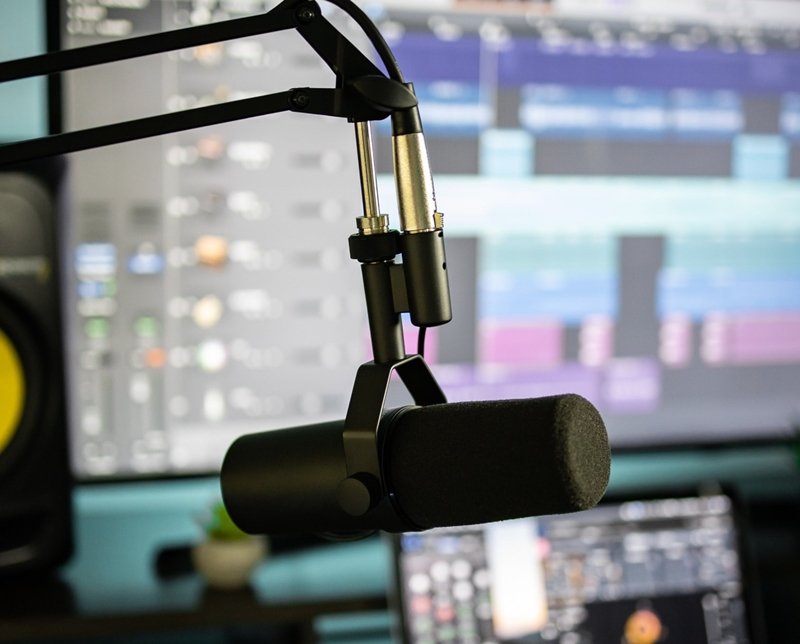
Why do Condenser Mics Need Phantom Power and Dynamic Ones Don’t?
The condenser microphone has a way of working that requires more voltage than a dynamic, adding a longer pickup range and greater definition, which is especially useful for recording sessions. On the other hand, the dynamic microphone works better than a condenser when it comes to live sessions.
Both the condenser and dynamic microphones perfectly fulfill the task of capturing sounds within a given space. Their main difference is found in the components they are made and their way of capturing sound. The condenser works by capturing sound through a thin, lightweight plate called a diaphragm, which vibrates when struck by sound waves traveling through the air. This gives you a high sensitivity that is reflected in a very clear signal.
On the other hand, dynamic microphones pick up sound through a coil suspended in a magnetic field, causing the signal to flow as the flux lines of the magnet are cut. Compared to the condenser, its sensitivity is lower, but it can withstand much higher sound pressure levels, does not need added voltage, and is structurally more resistant.
| Microphone | Dynamic | Condenser |
|
Performance |
They are ideal for live performances when capturing voices and percussion instruments. | They are especially effective when capturing voices and acoustic instruments within a recording studio with a high level of detail. |
|
Features |
They can effectively capture the sound source towards which they are oriented, even in environments with high sound pressure levels. | They can capture sound with high fidelity, allowing you to edit and process the audio comfortably. |
|
Orientation |
Most models tend to have a cardioid pattern. They can also be found in omnidirectional format, although they are used less frequently. | Most models have an omnidirectional pattern, although there are also cardioid types, which usually have a smaller format. |
|
Requirements |
It can work even with a cable that is not balanced. It does not need extra voltage. | It needs a balanced cable and Phantom power (+48V) to work correctly. |
|
Price |
Between 50 and 200 dollars on average. | Between 100 and 400 dollars on average. |
Can Phantom Power Produce Feedback?
Phantom power is not responsible for producing feedback. Although the phantom power can add enough voltage for the condenser mic to have the necessary power to work, the feedback is caused by the position in which they are placed concerning the speakers or by excessive gain.
The feedback produced by microphones can be a real headache, especially when you don’t know how they are originating. Feedback is a small hum repeated thousands of times until it becomes a high-frequency sound and sound pressure that drown out anything else you try to reproduce through your microphones.
Because of this, it is important to understand how it is generated to avoid it. The most common situation is that the microphone is pointed directly at the speaker or is too close to it. This will cause the microphone to pick up its own signal immediately, giving rise to new feedback. Try to point the speaker in another direction. If this is not possible, consider placing the microphones in a different position until you find a spot where the speaker does not directly reach them. This technique has its share of trial and error until the optimal result is achieved.
Another determining factor in controlling feedback is the amount of gain from the amplifier to the microphone. If the microphone has excessively high gain, it will be much more likely to generate feedback even when not facing the speaker. The idea is to find the gain level where the microphone can emit its signal without excessive volume that can generate sound reflections in the room.
In certain cases, feedback is used by guitarists as a useful resource. This happens when they place their guitar in front of the amplifier, which, added to the distortion that the guitar signal has, generates a certain level of feedback in a controlled way. The difference is that guitar mics work by picking up the strings’ vibration, allowing you more control over gain, which is much more difficult to do with dynamic mics.
During band rehearsals, it is very common for the guitar and bass amps to be turned up high to match the sound of the drums, forcing the singer to increase the gain to hear their voice, which ends up generating feedback. In these cases, it is convenient that the drums be located at a certain distance and can be attenuated with some acoustic treatment. This way, the rest of the microphones and equipment can be used at more controlled volume levels.
By consciously placing your microphones and speakers and keeping the gain of your equipment at balanced levels, you will have more control over the way the sound behaves, and you will not have to deal with any feedback problems.
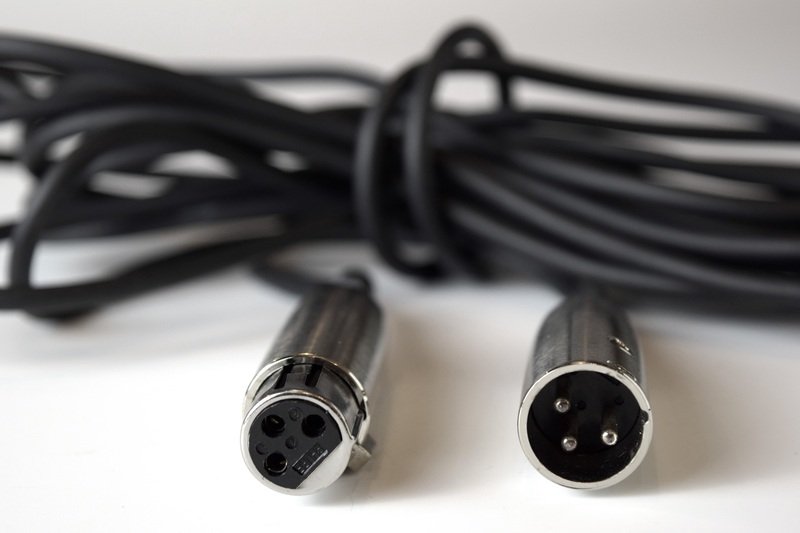
Can Phantom Power Add Noise in The Signal of Your Mic?
Phantom Power cannot add noise or negatively affect your microphone signal. However, other factors that can do so include damaged or unbalanced cables, magnetic fields from external electrical devices, or even microphone support vibrations and movements.
The cables you use are key in sending the signal that the microphone picks up. The cable must be in good condition so that it does not pick up any interference. On the other hand, the jacks that connect the microphone to the amplifier must be firmly fixed not to generate any mechanical noise.
It is important always to use balanced cables on your microphones. A balanced cable, unlike an unbalanced one, has an extra conductor that significantly improves communication and a metallic mesh that covers the structure and protects the signal from any external frequency that may enter.
When using condenser microphones, make sure that the environment you are recording in has controlled acoustics. This type of microphone is highly sensitive, so closing doors and windows will prevent outside sound from entering the signal. If the room where you are recording does not have any acoustics treatment, you can place blankets or pieces of cloth near the microphones to attenuate the reflections that the sound can generate.
In the case of dynamic microphones, placing the sound source as close as possible to the microphone will prevent external noise from filtering into the signal. In the same way, avoid the microphone being oriented towards the speakers to avoid generating feedback.
A shock mount can minimize vibrations that reach the microphone and generate mechanical noise. Its fastening system through elastic bands absorbs vibrations keeping the microphone firm, which is necessary, especially in condenser microphones.
Keeping the microphone, cables, and amplifier away from other electrical devices will help keep the signal clean and clear. Some electrical devices, when working, generate a magnetic field that, in case of sneaking into the signal, will generate noise or hum.
How to Protect Your Microphones?
To extend the durability of your microphones, it is advisable to keep them away from moisture, liquids, and dirt. Store it in a dry place and use antipop filters. Avoiding falls and blows is also very important to not damage any of its internal parts.
Microphones are devices with very long durability, which sometimes can even reach up to 20 years. However, you need to take into account what kind of factors affect them the most in order to preserve them correctly. It is important to note that condenser microphones, due to their components and structure, are somewhat more fragile than dynamic microphones.
The main enemy of microphones is humidity. Humidity can cause the microphone’s internal components to rust or even short-circuit. Storing microphones in cases made of waterproof material will prevent the microphone from degrading.
Dust and dirt are other factors from which it is necessary to protect your microphones. Dirt can accumulate moisture and block the microphone’s membrane, limiting its ability to pick up sound. To avoid this, it is advisable to clean the microphone grill periodically with a damp cloth to remove any dirt and store the microphone when it is not being used.
Pop filters are very useful not only when it comes to recording clean audio takes but also when it comes to preventing saliva and hot air from reaching the microphone membrane. In dynamic microphones, the pop filter is usually included. While in condensers, it is necessary to add the antipop filter externally.
Another factor to consider, particularly with condenser microphones, is to keep the phantom power function off when plugging and unplugging the microphone. Waiting one minute to unplug the microphone after turning off the phantom power will give the circuit enough time for the residual power to disappear. Doing this will prevent sparks or voltage variations that could damage the devices.
Conclusion
Phantom power is a fundamental function so that condenser-type microphones can work correctly, and it does not have any incidence in dynamic microphones. However, in the case of dispensing with the +48V that the phantom power offers, it is recommended to turn off this function not to compromise any other component of the amplification source or sound system.
The correct use of the devices and the monitoring of the measures recommended by their manufacturers will allow you to use them for a long time. Microphones play a starring role in any music and audio production, and you can find many options that offer high performance at a reasonable price. The better you know the capabilities and limitations of your equipment, the easier it will be for you to get the most out of them.
I hope this article has been helpful to all those who are entering the world of audio and music production. Thanks for your time!

The Integraudio Editorial Team consists of experienced music producers, audio engineers, and plugin enthusiasts dedicated to providing in-depth reviews and guides for music production software.