

Dynamic microphones have a great ability to pick up sounds within a wide dynamic range.
Although they cannot reach the sensitivity of a condenser microphone, they can withstand high sound pressure levels and are very resistant, making them ideal for amplifying percussion instruments, horn sections, and live vocals. Its construction and operation are simple and effective, and it has maintained the same physiognomy for more than 70 years.
Although a dynamic microphone can pick up sound and transmit a signal through a cable with minimal voltage, its power output is usually relatively low and inaudible. Due to this, additional power must reinforce the signal that the microphone picks up to be usable and audible. This is where the preamp comes into play.
In this article, we will talk about microphones, preamps, and their role in audio productions.
Do Dynamic Microphones Need a Preamp? Answered
A dynamic microphone needs a preamplifier to offer optimal performance in terms of volume and sound quality. If the microphone signal did not have a preamplifier, it would be limited in terms of performance. Its output power would not be enough for many of the utilities it offers.
A preamplifier is an active electronic device that boosts a signal that passes through it. They are fundamental in most audio equipment and can be found integrated or externally, depending on their power and use. The output signal of a dynamic microphone has a power between -60 dB and -20 dB, while the standard for recording or playing audio is around 2 dB. Using a preamplifier means that the microphone output can correctly reach those levels.
Many devices, such as audio interfaces, mixing consoles, EQs, or sound systems, have built-in preamplifiers. Thanks to these, preamplifiers can reproduce the signal from a microphone and any external sound source that sends an audio signal through a cable. A microphone, an electric guitar, or a record player are some of the sound sources that will need a preamplifier to transmit their signal clearly. Because of this, you can find preamps on more devices than you might think.
The quality of the preamplifier sometimes plays a determining role, especially in musical productions, since it will define the character of the sound that will later be amplified and reproduced. While any preamp can bring more power to a signal, the better the preamp, the cleaner, more accurate, and more powerful the signal. It will also be less prone to distortion and generate noise.

Do Condenser Microphones Need a Preamp?
Condenser microphones always need a preamp to allow their internal components to work. They are named for the technology they use: A condenser provides the primary sound-capturing mechanism just below the microphone’s outer grill, storing an electrical charge measured in capacitance.
The capacitor comprises two plates; a fixed back plate and a thinner, more flexible front plate. When sound waves enter the microphone, they cause the faceplate to vibrate, varying the distance between plates and changing the capacitance. This process converts the sound waves into electrical signals that can then be transported to the preamplifier, mixing console, or PC. There must be a charge on the capacitor to use these changes in capacitance and therefore require power.
For this reason, condenser microphones require what is called phantom power. This constant +48V input is provided by either the mixer or preamplifier, although some models include a small battery. This is the bad part of this type of device since it makes them much more expensive and fragile.
These types of microphones are ideal for recording voices since the movement of the flexible front plate is captured very precisely, then representing the voice reliably, which is why its use is the most widespread. In addition, they are suitable for recording at high frequencies, and since the components they use are small, we can see them in many different formats, from studio mics to belt packs.
Do USB Microphones Need a Preamp?
USB microphones can work perfectly being connected directly to the computer without needing the signal to go through a preamp. This is because they have an integrated audio interface that digitally converts and delivers the signal from the microphone to the computer.
USB microphones are widely used in voiceovers, podcast creations, and streaming, among other variants, because they are specially designed to work with a computer. This type of device can be both dynamic and condenser and offers a microphone, preamp, and analog-to-digital converter all in one unit, which can be a great advantage.
On the other hand, some USB microphone models also include XLR output to be connected to an audio interface or external preamplifier, which makes them a versatile option if you intend to use both. They can also include a headphone output for monitoring sound directly from the microphone and are usually more expensive than XLR microphones.
However, when it comes to entering a recording session in any studio, you will find XLR microphones. This is because XLR microphones can be connected to any audio interface or preamplifier, increasing the possibility of upgrading your gear if you want to. With a USB microphone, this is not possible since its interface is always integrated.
On the other hand, XLR microphones are available in many different formats that adjust to each situation, and their connectors, unlike those of the USB mic, are balanced. The balanced connection allows the signal to be transmitted cleanly, without noise or interference, resulting in better audio quality, which is crucial in music production. This makes the USB microphone complete and versatile for some situations but less suitable for others.
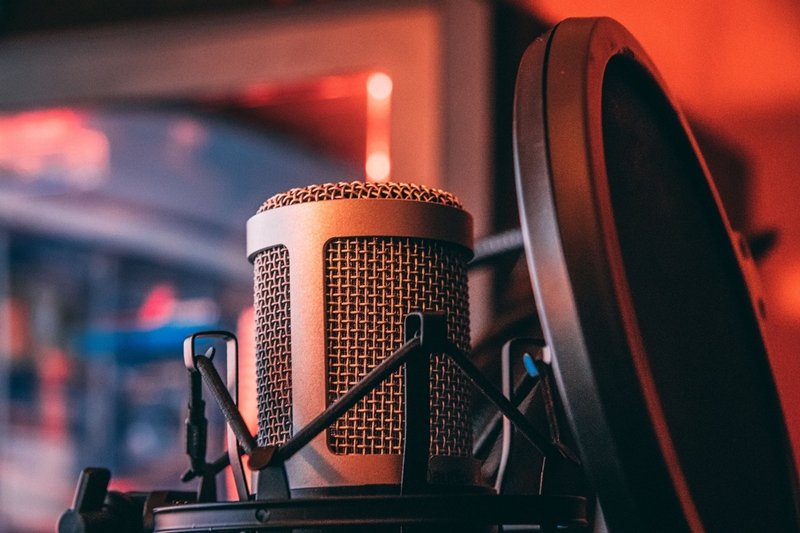
Do microphones work better with digital or analog preamps?
Microphones can function properly with both analog and digital preamps. Their main difference lies in the way they amplify the signal. While one uses digital processing to amplify the signal, the other uses tubes and transistors to complete the same task.
At the same time, each type of preamp brings a different character to the sound it amplifies. The digital preamp offers more control and versatility than an analog preamp, but at the same time, its sound has less character and naturalness. These characteristics make it widely used for live mixing consoles.
On the other hand, an analog preamp, although it has fewer options than a digital one, can provide a more quality and natural signal, which better defines the character of the amplified sound source. Because of this, the use of analog preamps in recording sessions and musical productions is much more common.
You can identify the amplification through transistors and the valve within the analog preamplifiers. Transistor preamps have less gain and are more transparent and stable than tube ones, making them widely used in genres such as jazz or funk, where clear and clean voices are sought.
In contrast, tube preamps have an overdrive effect that adds color to the sound and makes vocals pop a bit more. This can be very useful for genres like heavy metal and rap or when you need the voice to have strength and presence.
Due to this, an analog and a digital preamp can be a valid options depending on the scenario where it will be used and the character that is sought to be obtained from the voices captured through the microphone.
Should I Invest in a Better Preamp or a Better Microphone?
A high-quality preamp can add color, definition, and clarity to your sound, so investing in one can be very convenient. However, at the same time, investing in a higher-quality microphone can translate into more noticeable improvements to your sound.
A good preamp can raise the quality of the signal it processes by increasing its gain, clarity, and presence. Beyond this, it is important to remember that even if you have a high-quality external preamp, if the rest of your equipment does not offer the same facilities, you cannot get the most out of it.
On the other hand, a high-quality microphone can work well with either a cheap or an expensive preamp without noticeable differences. So, if you compare the sound clarity of a cheap microphone with that of a high-quality one, the difference will be much more evident to your ears, so in that case, it is better to consider upgrading your microphone.
Preamps are widely used within music production and by lovers of the analog sound of turntables; therefore, users who seek to get an external preamp are people who are very immersed in the world of music. This makes his judgment and ability to differentiate the sound quality of one signal from another evident.
Therefore, if you are still getting familiar with these worlds and already have a sound system that offers good features, you might not notice the improvements that an external preamp brings. This is because, for many people, the difference is very subtle and may not be reflected in big changes.
By analyzing your possibilities and the results you are looking to achieve, it will be easier for you to decide whether to invest in a better preamp, an audio interface, higher-quality monitors, or a better microphone than the one you already have.
Why is it Better to Use Balanced Cables in Your Microphones?
A balanced cable, unlike an unbalanced one, can offer a signal free of noise and interference and can also increase the intensity. While it is possible to use microphones with unbalanced cables, you are giving up some of the audio quality by doing so.
External interference is inherent in any device that handles a certain amount of voltage; this means that you are also transmitting noise by transmitting signals through the cables. Since complete noise removal is impossible, balanced cable doubles the signal, reversing the polarity of one of them and making them cancel each other out.
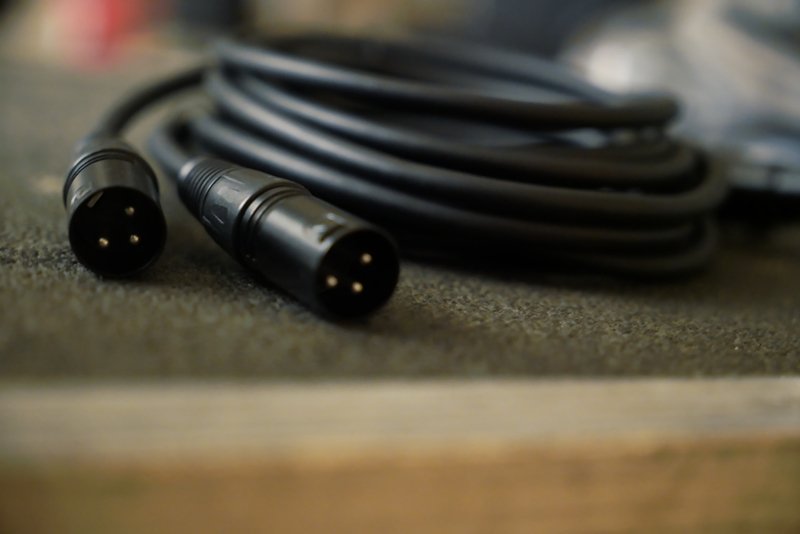
This noise cancellation process is especially important when using extremely long ones and when the cables are around many electrical devices generating magnetic fields that can leak into the signal. For the cable to be perfectly balanced, it must have XLR connectors at both ends. It is an unbalanced cable if it has an XLR connector on one end and a TRS connector on the other.
Although some instruments, such as guitar and bass, can use unbalanced cables and offer good results, using balanced cables is essential in microphones since they allow the signal to be as clear and crystalline as possible. Investing in good-quality cables will enhance the possibilities of your microphones and equipment.
Conclusion
Microphones can offer great fidelity as long as they are used with the corresponding devices. Together with preamps, they play a fundamental role in the audio recording and reproduction processes. The preamp’s importance is often greater than you perceive since it is the first step in the process and will influence all subsequent results.
A clear, powerful sound with a defined presence begins to take shape from the preamp. Each quality component you add will enhance the others, so whenever you invest in better audio devices, microphones, or equipment, analyze the compatibility between them to obtain the best combination and the best investment. Accessories such as cables, filters, supports, or power supplies must be consistent with the quality of your devices.
It’s no use having the best microphone or preamp if you don’t use balanced cables or your speakers sound saturated. I hope this article is very useful for all those starting in the world of audio and music production. Thanks for your time!

The Integraudio Editorial Team consists of experienced music producers, audio engineers, and plugin enthusiasts dedicated to providing in-depth reviews and guides for music production software.