

One consideration in buying a tube amp is having suitable tubes available in the market, as there was a time that there weren’t that many dealers of tubes in the city.
There was a time when I was learning guitar, that I wanted to get a decent amp to use at home. Back then, tubes were hard to get, as the market was flooded with solid state amplifiers. It would take a trip to one of the business districts in the capital to find tubes for amps. It was because of that factor that I stayed away from tube amps.
Later on, more music store retailers opened, which paved the way for new dealers of tubes to be introduced. Because tubes were more readily available, and e-commerce sites have become more robust here, I decided to ditch my solid state amp in favor of a tube amp.
I was researching the type of tubes available and what kind of maintenance was needed. In one of my research, I encountered the term matched tubes, which made me wonder if I would need to deal with it.
Now the amp I own is a hybrid tube amp. It has a tube preamp section and a solid state power amp section. I had to take a second look and see what kind of maintenance I should expect with this amp, particularly with getting matched tubes.
Do preamp tubes need to be matched?
Preamp tubes don’t need to be matched, unlike tubes used in the power amp section. However, what you need to look out for is that you use the same tube models that the manufacturer specifies. If your amp manual says you need to use 12AX7, then you can only use 12AX7 tubes, or something similar like 12AT7.
The nice thing about preamp tubes is that you can try different combinations aside from not having to use matched tubes. Often, tubes are placed in a chain, which you can play around with to get different sounds. In this case, each tube is affected by the succeeding tube in the chain.
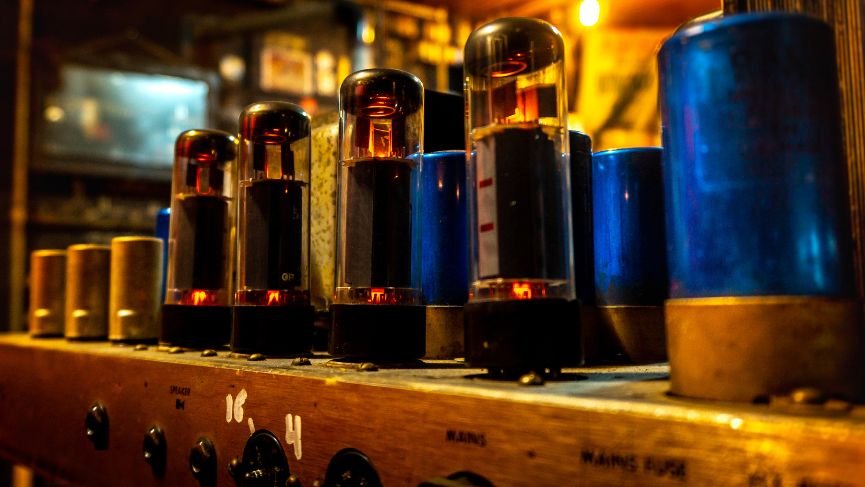
What are matched tubes?
Matched tubes refer to a set of tubes certified by the manufacturer as having the same current draw. Matched tubes allow you to get the best performance from your amp, especially modern ones. They are often found in the power amp section of your amp.
In some cases, manufacturers specify a tube’s rating and how it will affect your sound. They would label them based on how they break up and the clipping you can expect from these tubes. This labeling allows you to get a particular characteristic from your power amp section.
What happens if you don’t use matched tubes?
Using unmatched tubes can produce good or bad results, depending on how unmatched these tubes are. You can either have over-biased tubes, which could result in less current flowing, resulting in your amp sounding bland, or under-biased, which would mean more saturation but at the risk of overloading your amps.
To get into the precise details, getting matched tubes is to remove crossover distortion. The bias voltage is tweaked to allow a small amount of DC current to flow with no signal. This current flow lets your tubes handle the signal and change from positive to negative for DC biasing so that both tubes have the same current and voltage.
You don’t need to get a matched pair if your amp has biasing per tube. But if your amp doesn’t have one, you’ll need to cough up the extra cash for a matched pair.
If you decide to push for using an unmatched pair of tubes, the best result is more distortion, which isn’t as bad, depending on how you run your amps. In this scenario, it’s more likely that one tube will burn out faster than the other. However, the worst case of using an unmatched pair could be potentially damaging your amp.
How do you replace preamp tubes?
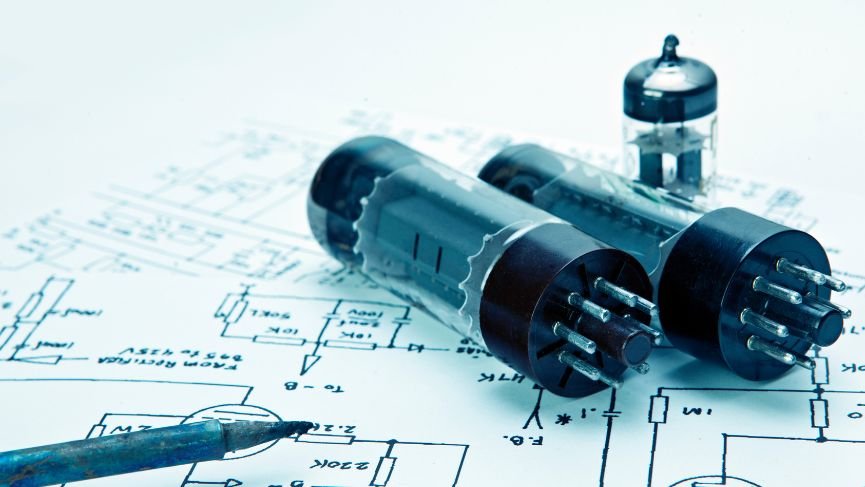
Replacing preamp tubes is relatively easy and only needs a screwdriver and something to help you grip the tube properly with care. You will need access to the back panel of your amp to remove the tubes inside. Don’t worry about voiding your amp’s warranty, as tubes are considered dispensable parts.
As mentioned previously, some amps have their tubes arranged in such a way they follow a visible signal path, even if you’re not familiar with electronic circuits. Often, tube sockets closest to the input jack are the first tube in the preamp circuit, and if your amp has an effects loop, the tube closest to the send jack is the last in the preamp.
Should your amp have such arrangements, you can consider that when choosing which tubes to put into the tube sockets. As a rule of thumb, you should only use the tube type specified by the manufacturer, but that doesn’t mean you can’t mix and match tubes by different brands.
A JJ 12AX7 tube will differ from a 12AX7 tube made by TAD. At the same time, some tubes will be compatible with the tube that your amp comes with, but there will be some differences in breakup on the preamp. It would be good to try different combinations, which can yield promising results.

To replace your tubes in your preamp:
- Turn off your amp, unplug it from the power outlet, and let it cool down. Remove the back panel once your amp has cooled down.
- If your tubes have covers, gently pull and turn counterclockwise to remove them.
- Hold the base of the tube and gently wiggle the tube while pulling the tube.
- Get your new tubes and ensure the pins are aligned with the socket, then gently insert the tubes into the socket. Do not force the tubes in.
Do you need to bias preamp tubes?
You don’t need to bias preamp tubes as biasing concerns the power amp section. What is essential for preamps is that you use compatible tubes based on the specifications set by the manufacturer. You don’t need to use the same brand, and some tubes are direct replacements for specific tubes.
That said, you don’t have to worry about having any power issues when replacing preamp tubes. Because of this feature, hybrid amps have also become a popular alternative to tube amps, as they only have tubes in the preamp section and use a solid state power amp.
Conclusion
As long as you’re replacing the tubes of a preamp section, you don’t need to worry about getting matching tubes. What is essential is that the tube you use is compatible with what the amp manufacturer specifies. You can use any brand or variations of tubes.
If you’re planning on getting a tube amp but don’t want to deal with the maintenance costs, you can opt to have your tubes biased by a technician. But if you’re not keen on dealing with added maintenance costs, your options would be to buy a cathode tube amp, which doesn’t need biasing or get a hybrid tube amp, which often features a tube preamp section and a solid state power amp.
In any case, as long as the amp serves its purpose, then you’re all set.

The Integraudio Editorial Team consists of experienced music producers, audio engineers, and plugin enthusiasts dedicated to providing in-depth reviews and guides for music production software.